Baby Food Maker


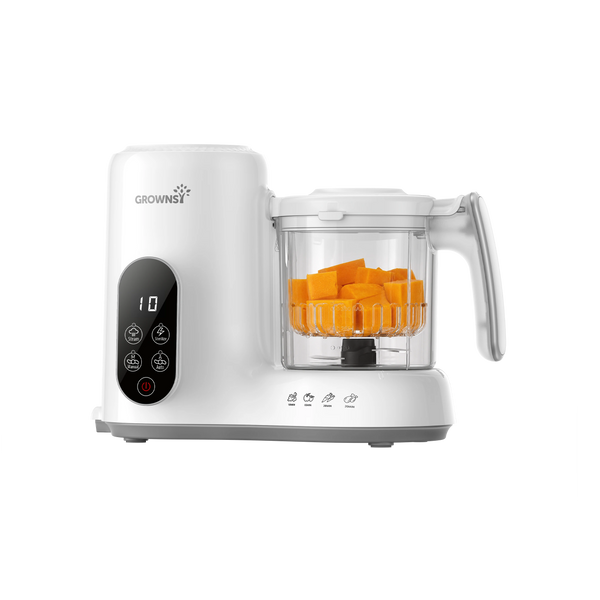
Starting solids brings plenty of firsts—new flavors, changing textures, and a little trial and error. With our Grownsy baby food maker collection, you can steam, blend, and adjust textures for every stage while keeping homemade baby meal simple.
View as

FAQs

What is the difference between a baby food maker, blender, and food processor?

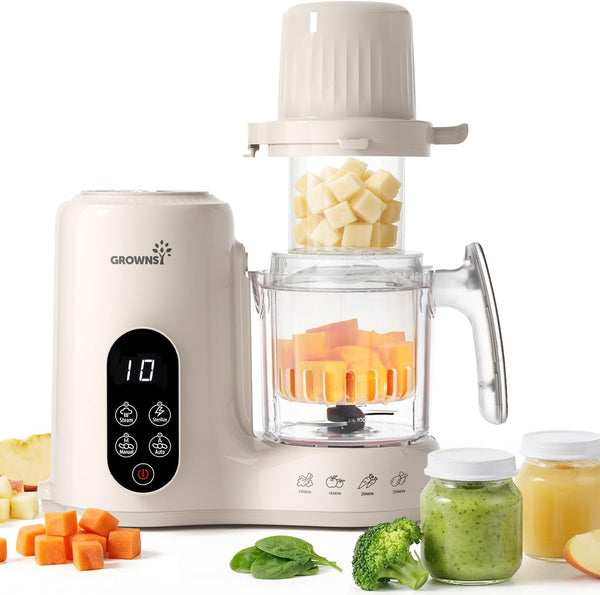
The main difference is workflow. From a practical standpoint, a standard blender primarily liquefies, while a food processor chops and mixes a wider range of textures. In this context, a dedicated baby puree maker is designed around smaller portions and early-feeding consistency, often adding steam. This model uses an elevated steam basket and stainless steel blade, so cooking and stage-based texture control are organized in one compact system.

When do I start using a baby food processor?

Age around 4 to 6 months is highly recommended by most pediatricians for introducing solid foods. The exact timing should depend on developmental signs and a pediatrician’s advice. At this stage, consistency matters. Food should be soft, fully cooked, and easy to swallow. You can start using the Grownsy baby food maker to prepare for this milestone, beginning with single-ingredient, smooth purees and other nutritious foods such as carrots, sweet potatoes, apples, peas, or pumpkin for your baby.

Do I need an all-in-one baby food maker if I already own a blender?

Yes. The all-in-one format may still save meaningful time. In everyday use, a household blender can puree cooked food, yet you must steam ingredients separately, transfer hot food, and manage more dishes. For example, Grownsy brings steaming, blending, texture adjustment, and a sterilizer mode into one feeding-focused appliance, making it more valuable when homemade meals are part of your daily routine rather than an occasional project. Cool the food and check both texture and temperature before serving.

What features should I look for in a baby food maker?

Choose features that solve the full prep routine.

What Matters Most:

  • True Steam Cooking: An elevated basket cooks food without leaving it submerged.
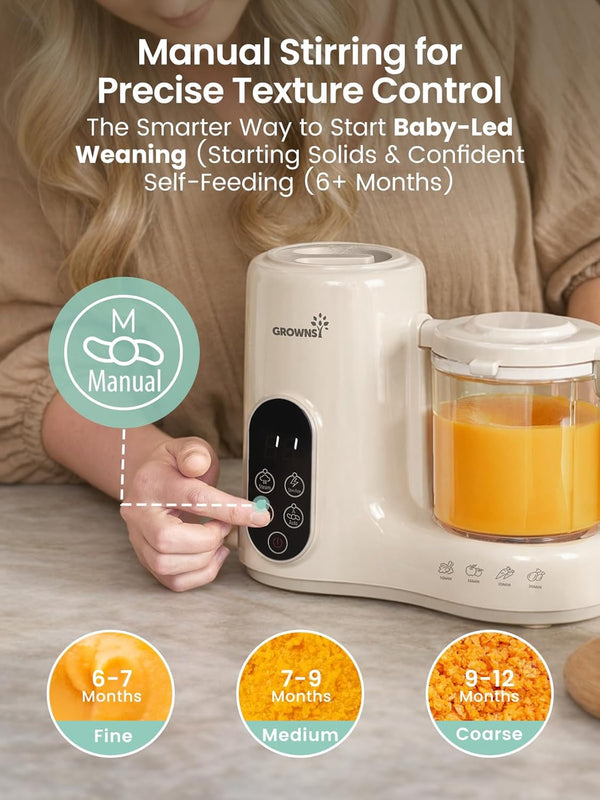
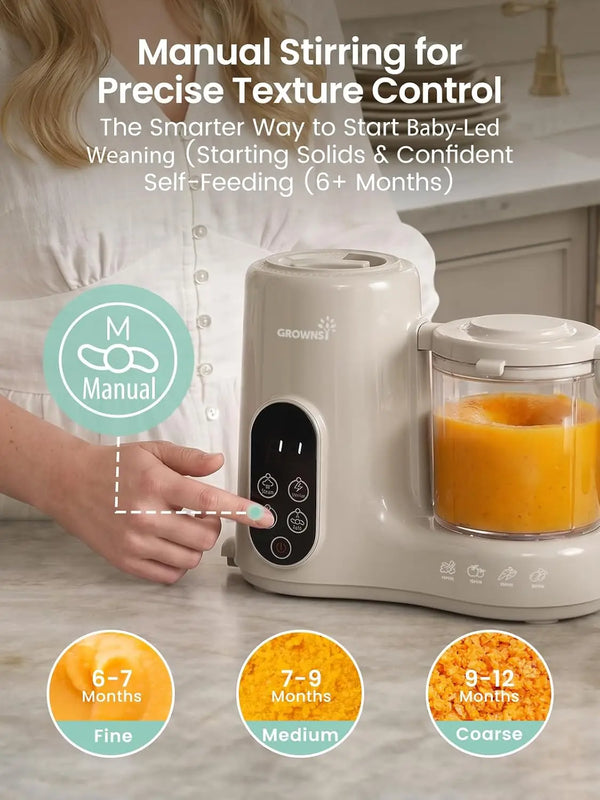
  • Texture Control: Manual and automatic modes should move from smooth to thicker consistencies.
  •  Food-Contact Materials: Look for BPA-free components and a stainless steel blade.

 Easy Cleanup: Removable, dishwasher-safe parts and smooth surfaces reduce trapped food.

For example, the baby food maker from Grownsy combines these priorities in a compact design that supports changing feeding stages.

Is a glass baby food maker better?

It depends on your priorities—both are safe and well-designed. Glass models are non-porous, resistant to stains and odors, and ideal for parents who prefer to avoid plastic entirely. However, it can also be heavier and easier to break, which may not be ideal for frequent daily use. On the other hand, Grownsy Baby Food Maker is designed by BPA-free plastic versions, which are lighter, more impact-resistant, and just as rigorously tested for safety.

Is steaming better than boiling food for baby purees?

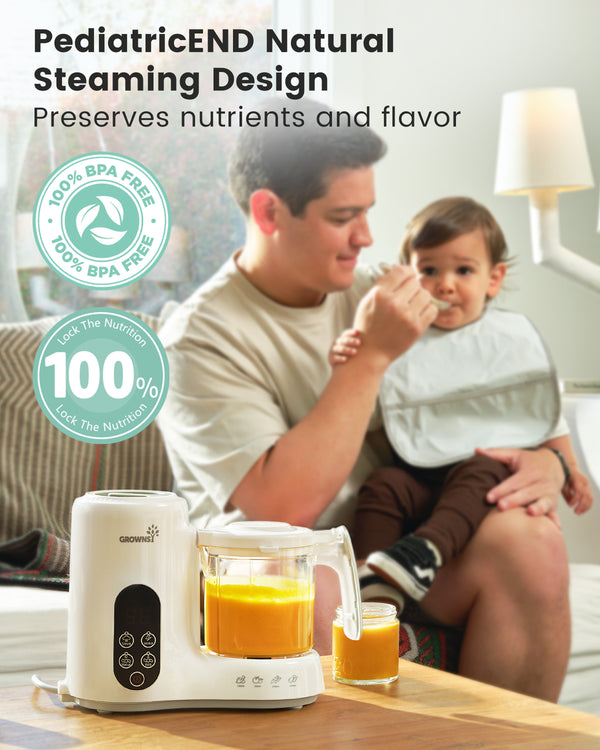
Of course. Steaming keeps ingredients above the cooking water, which can limit the loss of water-soluble nutrients and preserve flavor better than boiling food in a large volume of water. On this model, the elevated basket surrounds ingredients with steam and lets excess water drain away. Nutrient retention also depends on time, temperature, freshness, and storage, so cook only until the food is safely tender.

Can a baby food maker create different textures for each feeding stage?

Certainly! The key is adjustable blending rather than one fixed puree setting. Here, the 2 mixing modes let you create silky first purees, pulse for thicker textures, and gradually leave more structure as oral skills develop. Follow your pediatrician’s guidance and your baby’s readiness cues; texture progression should match safe chewing and swallowing development, not only a month printed on a chart.

When can babies start eating food prepared in a baby food maker?

Most babies begin complementary foods at about 6 months when they show developmental readiness, although individual timing should be confirmed with a pediatrician. Signs include steady head control, sitting with support, bringing food to the mouth, and swallowing rather than pushing food out. In this context, a Grownsy infant food blender helps you start with thoroughly cooked, simple ingredients and adjust consistency as those skills grow. Cool the food and check both texture and temperature before serving.

How much baby food can I make in one batch?

Capacity varies by model and by whether you use a single or dual-layer basket. Make enough to fit comfortably without packing ingredients so tightly that steam cannot circulate; this dual-layer food maker machine lets you cook more than one component in the same session, which is useful for meal prep; follow the fill marks and portion leftovers into small, dated containers promptly.

How do I clean and descale a baby food maker?

For day-to-day use, unplug the unit, let it cool, then remove the basket, bowl, blade, and lid as directed. Rinse food promptly so it cannot dry around seals or vents, and place only manufacturer-approved parts in the dishwasher. Wipe the motor base rather than immersing it. Descale the water reservoir on the manual’s schedule with an approved solution, then rinse fully before the next meal.