


Your 11-Week-Old Baby: Development Milestones, Sleep, and Daily Care
Nearly three months in. Baby's changing fast, you're running on caffeine. Eleven weeks is a weird in-between week. Not really newborn anymore. Not quite three months either. Lots going on under the surface.
So here's what's actually happening, and how to handle the rough parts.
What's Happening at 11 Weeks: The End of the Fourth Trimester
The "fourth trimester" is just shorthand for the first 12 weeks of life.
Pediatrician Dr. Harvey Karp coined the term. Idea is, newborns are basically still adjusting to being outside the womb for that whole first stretch. At week 11, you're nearly out of it.
Physical Growth at This Stage
Most 11-week-olds weigh somewhere around 11 to 14 pounds. Roughly two pounds added in the past month per typical WHO growth standards. They're filling out. Cheeks rounder. Limbs longer.
Even tiny stuff you'd never think about, like when babies actually get their kneecaps, is happening quietly in the background.
Why This Week Marks a Key Turning Point
This is the week lots of parents notice something shifts. Head holds up longer. Smiles come back when you smile. Feeds settle a bit faster. Nothing huge on its own.
But the 11 week old milestones stack up into a baby who feels noticeably more "with you" than they did a month ago.

11-Week-Old Development Milestones
Beyond the physical changes, this is also the week most parents start sensing a real shift in how their baby engages with the world. Head holds up longer. Smiles come back when you smile. Feeds settle a bit faster. Nothing huge on its own.
But the 11 week old milestones stack up into a baby who feels noticeably more "with you" than they did a month ago.
Motor Skills and Head Control Progress
Most babies now hold their head up briefly during tummy time. Turn it side to side on their back. Per CDC 2-month milestones, head lift on the belly is one of the expected wins in this window. Arms and legs move with more purpose. Less of the newborn flail.
Social and Emotional Signals to Watch For
Alongside those motor gains, the social side of your baby is also coming online fast. First real social smile usually shows up between 6 and 8 weeks. By 11 weeks, most babies smile back at familiar faces pretty regularly.
Some are starting to coo and stretch out vowel sounds. If you're tracking when babies start cooing and babbling, 11 weeks is right at the start.
Sensory Awareness and Visual Tracking
Sound and emotion aren't the only things sharpening up. Vision is leveling up too. Your baby follows a toy moving slowly across their view. Turns toward voices, especially yours. High contrast pictures, faces, and slow-moving things all hold their attention longer than they did a month back.
Why Your Baby Behaves the Way They Do Right Now
With all of those changes happening at once, the behavior shifts that come with them start to make a lot more sense. If your baby's suddenly clingier, fussier, or hungrier, there's usually a reason.
The Science Behind Cluster Feeding and Fussiness
Cluster feeding is when your baby wants quick feeds back to back, often in the evening. Per AAP HealthyChildren.org, normal newborn behavior, common around growth spurts. Brutal to live through. Not a problem.
How Growth Spurts Change Behavior at 11 Weeks
Cluster feeding usually doesn't show up alone, it tends to come packaged with a full growth spurt. A growth spurt around 11 to 12 weeks is one of the more reliable ones. More feeds. More sleep, or weirdly less. More fussiness. Usually clears in a few days.
Signs of Overstimulation vs. Genuine Hunger
This is where most new parents get crossed up. Hunger cues are early and physical. Rooting, sucking on hands, smacking lips, turning toward you. Overstimulation looks different. Arching back, turning head away, breaking eye contact, fussing with no rooting.
Per AAP guidance, catching hunger early heads off the meltdown stage.

Feeding Schedule and Nutrition at 11 Weeks
Speaking of hunger cues, the actual feeding schedule by 11 weeks looks pretty different from those early newborn days. Still frequent. Just more organized than the newborn chaos.
How Often and How Much: Breastfed vs. Formula-Fed Babies
Per AAP feeding guidance, breastfed babies usually feed 8 to 10 times in 24 hours at this age. Formula babies tend to take 4 to 5 ounces every 3 to 4 hours, totaling around 24 to 32 ounces a day. Both ranges are fine. No magic number.
Sample Feeding Routine for an 11-Week-Old
Numbers help, but a real-world example helps more. For a 7am-waker. Feeds at 7am, 10am, 1pm, 4pm, 7pm, dream feed around 10pm, one or two overnight. Slide everything earlier or later for your baby. The 11 week old milestones around feeding aren't about hitting times. They're about responsive intake.
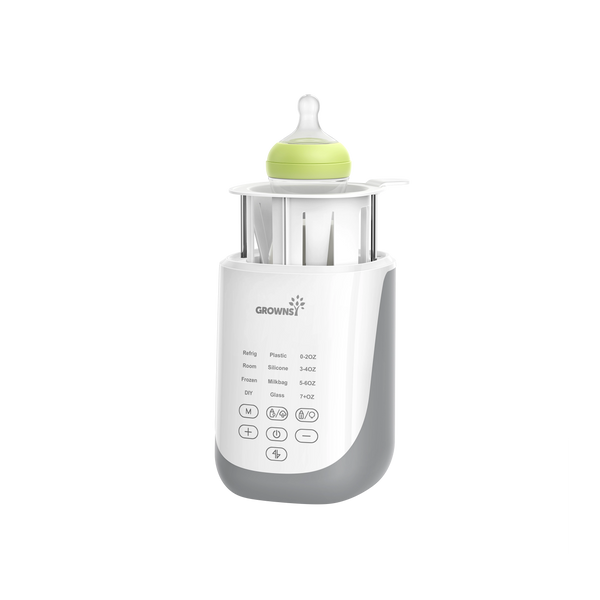
For the 3am stuff, anything that shortens the kitchen routine helps. The Grownsy 10-in-1 Fast Baby Bottle Warmer warms milk in under three minutes and has a built-in soft night light, so middle-of-the-night feeds don't blow up into a full house wake-up.
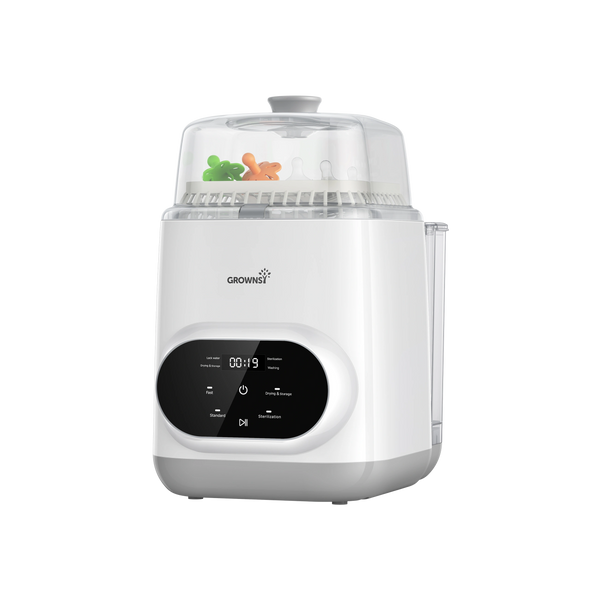
If you're feeding on the move, this portable bottle warmer guide is worth a look. And when the bottle pile takes over the counter, the Grownsy Bottle Washer takes a real chunk of sink time off your plate.
Sleep Patterns and Wake Windows
Once feeds are mostly sorted, sleep is the next big thing every parent obsesses over. Sleep at 11 weeks is starting to organize. Still all over the place.
How Much Sleep Your Baby Needs at This Age
The American Academy of Sleep Medicine consensus statement, endorsed by AAP, says 12 to 16 hours per 24 hours for infants 4 to 12 months. At 11 weeks most are still in the 14 to 17 hour range across day and night.
Sample Day and Night Sleep Schedule
Knowing the hours is one thing, mapping them onto an actual day is another. A typical day. Wake at 7. Nap around 8:30. Feed and play. Nap around 11. Lunch feed. Nap around 1:30. Late afternoon catnap. Wind-down around 6:30. Bed at 7. Overnight, one or two feeds depending on the baby. Wake windows at this age usually run 45 to 90 minutes.
When Night Stretches Start Getting Longer
Around 11 to 12 weeks some babies start stretching the first chunk to 4 or 5 hours. Some don't. Both fine. The first long stretch usually arrives on its own once the stomach can hold a bigger feed and the circadian rhythm starts to settle.

Safe Sleep Practices for Your 11-Week-Old
Now, before getting deeper into sleep optimization, the safety side of all this matters more than basically anything else here.
AAP Safe Sleep Guidelines at This Stage
The rules here aren't really up for debate. The AAP's 2022 safe sleep policy lays it out plainly. Baby goes on their back. Every nap, every night, no exceptions. Surface needs to be firm and flat, sheet pulled tight. Crib stays bare.
That means no blankets, no bumpers, no pillows, no stuffed animals. Skip the inclined sleepers too, they got recalled for a reason.
Best setup is room sharing without bed sharing, ideally for the first six months at minimum. Boring crib. Plain mattress. Safer baby.
Swaddling, White Noise, and Room Setup
Swaddling is still fine at 11 weeks as long as your baby isn't trying to roll. Per the AAP, stop at the first signs of rolling attempts, not after the first successful roll. White noise, blackout curtains, room temp around 68 to 72°F, all help.
Soothing Techniques That Actually Work
Even with a safe and well-set-up sleep environment, your baby is still going to cry, often a lot, and that's where soothing skills come in.
Some nights nothing works. Most nights, a small handful of moves cover almost everything.
The 5 S's and Why They Still Apply at 11 Weeks
The 5 S's, from Dr. Harvey Karp's work in Pediatrics, are swaddling, side or stomach position only for soothing, never sleep, shushing, swinging, and sucking.
The combination mimics the womb and triggers what Karp calls the calming reflex. Still works at 11 weeks for most babies, though yours might respond better to some than others.
Reading Cry Cues to Respond the Right Way
Different cries, different things. Hunger cries are rhythmic and build slowly. Tired cries are whinier with eye rubs and yawns. Pain cries are sharp and sudden. Overstimulation cries usually come with your baby actively turning away. You'll get better at this. Weeks of practice, not days.
Tummy Time, Play, and Sensory Activities
Once your baby is calm and fed, the awake time you do get with them is where the next round of growth happens. This is where the 11 week old milestones get built day by day.
Tummy Time Goals and Progression Tips
The Hewitt et al. 2020 review in Pediatrics confirmed tummy time speeds up gross motor stuff like head control and rolling. At 11 weeks, short bursts spread through the day, totaling around 15 to 30 minutes.
Simple Activities to Support Brain Development
High-contrast cards. Mirrors. Narrating what you're doing. Slow toy tracking. Face-to-face floor time. None of this needs anything fancy. Your face is still the favorite toy.
Red Flags and When to Call the Pediatrician
All that growth stuff aside, the other thing every 11-week parent wonders about is when something is genuinely a concern. Most 11-week worries turn out to be nothing. Some don't.
Developmental Warning Signs Not to Ignore
Most stuff parents worry about at 11 weeks turns out to be fine. A few things genuinely shouldn't wait.
Per AAP guidance, pick up the phone if your baby isn't reacting to loud sounds at all, isn't following moving stuff with their eyes, hasn't started smiling at people, can't even briefly lift their head during tummy time, or has lost a skill they were already doing.
Stuff like persistent feeding refusal, breathing that looks wrong, or a baby who's gone unusually limp or sleepy beyond what feels normal, those are always worth a call too. Trust the gut. Pediatricians would rather you ask the question.
Common Ailments at 11 Weeks and How to Handle Them
The usual suspects at this age are mild congestion, a bit of reflux, and the occasional fever that comes out of nowhere. Congestion hits the hardest because babies this small basically breathe through their nose. Even a little mucus throws off feeds and naps. Quick fix is saline drops followed by some gentle suction.
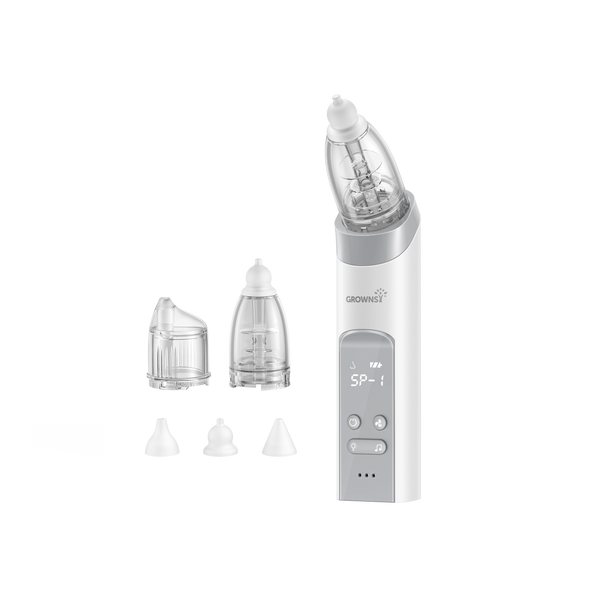
The Grownsy SniffEase Adjustable Suction Nasal Aspirator is built for this, with three suction levels so you can go really gentle on a tiny baby. Reflux usually looks worse than it feels and most babies grow out of it by their first birthday.
And if your baby's making weird sounds and you're not sure if it's just noisy breathing or something more, this guide on gasping sounds versus actual concerns walks through the difference.

Your Mental Health and Bonding at This Stage
And finally, all of the above is way harder to do when your own mental health is struggling, which is exactly why this part deserves space. Most articles skip it. They really shouldn't.
Postpartum Adjustment: What's Normal vs. What Needs Support
Almost every new mom goes through the "baby blues." Up to 80% of them, actually. Usually fades on its own within the first couple weeks.
Postpartum depression is something else, though. Per ACOG, it sticks around longer than two weeks and runs deeper. Persistent sadness. Hopelessness. Sometimes intrusive thoughts. Trouble bonding with your baby in a way that doesn't feel like exhaustion talking. Hits roughly 1 in 7 birthing parents.
This is a medical thing, not something you're doing wrong, and it doesn't get better by toughing it out. If you're 11 weeks postpartum and still in that place, please call your provider.
How to Strengthen Parent-Infant Attachment
Attachment isn't built in one big moment. It's built in hundreds of small ones. Eye contact during feeds. Talking through diaper changes. Skin-to-skin. Responding without panic. None of this has to be elaborate. Consistency over perfection.
Frequently Asked Questions
Is there a growth spurt at 11 weeks?
Yes, often. The 11 to 12 week window is one of the more reliable spurt stretches. More feeding, more fussiness, sometimes more sleep, for a few days.
How long should wake windows be at this age?
Around 45 to 90 minutes. Shortest in the morning, slightly longer through the day.
Is thumb-sucking at 11 weeks something to worry about?
No. Normal self-soothing at this age. Only becomes a dental thing much later if it sticks past the preschool years.
When do babies start holding their head up on their own?
Most show clear head control between 8 and 12 weeks during tummy time, with sustained upright control closer to 3 to 4 months. The 11 week old milestones include the early phase of this.
Conclusion
Eleven weeks is a real turning point, even when it doesn't feel like one mid-day.
The 11 week old milestones show up quietly. A longer head lift. A real smile. A four-hour night stretch you weren't expecting. Your job isn't to hit every milestone on schedule. It's to respond, be present, and protect your own rest while you do it.
Editor's Recommendation
A few tools that actually help.
- The Grownsy 10-in-1 Fast Baby Bottle Warmer is a quiet lifesaver for night feeds. Fast warming, soft built-in night light.
- The Grownsy Bottle Washer takes sink time off your day when feed frequency stays high.
- The Grownsy SniffEase Adjustable Suction Nasal Aspirator is worth having on hand for the inevitable congestion that hits in the early months.
Disclaimer
This article is for informational purposes only and is not a substitute for professional medical advice. If you have concerns about your baby's development, feeding, sleep, or your own mental health, please contact your pediatrician or healthcare provider.


