


Baby First Food: 14 Easy, Iron-Rich Recipes for Starting Solids
Still thinking about what is the best baby food to start with? Here is a based-research baby first food guide. If you ask a room full of parents what their baby ate first and you will hear everything from avocado and oatmeal to steak, eggs, and the pancake a determined six-month-old stole from their plate.
That answer is not absolute. There is no “best” for first baby food, and choosing banana instead of broccoli will not determine how your child eats in daily life. What matters more is the pattern you build after the first bite.
After researching three groups of parents’ discussions about starting solids, one pain point springs out: they want to feed babies well, but they are tired, short on time, worried about baby choking, and surrounded by products they may not need. Our opinion is easy : the best first-food plan is not the most complicated one. It is the one that reliably offers iron-rich foods, safe textures, early variety, and manageable steps.
Quick Answer: What Is a Good First Food for a Baby?
- Start around 6 months, when your baby shows developmental signs of readiness.
- Make iron-rich foods—such as iron-fortified oatmeal, meat, beans, lentils, eggs, or tofu—a regular part of the menu.
- Offer smooth, mashed, or very soft food in a shape and texture your baby can manage.
- Introduce common allergens in infant-safe forms instead of delaying them, unless your pediatrician gives different advice.
- Begin with one or two teaspoons. Let your baby decide whether and how much to eat.
- Keep breast milk or iron-fortified infant formula as the main source of nutrition while solids gradually expand.
According to Dietary Guidelines for Americans, 2025–2030, we found that introducing a diverse range of nutrient-dense foods in developmentally appropriate textures at about 6 months while breast milk or formula remains the main source of nutrition. That is why avocado can be a lovely first taste, but avocado plus beans—or avocado served alongside iron-fortified oatmeal—is a stronger nutritional plan.

When Is a Baby Ready for Solid Food?
Age is one of the factors in this decision. The CDC’s readiness guidance finds most children can begin around 6 months and advises against starting before 4 months. Look for several signs together:
- Good head and neck control
- Ability to sit alone or with support
- Interest in food and opening the mouth when food is offered
- Crawling objects to the mouth
- Swallowing food instead of immediately pushing everything out with the tongue
If your baby was born prematurely and not growing as expected, or has another concern, ask your pediatrician before starting.
At first, trying to eat solids is a practice as well as nutritious feeding. A baby may lick, squeeze, spit out, or wear more food than they swallow. That is not a failed meal. The CDC also notes that a new food may take multiple exposures to be accepted. A closed mouth, turned head, or food pushed away means “I’m done”; responsive feeding guidance recommends letting the child decide how much to eat.
Why “Iron First” Is Better Than Chasing One Perfect Food
Many popular first foods are soft and easy to prepare but not rich in iron. Around the middle of the first year, babies need dietary sources of iron, especially if they receive human milk. The CDC lists meat, poultry, seafood, and eggs as sources of heme iron, while beans, lentils, tofu, and iron-fortified cereals provide non-heme iron.
This does not mean every bite must be meat or cereal. Use a simple formula:
Iron-rich food + fruit or vegetable + enough liquid or fat for a safe texture
Examples include oatmeal with pear, beef with carrots, lentils with sweet potato, or white beans with avocado. Pairing plant iron with vitamin C-rich produce—such as berries, broccoli, peas, or sweet potato—can improve non-heme iron absorption, according to the NIH Office of Dietary Supplements.
Variety matters for another reason. Rice cereal can be part of a balanced diet, but it does not have to be first or served every day. The FDA recommends varying grains, because rice absorbs more arsenic than many other crops. Rotate oat, barley, multigrain, and other developmentally appropriate grains.
14 Easy First Baby Food Recipes
We collect and display 14 detailed baby friendly food for your new eater below. These recipes are designed for babies who are developmentally ready for solids, usually around 6 months. Start with a small portion. Thin or mash as needed, and move toward thicker, lumpier textures as your baby’s skills improve. Any food should be soft enough to mash easily with a fork.
1. Creamy Iron-Fortified Oatmeal

- Ingredients: 2 tablespoons iron-fortified infant oat cereal; 3 to 4 tablespoons prepared infant formula, breast milk, or water.
- Method: Stir until smooth and loose enough to fall easily from a spoon. Add more liquid if needed. Once oatmeal is familiar, mix in mashed pear, apple, pumpkin, or berries.
- Why it works: It is fast, inexpensive, iron-fortified, and easy to change without cooking a separate meal.
2. Avocado and White Bean Mash

- Ingredients: 1/4 ripe avocado; 2 tablespoons no-salt-added cannellini beans, rinsed and drained; water as needed.
- Method: Mash until completely smooth. Add water a teaspoon at a time for a softer consistency.
- Why it works: Avocado supplies a creamy texture, while beans add iron, protein, and fiber that avocado alone does not provide.
3. Sweet Potato and Red Lentil Purée

- Ingredients: 1/4 cup peeled sweet potato cubes; 2 tablespoons cooked red lentils; 2 to 4 tablespoons water.
- Method: Steam the sweet potato until it crushes easily with a fork. Blend with the lentils and enough water to reach the right texture.
- Batch tip: Freeze extra portions in a clean covered tray, then transfer the frozen portions to a labeled freezer container.
4. Beef, Carrot, and Apple Purée

- Ingredients: 2 ounces lean ground beef; 1/3 cup sliced carrot; 2 tablespoons peeled apple.
- Method: Cook the beef to 160°F. Steam the carrot and apple until very soft. Blend everything with warm water until smooth, or leave finely ground for a baby ready for more texture.
- Why it works: Beef is rich in heme iron and zinc; carrot and apple soften the flavor without added sugar.
5. Chicken and Pumpkin Purée

- Ingredients: 2 ounces boneless, skinless chicken thigh; 1/2 cup pumpkin or butternut squash cubes; water as needed.
- Method: Cook chicken to 165°F and steam the squash until soft. Blend together, adding water for a spoonable consistency.
- Time saver: Make a larger unsalted batch. Serve the adult portion with seasoning added at the table.
6. Pea, Spinach, and White Bean Mash

- Ingredients: 1/4 cup frozen peas; a small handful of spinach; 2 tablespoons no-salt-added white beans.
- Method: Steam the peas and spinach until tender. Blend with the beans and a little water. Press the mixture through a fine sieve if pea skins bother a brand-new eater.
7. Plain Yogurt with Mashed Blueberries

- Ingredients: 2 tablespoons plain, pasteurized whole-milk yogurt; 1 tablespoon blueberries, cooked until soft and mashed.
- Method: Swirl the berries into the yogurt. Do not use honey or sweetened yogurt.
- Allergen note: Dairy is a common allergen. Offer this when your baby is healthy and you can watch for a reaction.
8. Fully Cooked Egg and Avocado Mash

- Ingredients: 1 fully cooked egg; 1/4 avocado; water as needed.
- Method: Mash until soft and moist, with no rubbery pieces. For a baby managing finger foods, cut a fully cooked omelet into wide, soft strips instead.
- Why it works: Egg adds protein, choline, and iron; avocado keeps the texture moist.
9. Thinned Peanut-Banana Oatmeal

- Ingredients: 2 tablespoons prepared infant oatmeal; 1 teaspoon smooth peanut butter; 1 tablespoon mashed banana; warm water as needed.
- Method: Thin the peanut butter with warm water first, then stir it into the oatmeal and banana. The mixture should be smooth, never sticky or gluey.
- Critical safety note: Never offer whole peanuts or a thick spoonful of nut butter. For babies with severe eczema or an egg allergy, speak with a clinician before peanut introduction. The American Academy of Pediatrics advises against delaying allergenic foods once a baby is ready for solids.
10. Salmon and Sweet Potato Mash

- Ingredients: 1 ounce fully cooked low-mercury salmon; 1/4 cup cooked sweet potato; water as needed.
- Method: Check the fish carefully for skin and bones. Flake it finely, then mash with the sweet potato and enough water to keep it moist.
- Allergen note: Introduce fish on a day when no other new allergen is being served.
11. Tofu and Pear Purée

- Ingredients: 1/4 cup soft tofu; 2 tablespoons ripe pear, steamed if firm.
- Method: Blend or mash until smooth. For a more advanced texture, crumble the tofu finely and serve the pear mashed alongside it.
- Why it works: Tofu offers plant protein and iron with almost no prep. Soy is a common allergen, so introduce it separately.
12. Steamed Broccoli with Bean Dip

- Ingredients: One large broccoli floret with a long handle; 2 tablespoons mashed no-salt-added beans; water or olive oil to loosen.
- Method: Steam the broccoli until the stem and crown squash easily between your fingers. Spread a thin layer of bean mash on the crown or offer the mash on a preloaded spoon.
- For self-feeding: A large, soft floret is easier for a beginner to grasp than tiny pieces.
13. Two-Ingredient Banana-Oat Pancake Strips

- Ingredients: 1 small ripe banana; 1 egg; 2 tablespoons finely ground oats if the batter needs structure.
- Method: Mash, mix, and cook small pancakes over medium-low heat until the egg is fully cooked. Cut into two-finger-wide strips. The strips should remain soft, not crisp.
- Allergen note: Use this recipe only after egg has been introduced and tolerated.
14. Turkey, Pea, and Ditalini Bowl

- Ingredients: 2 tablespoons cooked ground turkey; 2 tablespoons very soft ditalini; 2 tablespoons cooked peas; 1 to 2 tablespoons vegetable purée or water.
- Method: Cook turkey to 165°F. Mash the peas, combine all ingredients, and moisten well. For an earlier eater, pulse the mixture briefly; for a more experienced baby, serve it lumpy and scoopable.
- Why it works: This is the realistic bridge to family meals: protein, grain, and vegetable in one soft bowl.
How to Introduce Allergens Without Turning Every Meal Into a Test
Once your baby explore a few first foods, you can try to introduce major allergens in safe forms—fully cooked egg, thinned peanut butter, plain yogurt, soft tofu, wheat, and well-cooked fish—one at a time. Offer a small amount early in the day, when your baby is well and you can observe them. If tolerated, keep the food in regular rotation.
Stop feeding and contact your pediatrician if a new food causes hives, repeated vomiting, facial swelling, or other concerning symptoms. Trouble breathing, wheezing, sudden lethargy, or swelling involving the airway requires emergency care. Babies with severe eczema, an existing food allergy, or a previous immediate reaction need individualized medical guidance.
First-Food Safety Rules That Matter More Than Fancy Gear
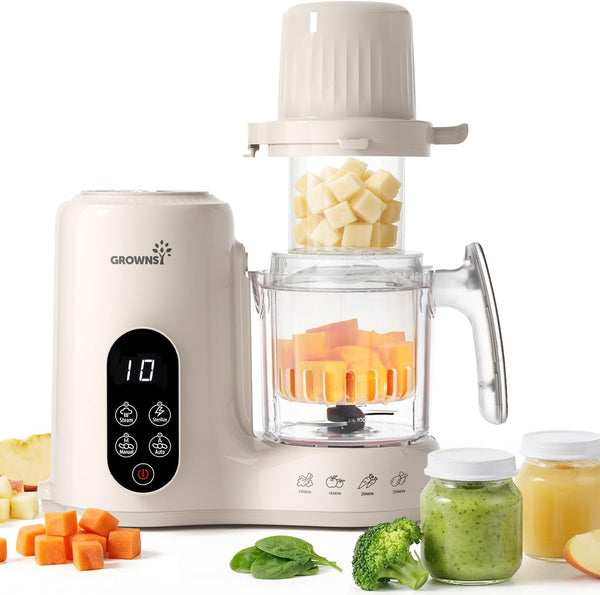
As we know, less is more. The parents in our research group were remarkably consistent about equipment: you need much less than marketing suggests. A secure high chair that keeps the baby upright, one or two small spoons, a bib, a washable cup, and an easy-clean surface are enough to begin. Additional, you can try to purchase a baby food maker, making it become your kitchen helper to create various baby food. Plates and suction bowls can wait.
Food preparation and supervision matter more. The CDC choking guidance recommends preparing food in the right shape, size, and texture; seating children upright; and watching them throughout the meal. Avoid whole nuts, thick globs of nut butter, uncut grapes and tomatoes, raw apple or carrot pieces, popcorn, hard chunks of meat or cheese, and other small, hard, round, or sticky foods.
Gagging can happen while a baby learns to handle texture, but choking can be silent. Take an infant CPR and choking-response course rather than relying on social media demonstrations.
Also avoid honey before 12 months, unpasteurized foods, juice before 12 months, added sugar, and high-sodium foods. Cow’s milk yogurt can be introduced in an infant-appropriate form, but cow’s milk should not replace breast milk or formula as a drink before age 1. These recommendations are summarized in the CDC’s foods-to-avoid guidance.
The Low-Stress System: Cook Once, Serve Three Ways
The most useful suggestions from experienced parents was not a specific food. It was a workflow:
- Choose one iron anchor: beef, chicken, lentils, beans, tofu, egg, or fortified oatmeal.
- Add one easy produce item: frozen peas, steamed broccoli, sweet potato, avocado, pear, or berries.
- Change the texture, not the whole meal: blend it smooth for a beginner, mash it for the next stage, or serve it soft and graspable as skills develop.
Frozen vegetables, canned no-salt-added beans, and store-bought unsweetened purées are legitimate shortcuts. A pouch can become oatmeal mix-in, a moistener for pasta, or part of a meal—not a parenting verdict.
For batch cooking, cool food promptly and label it with the date. FoodSafety.gov advises keeping homemade baby food in the refrigerator for 1 to 2 days or in the freezer for 1 to 2 months. Put only the amount your baby will eat into the serving bowl so saliva from a used spoon does not contaminate the stored batch.
Conclusion
To sum up, your little one’s first food may be memorable, messy, or barely swallowed. It does not need to be perfect. The stronger win is what happens over the next several weeks: iron-rich foods show up often, textures progress safely, allergens are introduced thoughtfully, and meals remain manageable enough to repeat.
Start with two teaspoons, one soft food, and one calm seat at the table. If your baby frowned, that is a sign—not rejection. Offer it again another opportunity. Or, changing another baby recipes. You don’t need to nurture your baby become a perfect eater in one meal, but helping a new eater to practice by self.
This article provides general educational information and is not a substitute for care from your pediatrician, registered dietitian, or feeding specialist.
Sources
- CDC: When, What, and How to Introduce Solid Foods
- CDC: Iron
- CDC: Choking Hazards
- CDC: Foods and Drinks to Avoid or Limit
- CDC: Signs Your Child Is Hungry or Full
- American Academy of Pediatrics: Introducing Common Food Allergens
- Dietary Guidelines for Americans, 2025–2030
- FDA: What You Can Do to Limit Exposure to Arsenic
- USDA FSIS: Safe Minimum Internal Temperature Chart
- FoodSafety.gov: Safe Storage of Puréed and Solid Baby Food
- NIH Office of Dietary Supplements: Iron Fact Sheet for Health Professionals


