


No Outlet, No Problem: How Parents Warm Bottles Anywhere
Leaving the house with a newborn often feels like preparing for a small adventure.
Diapers. Extra clothes. Bottles. Milk.
And one question many parents eventually face:
How will I warm the next bottle when I’m away from home?
At home, feeding routines can feel predictable. You have your supplies nearby, your favorite setup, and everything within reach.
But once you step outside, things change.
A hungry baby doesn’t always wait for the perfect moment—or the perfect location.
The Hidden Challenge of Feeding Away From Home
Many everyday places are not designed around baby feeding needs.
Parents may find themselves preparing a bottle while:
- Sitting in the car between errands
- Spending the afternoon at a park
- Waiting at a doctor’s appointment
- Traveling through airports
- Visiting family and friends
Suddenly, a simple feeding routine becomes more complicated.
No kitchen. No nearby outlet. No countertop bottle warmer.
Just a parent trying to make the next feeding happen.
Why Traditional Bottle Warming Methods Can Be Difficult Outside
When parents need to warm a bottle away from home, common solutions include:
- Asking for hot water at a café or restaurant
- Carrying a thermos filled with warm water
- Searching for available facilities
These methods can sometimes work.
But they often add extra preparation to already busy days.
More items to pack. More steps to remember. More waiting when your baby is ready to eat.
For parents on the go, convenience is not just about saving time—it is about reducing the small challenges that add up throughout the day.
Why Microwave Warming Is Not a Good Option
When parents are away from home, it may feel tempting to look for the fastest warming method available. But microwaving baby bottles is not recommended.
Microwaves can heat milk unevenly and create hot spots, even when the bottle feels only slightly warm from the outside. These hot spots can burn a baby’s mouth or throat.
For this reason, parents should use gentle, controlled warming methods and always check the bottle temperature before feeding.
Do Bottles Always Need to Be Warmed?
Not every baby bottle needs to be warmed. Breast milk can be served cold, at room temperature, or warm, depending on what your baby accepts and what your feeding routine looks like.
However, many babies prefer a gently warmed bottle, especially if they are used to warm milk at home or if the milk has been stored in the refrigerator.
The goal is not to make the bottle hot. The goal is to bring it to a comfortable feeding temperature. Before feeding, parents should always test a few drops on the inside of the wrist to make sure the milk feels warm, not hot.
Portable Bottle Warmer vs Traditional Countertop Warmer
At home, a traditional countertop bottle warmer can be useful because it stays in one place and plugs into a wall outlet. But outside the home, parents often need a different kind of solution.
| Dimension | Portable Bottle Warmer | Traditional Countertop Bottle Warmer |
|---|---|---|
| Power Source | Designed for cordless use with a built-in battery, so parents do not need to search for an outlet. | Usually needs a wall outlet and is better suited for a fixed home setup. |
| Best Use Scenario | Travel, errands, parks, car rides, family visits, outdoor feeding, and airport days. | Home kitchens, nurseries, or regular countertop feeding stations. |
| Air Travel | Carry-on friendly for most flights when packed according to airline lithium battery rules. | Can be packed for travel, but it usually still needs an outlet after arrival and is less useful during airport transfers or layovers. |
| Portability | Easy to pack in a diaper bag, stroller basket, or travel tote. | Usually larger and better kept on a countertop. |
| Feeding Flexibility | Helps parents warm bottles when no outlet, kitchen, or hot water source is nearby. | Works well when parents are close to home supplies and have access to electricity. |
| Preparation Needed | Reduces the need to carry a thermos, ask for hot water, or depend on public facilities. | Requires a stable setup, nearby outlet, and often a kitchen or feeding area. |
| Main Advantage | Supports bottle warming away from home, especially when feeding time does not follow the plan. | Useful for regular home feeding routines where everything is already within reach. |
For air travel, parents should always check current airline and airport security rules before flying. The FAA notes that lithium-ion batteries are generally limited to 100 watt hours per battery and should be packed according to carry-on battery safety rules. Learn more from the FAA lithium battery travel guidance.
What Makes a Portable Bottle Warmer Truly Useful?
A travel bottle warmer needs to do more than fit inside a diaper bag.
For everyday use, parents look for:
- Reliable warming performance
- Long-lasting battery life
- Simple operation
- Easy portability
Because family outings rarely follow a perfect schedule.
A feeding solution should be ready when your baby needs it.
Power That Supports More Feeding Moments
Battery life is one of the most important features of a portable bottle warmer.
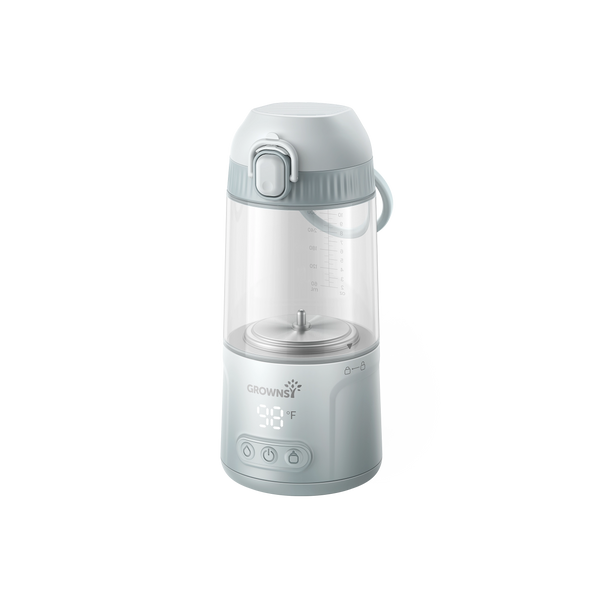
The Grownsy Portable Bottle Warmer is equipped with an 18,000mAh high-capacity battery, designed to support multiple warming sessions throughout the day.
Instead of constantly thinking about the next charge, parents can have more confidence during longer outings.
Whether it’s a full day of errands or a weekend trip, dependable battery capacity helps keep feeding routines more flexible.
This matters most when feeding time does not follow the plan. Parents may not know when the next bottle will be needed, whether an outlet will be nearby, or whether a baby will want milk sooner than expected. A higher-capacity battery helps reduce that uncertainty, especially during travel days, outdoor activities, or back-to-back errands.
How to Warm a Bottle on the Go
A simple routine can make outside feeding feel less stressful.
- Pack the milk safely. Keep breast milk or prepared formula in a sealed bottle or suitable storage container while traveling.
- Start warming before your baby becomes too hungry. If you know feeding time is close, warming the bottle a little earlier can help reduce waiting.
- Use a controlled warming method. A portable bottle warmer can help warm the bottle without needing a kitchen, café, or outlet.
- Check the temperature before feeding. Put a few drops on your wrist. The milk should feel warm, not hot.
- Feed in a comfortable position. Once the bottle is ready, find a calm place where your baby can feed without too many distractions.
Using a Portable Bottle Warmer While Traveling
Travel days can make bottle feeding even less predictable. Parents may be moving through parking lots, airport security, boarding areas, rideshares, or hotel rooms without easy access to warm water or a clean kitchen setup.
For air travel, parents should also plan ahead for how they carry breast milk, formula, and feeding supplies. A portable bottle warmer can help after security, during layovers, in hotel rooms, or during road trips when a nearby outlet or warm water source is not available.
Before traveling, it is also worth checking current airline and airport security rules for baby feeding items, especially when carrying breast milk, prepared formula, water, or cooling packs.
Feeding Freedom Beyond the Kitchen
A portable bottle warmer helps families maintain familiar feeding routines wherever they go.
It can be useful for:
- Road trips
- Outdoor activities
- Family visits
- Travel days
- Everyday errands
Your location may change, but your baby’s feeding needs stay the same.
A portable warming solution helps bring a little more comfort and consistency to those moments.
FAQs About Warming Baby Bottles Away From Home
Can babies drink cold breast milk?
Yes. Breast milk does not always need to be warmed. Some babies accept cold or room-temperature milk, while others prefer it warm. Parents can choose based on their baby’s preference and feeding routine.
What is the safest way to check bottle temperature?
Before feeding, place a few drops of milk on the inside of your wrist. It should feel warm, not hot.
Can I microwave a baby bottle when I am away from home?
No. Microwaving baby bottles is not recommended because it can heat milk unevenly and create hot spots that may burn a baby’s mouth or throat.
Is a portable bottle warmer useful for travel?
Yes. A portable bottle warmer can be useful during road trips, airport travel, family visits, outdoor activities, and everyday errands when warm water or an outlet is not easy to find.
What should I look for in a travel bottle warmer?
Parents should look for reliable warming performance, long battery life, simple controls, easy portability, and a design that fits real feeding situations outside the home.
Final Thoughts
Parenthood already comes with plenty of planning.
Packing the diaper bag. Organizing schedules. Preparing for the unexpected.
Feeding on the go shouldn’t mean searching for an outlet every time.
With portable warming convenience and an 18,000mAh high-capacity battery, the Grownsy Portable Bottle Warmer helps parents stay prepared wherever the day leads.
No outlet needed. Less waiting.
A simpler way to feed wherever life takes you.
Source:
For more safety guidance, you can refer to the CDC breast milk storage and preparation guidelines and the CDC infant formula preparation guidance.


