


Why Your Baby Sounds Congested Even When You Can’t See Any Mucus
You hear it. The tiny snuffling sound. The stuffy breathing.
The congestion that seems to appear and disappear throughout the day.
But when you check your baby’s nose:
Nothing. No visible mucus. No obvious blockage.
This can be confusing for many parents.
Your baby sounds congested, but you can’t seem to remove anything.
Before reaching for stronger suction, it helps to understand what may actually be happening inside your baby’s small nasal passages.
Why Does My Baby Sound Congested Without Visible Mucus?
Not all nasal congestion is easy to see.
Sometimes mucus can be:
- Deeper inside the nasal passage
- Thicker and harder to move
- Dried against the nasal lining
Babies naturally have much smaller nasal passages than adults. Because of this, even a small amount of mucus or dryness can make breathing sounds more noticeable.
This is why a baby may sound stuffy even when there is little or no mucus visible at the entrance of the nose.
Why Suction Alone May Not Always Work
When parents hear congestion, the first thought is often:
“Do I need stronger suction?”
But the challenge is not always suction strength.
If mucus is dry, thick, or stuck, it may not move easily, even with suction.
This can lead to a frustrating cycle:
- Try suction. Nothing comes out.
- Try again. Still little result.
- Wonder whether stronger suction is needed.
The issue may be that the mucus needs preparation before removal.
A Better Approach: Loosen First, Remove Second
Effective baby nasal care often starts before suction.
Adding gentle moisture can help prepare mucus by:
- Softening dried buildup
- Helping loosen thicker mucus
- Making the removal process easier
This simple two-step idea is often more practical:
- Prepare the mucus first.
- Remove it second.
By supporting the whole process, parents may spend less time repeating the same step without results.
What Parents Can Try First When Nothing Comes Out
If your baby sounds congested but suction removes little or nothing, try focusing on preparation before repeating suction.
Step 1: Add Gentle Moisture
Use a baby-safe nasal spray or saline-style moisture step to help soften dry or sticky mucus.
Step 2: Wait Briefly
Give the moisture a short moment to work before suctioning. This helps avoid rushing straight into removal when mucus may still be too dry or stuck.
Step 3: Suction Gently
Use gentle suction to remove loosened mucus. The goal is not to force mucus out, but to support a calmer and more comfortable nasal care routine.
Step 4: Stop If Nothing Changes
If little comes out after gentle care, avoid repeating suction over and over. Too much suction may irritate the delicate nasal area and make nasal care more stressful for both baby and parent.
A Complete Approach to Baby Nasal Care
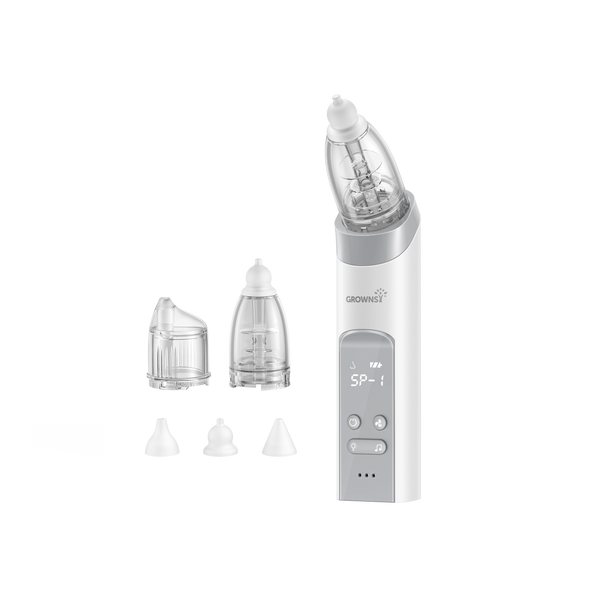
The Grownsy SniffEase SPA is designed around a more complete nasal care routine with three integrated steps:
1. Spray: Prepare and Soften
The gentle spray helps add moisture and soften stubborn mucus before suction.
2. Suction: Remove Loosened Mucus
After preparation, suction helps clear mucus more effectively as part of the routine.
3. Micro-Mist Care: Support Gentle Comfort
The micro-mist function provides a gentle finishing step to support a comfortable nasal care experience.
Instead of focusing only on removal, SniffEase SPA supports the complete process, from preparation to clearing.
When Parents Often Notice This Problem
Many parents notice noisy or stuffy breathing during:
- Dry seasons
- Winter months with indoor heating
- Bedtime routines
- Early morning wake-ups
- Changes in environment
Sometimes the challenge is not a large amount of mucus.
It is mucus that needs a little extra help becoming easier to remove.
When Not to Keep Suctioning
If your baby sounds congested but nothing comes out, stronger or repeated suction is not always the answer.
Consider pausing if:
- Your baby becomes very upset during suction
- The nose looks irritated
- Nothing comes out after gentle preparation
- The congestion sound does not seem to affect feeding or sleep
In these moments, a gentler moisture-first routine may be more helpful than repeating suction again and again.
When to Check With Your Baby’s Doctor
Most everyday stuffy sounds are manageable with gentle care at home, but parents should contact a healthcare professional if they notice signs that go beyond simple congestion.
Check with your baby’s doctor if your baby has:
- Trouble breathing
- Ribs pulling in with each breath
- Blue lips or face
- Difficulty feeding because of breathing discomfort
- Signs of dehydration
- A high fever or symptoms that are getting worse
If you are unsure whether your baby’s breathing is normal, it is always better to ask your pediatrician.
Creating a Calmer Nasal Care Routine
Baby nasal care can feel stressful when parents don’t know why congestion sounds continue.
Understanding that visible mucus is not the only factor can help parents choose a more thoughtful approach.
A routine that combines moisture, gentle suction, and comfort-focused care can make nasal care feel simpler and more manageable.

FAQs About Baby Congestion With No Visible Mucus
Is it normal for my baby to sound congested but have no mucus?
It can happen. Mucus may be deeper in the nasal passage, dry, or too thick to see near the nostril opening. Small nasal passages can also make minor dryness sound more noticeable.
Why does nothing come out when I use a nasal aspirator?
If mucus is dry or stuck, suction alone may not move it well. A moisture-first step can help soften mucus before gentle suction.
Should I use spray before suctioning my baby’s nose?
Using a gentle spray or saline-style moisture step before suction can help prepare thick or dry mucus, making removal easier and more comfortable.
When is the best time to use a nasal aspirator?
Parents often use nasal care before feeding or before sleep, when a stuffy nose may affect comfort. Avoid overusing suction, especially if little mucus comes out.
Does dry air make baby congestion sound worse?
Dry air may make nasal passages feel drier and mucus harder to move. This is why some parents notice stuffier sounds during winter, indoor heating, or dry seasons.
Final Thoughts
When your baby sounds congested but nothing comes out, stronger suction is not always the answer.
Sometimes the first step is helping mucus become easier to remove.
With a three-step system of spray, suction, and micro-mist care, the Grownsy SniffEase SPA helps parents build a more complete approach to everyday baby nasal care.
Because calmer nasal care starts with thoughtful preparation.


