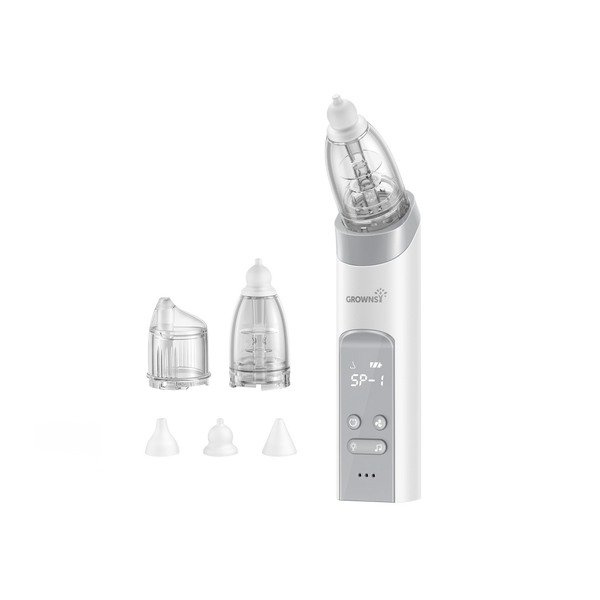
When your little one is stuffed up and struggling to breathe, all you want as a parent is to help them get fast relief. But if you’ve ever found yourself scrolling through endless nasal aspirators online, you’ve probably noticed every brand boasting about having the "strongest suction." It’s super tempting to think that more power equals a clearer nose, right? 👶
Well, it turns out that’s actually one of the biggest misconceptions in baby care—strongest suction ≠ best option! 💡
To help set the record straight, we teamed up with Mary Catherine, a certified Pediatric Nurse Practitioner. She’s breaking down why bigger suction isn’t always better—and how matching the right suction to the right type of mucus is the real secret to keeping your baby comfortable and clear-headed. Let’s dive into her expert tips below! 👇
🎬 Prefer video? Click here to watch the full expert guide without leaving this page!
1. Mucus Viscosity Varies: Match Suction Power to Consistency
Nasal secretions change drastically depending on the stage of an illness or the age of the child. Consequently, a single, fixed suction level is rarely effective for every situation.
- Thin, Watery Mucus: Commonly seen in newborns or during the early stages of a viral cold, thin mucus moves with minimal resistance. For instance, a low-level suction setting is usually more than sufficient to clear these delicate nasal passages comfortably. Applying excessive force on thin mucus yields no added benefit and can easily irritate sensitive nasal tissues.
- Thick, Stubborn Mucus: Conversely, thick and sticky congestion—typically present in later cold stages or when mucus has accumulated over time—requires greater kinetic force. Using insufficient suction on heavy buildup will prove entirely ineffective.
Furthermore, implementing a nasal saline spray or mist prior to suctioning is an indispensable first step. Saline aids in breaking down stubborn proteins within the mucus, making it significantly easier to clear regardless of its initial thickness. 💧
2. Prioritize Versatility: Choose a Device with Adjustable Power Levels
Because a child’s congestion evolves, investing in a nasal aspirator with multiple adjustable power settings is paramount. Don’t always go for the strongest suction!! Instead, parents should adopt a progressive approach:
- Start Low: Begin at the lowest intensity when dealing with mild sniffles or newborn congestion.
- Increase Moderately: Step up to mid-level suction as mucus becomes denser and higher in volume.
- Reserve Maximum Power: Utilize the highest suction level exclusively for heavy, deeply rooted congestion.
Moreover, starting with the mildest setting required for the job protects your baby’s delicate nasal mucosa while ensuring optimal comfort.
3. Look for On-the-Fly Boost Capabilities for Real-Time Relief
A critical feature that many parents overlook when selecting an aspirator is mid-session adjustability. During a single suctioning session, it is common to encounter sudden, unexpected patches of dense mucus that require an immediate increase in power.
Having a device capable of instantly boosting suction power in the moment—without requiring you to stop, release the tip, or dial through complex settings—provides a major practical advantage. Consequently, an aspirator that seamlessly adapts to changing viscosity in real time eliminates guesswork, streamlines the cleaning process, and ensures a far more comfortable experience for your child. ✨
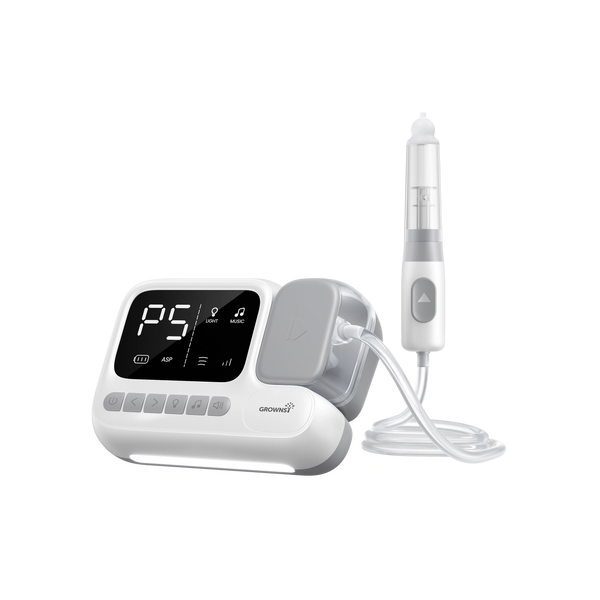
Final Thoughts for Parents
When evaluating a home nasal aspirator, prioritize versatility, safety, and adaptive power over brute strength. A high-quality device equipped with variable settings, an instant boost feature, and paired with saline spray will handle everything from mild newborn sniffles to stubborn toddler congestion with ease.