


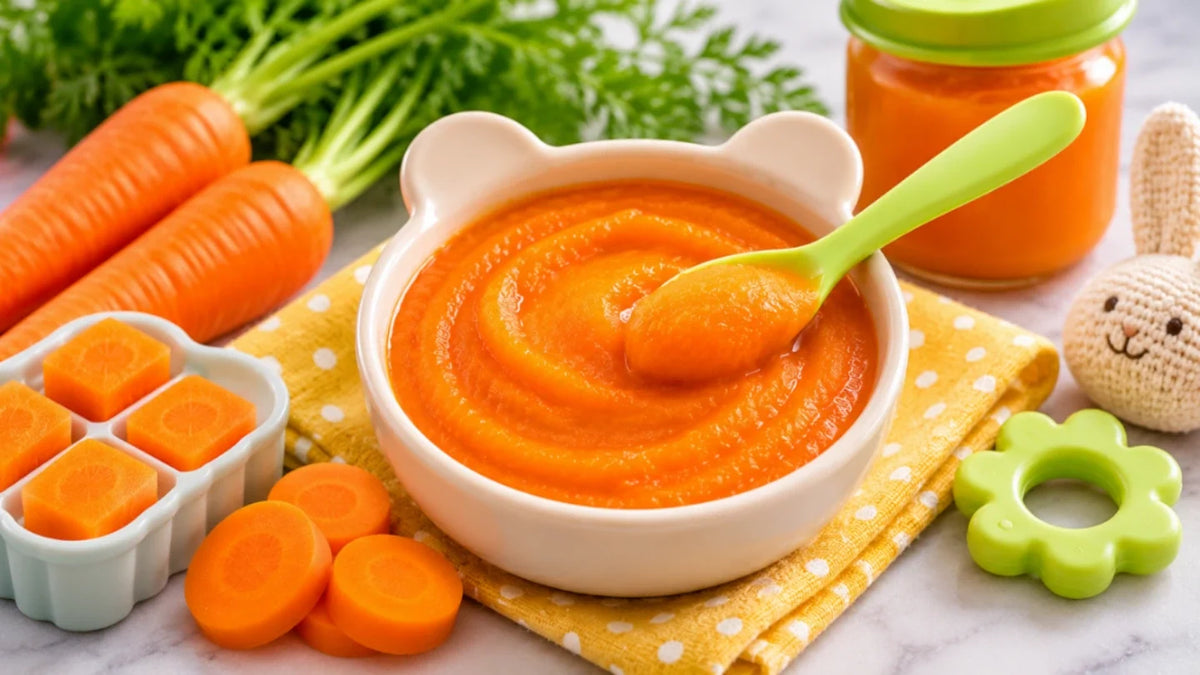
A carrot may look like a simple first food, but preparing it for a baby involves a few important decisions. Should you steam or boil it? How soft does it need to be? And when can you move from a smooth puree to pieces your baby can pick up?
Making homemade carrot baby food is straightforward once you know how to prepare it for your baby's eating stage. You can start with a smooth puree, explore combinations such as carrot and pear, and eventually offer soft-cooked pieces as your baby becomes more comfortable with solids. This guide explains how to prepare carrots using different cooking methods, serve them safely, and store extra portions for later meals.
When Can Babies Eat Carrots?
Most babies can start eating carrots at around 6 months, when they are ready for solid foods. Carrots do not need to be introduced in a particular order, so you can offer them alongside other suitable first foods.
Look for signs that your baby is ready to eat solids, including:
- Sitting up alone or with support and keeping their head and neck steady.
- Trying to grasp small objects, such as toys or food.
- Opening their mouth when food is offered.
- Bringing objects toward their mouth.
- Swallowing food instead of consistently pushing it back out with their tongue.
These signs matter more than a specific age alone. If your baby is not showing signs of readiness, give them more time rather than rushing to introduce solids.
What About Carrot Puree for 5 Months?
You may come across recipes for carrot puree for 5 months, but most babies are ready to start solids at around 6 months. Starting earlier is not routinely recommended. If you are considering introducing solids before 6 months, speak with your pediatrician first.
Why Include Carrots in Your Baby's Diet?
Carrots provide beta-carotene, which the body converts into vitamin A. Vitamin A supports normal vision, immune function, and growth. Carrots also contain fiber and have a naturally mild sweetness that many babies may enjoy.
As your baby begins eating solid foods, breast milk or infant formula should continue to provide most of their nutrition from 6 to 12 months. Carrot puree and other first foods gradually complement these regular milk feeds rather than replace them.
Their soft texture after cooking makes them suitable for different preparation methods. You can blend them into a smooth puree for a beginner eater, mash them as your baby becomes comfortable with thicker textures, or offer appropriately prepared soft pieces when your baby is ready for finger foods.
However, carrots should be one part of a varied diet. They are not a significant source of iron, so include iron-rich foods such as meat, beans, lentils, and iron-fortified infant cereals as your baby begins eating solids.
How to Make Carrot Baby Food
Homemade carrot puree requires only a few basic ingredients. Steaming is a convenient way to soften the carrots before blending, but boiling and roasting are also options.
Simple Carrot Puree Recipe
Prep time: 5–10 minutes
Cooking time: Approximately 10–15 minutes
Ingredients:
- 1 lb (about 450 g) fresh carrots
- Water, breast milk, or prepared infant formula, as needed for blending
- A small pinch of nutmeg, optional
Equipment:
- Vegetable peeler and knife
- Steamer basket or saucepan
- Blender or food processor
- Measuring cup and spoon
- Clean bowl and storage containers

Step 1: Wash, Peel, and Cut the Carrots
Wash the carrots thoroughly under running water and remove the outer skin with a vegetable peeler. Trim off both ends, then cut the carrots into evenly sized pieces, roughly half an inch thick.
Try to keep the pieces similar in size. This helps them cook at a similar rate, so you are less likely to end up with some pieces still firm while others become overly soft.

Step 2: Steam Until Tender
Add water to a saucepan and place a steamer basket above it. Bring the water to a gentle boil, add the carrot pieces, and cover the pan.
Steam for approximately 10–12 minutes, checking the carrots as they cook. The exact time depends on the thickness and size of the pieces, so use their texture rather than the clock alone to decide when they are ready.
The fork test: Insert a fork into one of the larger pieces. It should slide in easily, and the carrot should mash without much pressure. If the center still feels firm, continue steaming and check again after a few minutes.

Step 3: Transfer the Carrots to a Blender
Once the carrots are tender, allow excess steam to escape briefly. Transfer the cooked pieces to a blender or food processor, ready for blending.
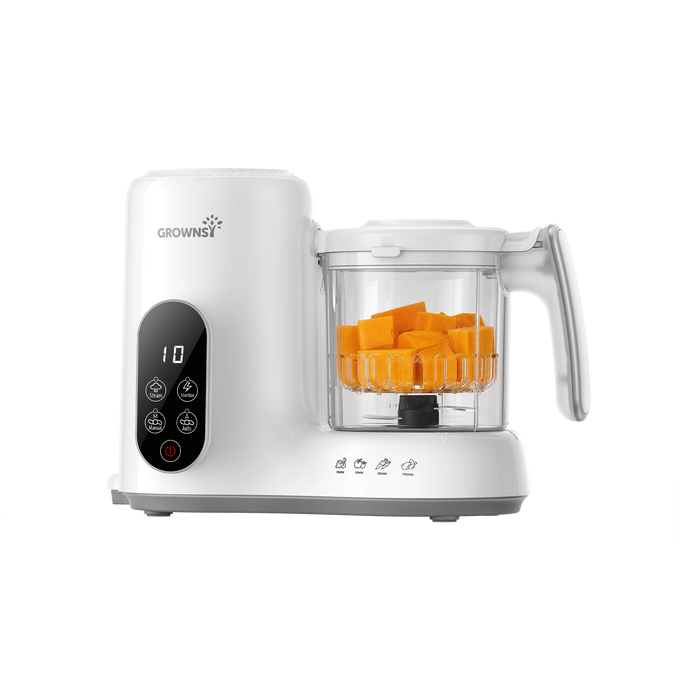
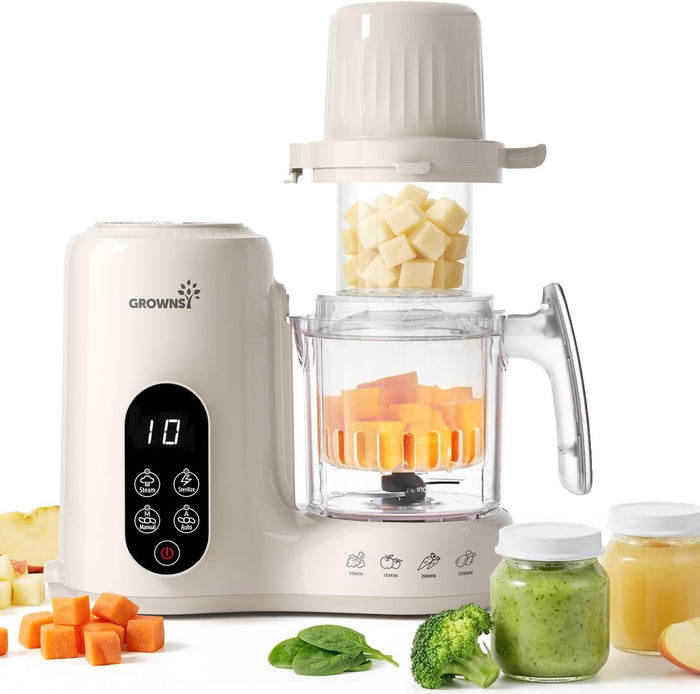
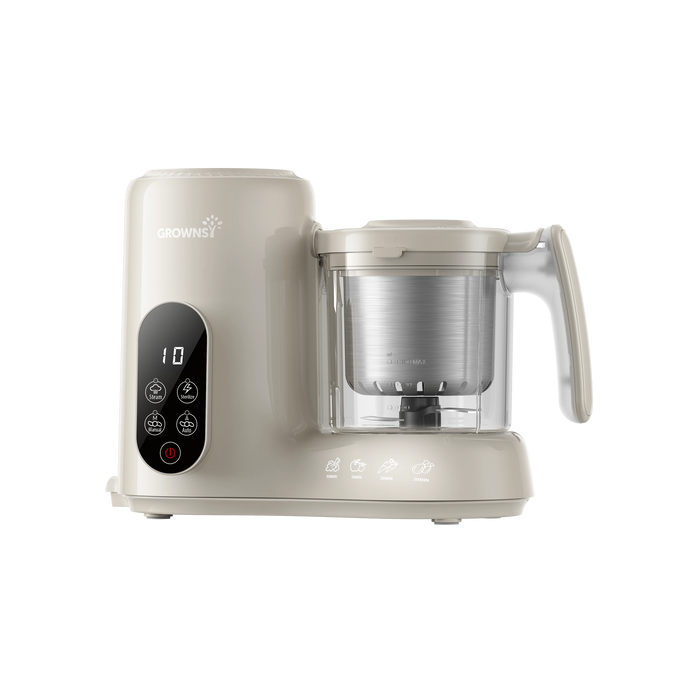
If you regularly prepare homemade baby food, the Grownsy NutriChef Steam & Blend Baby Food Processor can make the process more convenient by combining the steaming and blending steps in one appliance. It offers you to prepare and blend carrots using a single machine. If you already have a regular steamer and blender, those work just as well.

Step 4: Blend Until Smooth
Blend the cooked carrots for about 1–2 minutes, stopping to scrape down the sides if necessary. Add a little water to help the blades move, then continue blending until the puree is smooth and free of firm pieces.
If the puree is too thick, gradually add a little water, breast milk, or infant formula prepared according to its package directions. Blend briefly after each addition until you reach the consistency suitable for your baby.
If the puree feels grainy, the carrots may need more cooking or additional blending. Check that they are completely tender, then blend again until the texture is even.
Step 5: Cool and Serve
Transfer the puree to a clean bowl and allow it to cool to a safe serving temperature. Stir it before serving and check the temperature yourself. Offer a small amount on a soft baby spoon, following your baby's hunger and fullness cues.
You do not need to encourage your baby to finish a particular portion. Early solid meals are also an opportunity to explore new tastes, textures, and ways of eating.
If you have made extra puree, portion it into clean containers for refrigeration or freezing rather than leaving the entire batch at room temperature.

More Ways to Cook Carrots for Baby
Steaming is a convenient option, but it is not the only way to prepare carrots. The best method is one that cooks them thoroughly and leaves them soft enough for your baby's eating stage.
How Long to Boil Carrots for Baby
To boil carrots, peel and cut them into evenly sized pieces, then place them in a saucepan and cover with water. Bring the water to a boil and cook for approximately 12–15 minutes, or until the carrots are very tender.
Check a larger piece with a fork before draining. You can reserve a little of the cooking water to adjust the puree's consistency when blending. Avoid adding salt or seasoning blends containing added salt.
Can You Roast Carrots for a Baby?
Yes. Roasting gives carrots a deeper, naturally sweet flavor. Cut peeled carrots into evenly sized pieces, arrange them on a baking tray, and roast at 425°F (220°C) for approximately 20–25 minutes, or until completely tender. Cooking time will vary depending on the size of the pieces.
If you use oil, add only a small amount. Let the carrots cool slightly, then blend them with water or another suitable liquid until they reach the texture your baby can manage. Check carefully for any firm or dry pieces before serving.
How to Serve Carrots to Your Baby
The right way to serve carrots depends on your baby's eating skills, not just their age. Start with a texture they can manage and gradually offer more variety as they become comfortable with solids.
Smooth Carrot Puree for Beginners
For a baby who is just starting solids, offer a smooth puree with no firm lumps. Begin with a small spoonful and allow your baby to explore the taste at their own pace.
You can serve carrot puree on its own when introducing carrots for the first time. Once your baby has tried the ingredients separately and tolerates them, you can combine carrots with other suitable foods.
How to Serve Carrots to a 6-Month-Old
If your baby is around 6 months old and ready for finger foods, you can offer a large, appropriately sized piece of cooked carrot. A long piece may be easier for a young baby to grasp than small, slippery chunks.
Before serving, press the carrot between your fingers to make sure it squashes easily. Keep your baby seated upright in a high chair, stay within reach, and supervise them throughout the meal.
Baby-Led Weaning Carrots
If your baby is around 6 months old and showing signs of readiness for solid foods, you can offer carrots as a soft finger food. Peel the carrot, cut it into long, wide strips that your baby can easily grasp, and steam or boil them until they are very soft.
Before serving, check that a piece can be easily squashed between your thumb and forefinger. It should not feel firm or crunchy.
Avoid serving raw carrot sticks, hard carrot pieces, whole baby carrots, or firm round slices, as these can pose a choking risk. A carrot's shape alone does not make it safe; it must also be cooked until soft enough for your baby to manage.
Always seat your baby upright in a secure high chair while eating, and stay close enough to supervise throughout the meal. Never leave your baby alone with food.
Other Ways to Serve Carrots to Your Baby
Once your baby has tried carrots and other ingredients separately, you can combine them to introduce different flavors and textures. Here are a few simple combinations to try:
- Carrot and Pear Puree: Steam one peeled, chopped carrot until tender. Add one washed, peeled, cored, and chopped ripe pear, then steam until soft. Blend both ingredients until smooth, adding a little water if needed. Allow the puree to cool before serving.
- Carrot and sweet potato: Blend cooked carrot with soft sweet potato for a thicker, naturally sweet puree.
- Carrot and peas: Combine cooked carrots with well-cooked peas, then blend until smooth. Strain if needed to remove any remaining skins.
- Carrot and apple: Steam peeled apple pieces until soft and blend them with cooked carrots.
- Carrot with mild herbs: For older babies who are comfortable with solids, try a small amount of finely chopped, mild herbs such as parsley.
Introduce new ingredients thoughtfully, especially common allergens. There is no need to delay allergenic foods once your baby is ready for solids, but introduce them in an age-appropriate form and follow your pediatrician's advice if your baby has severe eczema, an existing food allergy, or another allergy-related concern.
How to Store and Reheat Homemade Carrot Puree
Making a larger batch can save time, but homemade baby food needs careful handling to stay safe.
- In the refrigerator: Transfer the puree into clean, covered containers and refrigerate promptly. For homemade vegetable puree, use it within 2–3 days.
- In the freezer: Freeze the puree in small, individual portions using freezer-safe containers or an appropriate food-freezing tray. Label each portion with the preparation date. Plain homemade vegetable puree can generally be frozen for 6–8 months.
- When reheating: Thaw frozen portions in the refrigerator or use a safe defrosting method. Reheat only the portion you plan to serve, then stir thoroughly and check that it has cooled to a safe temperature. Do not reheat the same portion repeatedly.
- Avoid saving leftovers from your baby's bowl: Once a spoon has touched your baby's mouth and returned to the food, bacteria can enter the remaining puree. Discard any food left in the bowl after the meal.
FAQs
A Simple First Food Worth Keeping in Rotation
Carrots are easy to prepare, naturally sweet, and flexible enough to serve as a smooth puree or a soft finger food. Once you know how to cook them until tender and adjust the texture to your baby's eating skills, you can use the same basic preparation for several different meals.
Start with plain carrot puree, introduce other ingredients separately, and try combinations such as carrot and pear when your baby is ready. Keep offering a variety of foods and let your baby's appetite and developing eating skills guide their early feeding experiences.
Related Articles



Editor's Recommendation
References
- CDC: When, What, and How to Introduce Solid Foods — readiness signs, puree preparation, and cooking hard vegetables such as carrots.
- CDC: Choking Hazards — raw carrots and other potential choking hazards.
- CDC: Tastes and Textures — progressing from smooth purees to mashed and more textured foods.
- FoodSafety.gov: Children Under Five — official storage guidance for homemade baby food.
- CDC: How Much and How Often to Feed — portions and the continued importance of breast milk or formula.


