


Table of Contents
10 Month Old Sleep Schedule: The Complete Parent's Guide
Reading this at 2 a.m.? We actually feel for you. Ten-month sleep has a way of falling apart on you out of nowhere, even after a stretch of decent nights had you convinced you finally figured it out. But there's nearly always a reason, and there's a 10 month old sleep schedule that actually lines up with how babies are wired at this stage.
So, the why, the what, and the now-what-do-I-do.

Why Sleep Suddenly Changes at 10 Months
Ten months is just a lot, all at once. Brain stuff, body stuff, big feelings, happening together, and sleep takes the hit first. If the past few weeks have been worse than the ones before, you're not making it up.
Developmental Milestones
Crawling. Pulling up. Cruising along the couch. Babbling, waving, maybe a word here and there. Most ten-month-olds have something cooking. Researchers describe the 8-to-10-month period as a developmental burst where new skills mess with sleep for a bit. Some babies will literally try to practice standing in their crib at 3 a.m. like nothing else exists. It usually settles within a couple weeks, once the novelty wears off.
Separation Anxiety
This is probably the biggest one. Per the American Academy of Pediatrics, separation anxiety usually starts peaking between 10 and 18 months, which lines up with babies finally clicking onto object permanence. They get that you exist when you leave the room, which sounds great until you realize, from the baby's side, that's kind of terrifying. A baby who used to settle fine now loses it the moment you step out.
Paediatricians at Stanford Children's Health call this a sign of healthy attachment. Doesn't help much at 2 a.m. but worth knowing.

Teething
Most parents pin every rough night on teething. Reasonable guess, first molars or upper incisors do tend to come in between 6 and 12 months, per AAP guidance. But here's the weird part. A 2025 study in the Journal of Pediatrics tracked 849 babies using actual video sleep tracking instead of parent surveys, and they didn't find meaningful sleep differences between teething and non-teething nights. Parents reported plenty of disruption. The cameras didn't really agree. Doesn't mean teething never bugs a baby, just that if wakings are dragging on for weeks, the real cause is probably somewhere else.
How Long Does a 10 Month Old Actually Need Sleep?
The standard number comes from the American Academy of Sleep Medicine consensus statement, which the AAP also backs: 12 to 16 hours per 24 for babies 4 to 12 months, naps in. For most ten-month-olds that ends up around 13 to 15 hours all in. About 10 to 12 overnight, 2 to 3 during the day.
Babies who go long at night tend to nap less, and reverse holds too. No perfect number to chase. Some babies sit slightly outside the typical range and are completely fine.
The 10 Month Old Sleep Schedule That Works
Now the part that actually helps. A workable sleep routine for 10 month old babies comes down to three things, wake windows that match their capacity, two naps protected, and roughly consistent timing. Most of the chaos sorts itself out when those are dialed in.
Wake Windows: The Real Foundation of a Good Schedule
A wake window is just how long your baby's awake between sleeps. At this age most pediatric sources land somewhere in the 2.5 to 3.75 hour range, shortest in the morning, longest before bed. Too short and they're not tired enough to settle. Too long and they hit overtired, which, infuriatingly, makes falling asleep harder, not easier. Most of us learn that one the hard way.
The 2-Nap Setup: What Normal Looks Like
By ten months most babies are on two naps. The 10 month old sleep schedule usually looks like one mid-morning nap, one early afternoon, each running 60 to 90 minutes-ish. Some babies do one short and one long. A handful start hinting they want to drop to one nap around now, but the average baby doesn't actually make that transition until 15 to 18 months. Resist the temptation. Going to one nap too early backfires more often than it works.
Sample 10 Month Old Daily Schedule
For a baby waking around 7 a.m. Slide everything earlier or later if yours wakes at a different time:
- 7:00 a.m. — Wake, milk
- 7:30 a.m. — Breakfast (solids)
- 9:30 a.m. — Nap 1 (60–90 mins)
- 11:00 a.m. — Milk, play
- 12:00 p.m. — Lunch
- 1:30 p.m. — Nap 2 (60–90 mins)
- 3:00 p.m. — Milk, play
- 5:30 p.m. — Dinner
- 6:15 p.m. — Bath, wind-down
- 6:45 p.m. — Last milk
- 7:00 p.m. — Bed
Building a Bedtime Routine Your Baby Can Count On
Predictability does a surprising amount of work here. Research from Dr. Jodi Mindell, one of the most cited names in pediatric sleep, found that a consistent bedtime routine cuts how long babies take to fall asleep, reduces night wakings, and even helps with maternal mood, usually within a few nights of starting it.
What a Good Wind-Down Actually Looks Like
It doesn't need to be elaborate. Twenty, maybe thirty minutes of calm activities in the same order each night gets you there. A version that works for plenty of families: bath, pajamas, quick feed, a book or two, lights low, into the crib. Skip screens. Keep the energy soft. The order's the magic part, that's what tells your baby's brain, alright, sleep's coming next.
Setting Up a Sleep Environment
The room itself does more work than parents usually credit it for. Few things worth getting right regarding 10 month old sleep schedule:
- Temperature. Most pediatric sources, including the Sleep Foundation citing AAP guidance, aim for roughly 68–72°F (20–22°C). Overheating's a real safety issue, so err cool and dress your baby in one light layer more than you'd wear.
- Darkness. Light kills melatonin. Blackout curtains pay for themselves twice — once for naps, once for the brutal 5 a.m. wake-ups.
- Sound. A steady white noise machine helps mask whatever's happening in the rest of the house.
- Safety. Per AAP safe sleep guidelines, the crib stays bare for the first year. No blankets, no bumpers, no stuffed animals. Looks sparse. Keep it that way.
How to Handle the Hardest Parts of the Night
Even with a workable schedule, nights still go sideways. Here's what's usually behind the most common stuff.
My Baby Keeps Waking Up — What's Going On?
Frequent wakings at ten months usually come down to one of a few culprits. Wake windows off (usually too long, sometimes too short). Separation anxiety. Hunger from not getting enough calories during the day.
Or a sleep association, meaning, however your baby fell asleep at bedtime (being rocked, fed to sleep, held), they need those same conditions to drop back off when they surface between sleep cycles. Which they do, multiple times a night. Normal. Looking at the day's wake windows and how your baby actually falls asleep at bedtime usually narrows it down fast.
Dealing With Early Morning Wake-Ups
A baby up and ready to start the day at 4:45 a.m. is genuinely one of the worst things parenting throws at you. No softening that. Pediatric sleep specialists point to a few usual suspects, too much daytime sleep, light slipping in through curtains, a bedtime that's actually too early and tipping into overtired (counterintuitive but it happens), or just a baby whose internal clock runs early. Blackout curtains, keeping total daytime sleep around 3 hours, and not "starting the day" until 6 a.m. at the earliest, that combo helps a lot of the time for parents dealing with 10 month old sleep schedule.
When Night Feeds Are Still Happening
Plenty of babies can make it through the night without feeding by ten months. Plenty can't, especially breastfed ones. Yale pediatric sleep specialist Dr. Craig Canapari recommends checking in with your pediatrician before working to drop a night feed, just to confirm growth and daytime intake are where they should be. If you're still doing one or two, keep the lights low, keep things quiet, and keep it brief. Top-up, not wake-up.
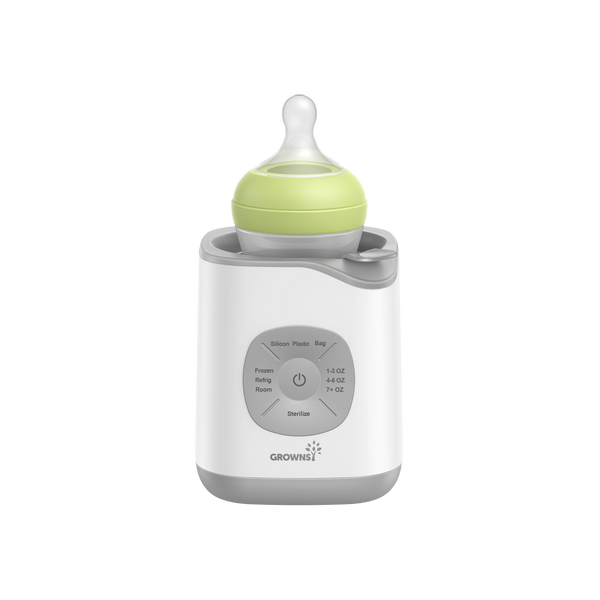
Anything that speeds the whole thing up genuinely earns its place, the Grownsy 10-in-1 Fast Baby Bottle Warmer gets milk warm in under three minutes and has a built-in soft night light, which means no flicking on overheads and no standing around at 3 a.m. while a hungry baby completely loses it. At that hour, fast and quiet matter way more than they should.
Editor's Recommendation
Grownsy 10-in-1 Fast Baby Bottle Warmer
For night feeds, a fast and quiet bottle warmer can help parents keep the room calm and avoid turning a brief feeding into a fully awake moment.
Is It Time to Sleep Train?
This is one of the most personal calls in early parenting. No actual right answer. Just what fits your family.
What Sleep Training at 10 Months Looks Like
By ten months most babies can developmentally handle learning to fall asleep more independently. Sleep training, broadly, just means helping your baby learn to settle without needing some specific outside cue, rocking, feeding to sleep, being held. People treat sleep training and "cry it out for hours alone" as the same thing. They're not.
Which Method Fits Your Family?
A few common approaches, all backed by research to deal with 10 month old sleep schedule:
- Graduated extinction (Ferber method). Parents check in at gradually longer intervals. The Sleep Foundation calls it the most-studied method and notes it usually works in about a week. Hard on parents emotionally, no way around it.
- Bedtime fading. Push bedtime later until your baby falls asleep fast, then slowly walk it back to where you want it. A 2016 trial led by Michael Gradisar found it worked nearly as well as Ferber with much less crying.
- Gentler/no-cry methods. Chair method, pick-up/put-down, that kind of thing. Parent stays present, slowly cuts back the help. Takes longer overall. Easier on most parents.
No best method, honestly. The right one is whichever one you and your partner can actually stay consistent with for a couple weeks straight. Inconsistency derails sleep training way more often than the method ever does.
When to Check In With Your Doctor
Most sleep stuff at ten months is just normal developmental static. That said, talk to your pediatrician if your baby is snoring loudly or seems to pause breathing during sleep, seems unusually tired or cranky during the day despite logging enough hours, isn't gaining weight as expected, or if rough nights have been going on for weeks with no clear pattern. Quick check can rule out reflux, sleep apnea, or a hidden ear infection that's masquerading as "bad sleeper."
FAQs
What time should a 10 month old go to bed?
Usually somewhere between 6:30 and 7:30 p.m. Depends on morning wake time and how the day's naps actually went. If nap two was short or skipped, pulling bedtime earlier, even to 6, usually works better than holding the line.
When do babies sleep 7 p.m. to 7 a.m.?
Some get there by ten months. Lots don't really nail a solid twelve-hour stretch until twelve or thirteen months. A short wake-up still happening at this age is normal. Sleeping all the way through is also normal. Both fall within the range.
Should I wake my baby from a long nap?
Yeah, if it's running long enough to push bedtime back or cut into the next nap. Most pediatric sources suggest keeping total daytime sleep around 3 hours so the overnight stretch stays protected.
Conclusion
A 10 month old sleep schedule that works isn't about hitting clock times perfectly. It's about giving your baby a rhythm that matches how they're wired right now, wake windows roughly right, two naps protected, a steady wind-down, and not unraveling on the nights things still go sideways. Some weeks are easier than others. That's the job at this age. You're not behind. You're not doing it wrong. And the fact that you're sitting here reading any of this means you're paying attention to exactly the kind of stuff that matters.
This article is for informational purposes only and is not a substitute for professional medical advice; please consult your pediatrician for guidance specific to your baby.


