


6-Month-Old Sleep Schedule: Top Tips for New Parents
If you are reading this at 3 a.m. with your baby wide awake in your arms, take a breath. In fact, 6 months is one of the most important transitions in baby's sleep. Your baby's brain is developing quickly, and their sleep/wake cycle is beginning to settle, so consistent sleep patterns are possible and will make a difference now.
This guide explains what to expect, what a reasonable 6 month old routine looks like, and how to establish habits that actually last.
How Much Sleep Does a 6-Month-Old Need?
Infants 4-11 months require 12-16 hours of sleep over a 24-hour period. According to Sleep Foundation, at 6 months, babies sleep an average of 14 hours, with 2 to 3 naps during the day.
The number is not as important as the behavior of the baby when awake. A well-rested six-month-old is alert, engaged and reasonably content. Chronic overtiredness manifests as fussiness, poor sleep onset and counterintuitively, poor sleep quality during the night.
How Much Nighttime Sleep Should Your Baby Get?
Most babies sleep at night for 9 hours or more by 6 months, with short awakenings. Some wake up once or twice to feed and that's good normal behaviour. They don't have to be an uninterrupted eight hours; they're more about consistency that slowly leads you there. (KidsHealth)

Sample 6-Month-Old Sleep Schedule
Here's a general framework to build your 6 month old routine around. These are starting points based on typical wake windows at this age, not a rigid prescription.
| Time | Activity |
|---|---|
| 7:00 AM | Wake up, first feed |
| 8:45–9:00 AM | Nap 1 (45–90 min) |
| 10:30 AM | Wake, feed, active playtime |
| 12:30 PM | Nap 2 (1–1.5 hours) |
| 2:30 PM | Wake, feed, playtime |
| 4:30 PM | Nap 3 if needed (30–45 min catnap) |
| 5:30–5:45 PM | Wake from nap 3 at the latest |
| 6:30–7:00 PM | Begin bedtime routine |
| 7:00–7:30 PM | Bedtime |
| Night | 1–2 brief feeds as needed |
Sample Schedule: 3-Nap Day
Most babies are still on 3 naps at exactly six months. Third is a short late afternoon bridge nap that keeps them from being overtired before bed. Main rule: cat’s nap must be completed by 5:45PM or bedtime will be delayed and quality of sleep will be worse.
Sample Schedule: 2-Nap Day (For Babies Nearing the Transition)
Around this time, some babies begin to resist that third nap. On a 2 nap schedule, wake windows are 2.5-3 hours. A typical day will have a wake at 7:00 AM, a nap at 9:30 AM, a nap at 1:30 PM and an earlier bedtime of around 6:30 PM, since the nap was taken at 1:30 PM.
The 3-to-2 Nap Transition: Is Your Baby Ready?
Most babies move from three naps to two between six and eight months.
Signs Your Little One Is Ready to Drop the Third Nap
Look for these signals consistently over 5 to 7 days before you make the change:
- Most days refusing the third nap or fighting it
- That third nap takes over 20 minutes to fall asleep
- Night sleep interrupted even if the first two naps went well
- Baby seems genuinely content, not overtired when third nap is skipped
Don't count one or two bad nap days. Consistent patterns matter.
How to Handle Nap Resistance
Before you completely drop a nap, check your wake windows. If they're too short, your baby just isn't tired enough yet. If the environment looks good and the windows of wake time feel right, a sudden resistance to naps could be a sign of an impending sleep regression, not readiness to transition.

The 6-Month Sleep Regression
Causes of the 6-Month Sleep Regression
After a baby begins to regularly sleeping through the night, parents are often caught off guard when night waking returns. This often happens at about 6 months old. As per Stanford Medicine Children's Health, the reason is developmental.
Babies this age are hitting major cognitive and motor milestones, separation anxiety is emerging, and sleep cycle architecture is maturing. The brain is simply busier, and settling down takes more effort.
Tips to Get Through It
Consistency is your biggest lever here. Regressions typically resolve within two to six weeks when parents hold the routine steady.
- Keep the bedtime routine identical every night
- Offer comfort at night without building new sleep associations you'll struggle to undo
- Protect the first two naps of the day as much as possible
- Be realistic: this phase is temporary, even when it doesn't feel like it
Why Is My Baby Waking at Night?
Not every night waking is hunger. Sleep habits, growth spurts, teething, and other factors such as room temperature and background noise all contribute. Give the baby a minute or two before offering them a feed.
Some babies wake for a few seconds between sleep cycles and will go back to sleep without intervention. If they have always needed a feeding or rocking to fall asleep, though, they will want that at 2 a.m.
How Many Night Feedings Are Still Normal at This Age?
As babies get older, they're able to take in larger amounts of calories during the day and require fewer feedings at night. Their sleep patterns are settling into a more adult schedule by 4-6 months.
Many 6-month-old babies still need to be fed at least one night, particularly breastfed babies. Remember that if your baby is eating well during the day and is gaining weight normally, then several night feeds could be more about routine than nutrition. Before making changes there, consult with your pediatrician.
Wake Windows for a 6-Month-Old
By six months, most babies can comfortably stay awake for 2-2.5 hours between sleep periods, extending to 2.5-3 hours before they go to sleep. This is more important than most parents think.
If it is too short, your baby will not be sleepy enough. If they're left too long, they end up "overtired," making sleep more difficult.
How to Read Your Baby's Sleepy Cues
Look for these signs before your baby becomes overtired:
- Rubbing eyes or ears
- Staring blankly or losing interest in toys
- Lack of activity and vocalizations
- A slight rise in fussiness or clinginess
- Yawning (usually a late sign at this age)
Is My Baby Waking from Hunger, Habit, or Teething?
Hunger wakes are usually fairly regular and your baby feeds properly before returning to sleep. Habit wakes happen at all hours, baby rouses easily, and doesn't always feed much.
Teething wakes typically occur with other symptoms, such as excessive drooling, chewing everything, and swollen gums that are clearly visible.
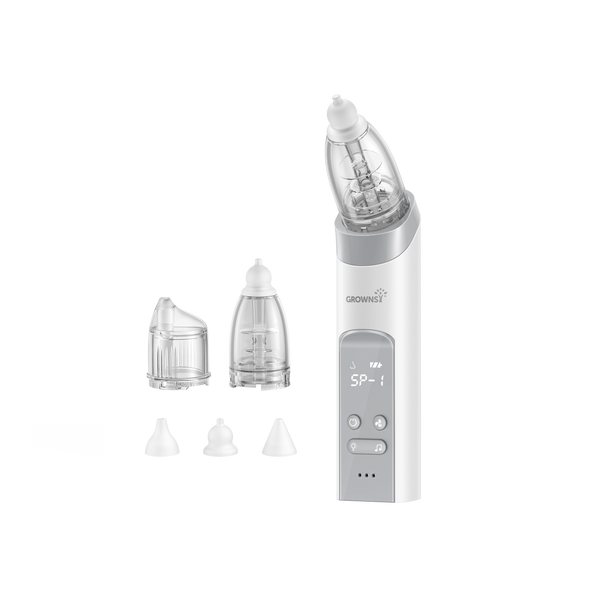
For teething or mild illnesses causing congestion in the nose, gently clearing your baby's nasal passages before bed by using a nasal aspirator such as the GROWNSY Nasal Aspirator can make all the difference in the way your baby sleeps and feels comfortable.
Why Is Your Baby Suddenly Waking Every 2 Hours?
Sudden regressions after a period of better sleep almost always trace back to a developmental leap, illness, a newly formed sleep association, or a schedule that needs adjusting.
If your baby normally slept for 4 hours and is now waking every 2 hours, first consider whether there is any illness to be blamed, and then check if there are any changes in their sleep environment or routine.

How to Build a Bedtime Routine for Your Infant
One of the most scientifically supported ways to improve baby sleep is to have a consistent 6 month old routine for bedtime.
Step-by-Step Bedtime Routine (20-30 Minutes)
The following sequence is a good one for this age:
- Take a bath (optional but helpful as a sleep cue): 5-10 minutes
- Gentle massage or lotion therapy: 3-5 minutes
- Pajamas and sleep sack
- Feed: offer this near the start of the routine, not as the final step, to avoid building a feed-to-sleep association
- Story or song: dim lights, calm voice, 5 minutes
- Into the crib drowsy but awake
That last point is the one most parents find hardest but most impactful. If your baby always falls asleep in your arms, the crib will feel unfamiliar when they naturally rouse at midnight.
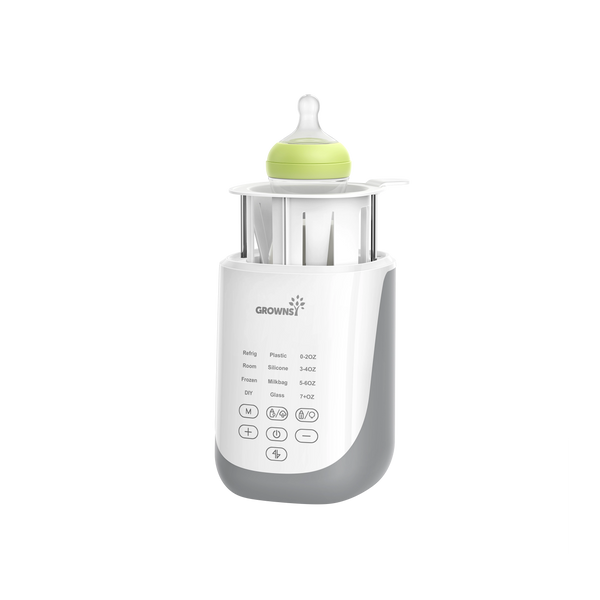
For nighttime feeds, having a GROWNSY Bottle Warmer within reach means you're not stumbling to the kitchen at 2 a.m.: bottles warm quickly and consistently, which helps keep the feeding calm and brief so your baby settles back to sleep faster.
How to Create the Ideal Sleep Environment
- Temperature: Ensure that your baby's sleep space is within the same room and near your bed for the first 6 months. According to the AAP, the ideal room temperature is 68 to 72°F.
- Darkness: Blackout curtains are an effective tool for resisting the urge to nap and waking up early.
- White noise: A consistent machine masks household sounds and helps babies sleep through partial arousals between cycles
-
Crib: Firm, flat mattress with a fitted sheet only
Safe Sleep Guidelines at 6 Months
The AAP advises that babies sleep in the parents' room, close to the parents' bed but on a separate surface specifically for infants, preferably for the first year of life at least until the first six months. Sharing a room without a bed reduces the risk of SIDS by up to 50 percent.
If your baby now rolls onto their stomach during sleep, you don't need to reposition them. Just always place them on their back to start.
Gentle Methods vs. Cry-It-Out: What Works at This Age
Six months is generally the earliest age pediatric sleep specialists consider sleep training. The AAP acknowledges that both graduated methods (like the Ferber approach) and unmodified extinction are safe for healthy, full-term infants when used consistently.
Gentler approaches like "check and console" take longer but feel more manageable for many families. What matters most is picking an approach you can follow through with, since inconsistency tends to make things harder, not easier. Always loop in your pediatrician before starting.
Relationship Between Sleep and Feeding
Does Starting Solids Affect Sleep?
Many parents expect solids to improve night sleep. The evidence doesn't back that up. Putting infant cereal or other solid foods in your baby's bottle will not make them sleep longer: it could increase your baby's risk of choking.
The AAP recommends introducing complementary foods around 6 months of age or when developmentally ready. Sleep improvements that happen to coincide with starting solids are more likely about developmental timing than the food itself.
How to Feed Your Little One After Waking?
Maintain low-key nighttime feeds: avoid bright lights, make minimal contact and feed for a short period, then back to the crib. The goal is a feed, not a full wake-up.
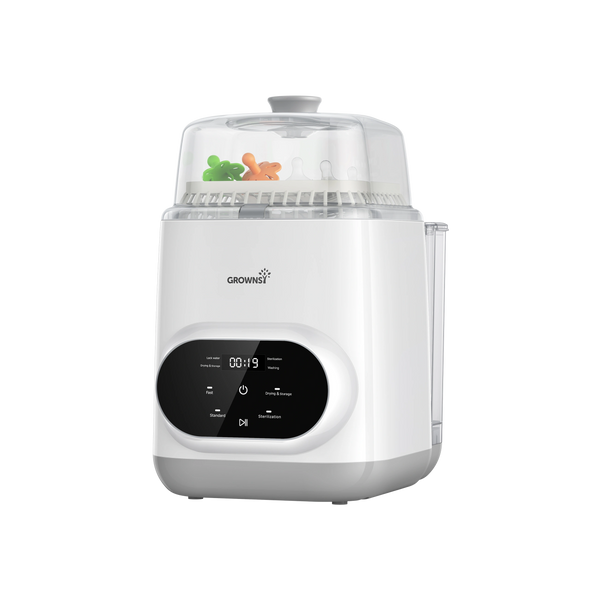
It's so much easier to keep things efficient if there are feeding supplies ready and organized, such as a pre-warmed bottle from a GROWNSY Bottle Warmer. When sleep is already disrupted, the GROWNSY Bottle Washer saves time at the sink between feeds when it comes to the daily cleaning routine.
FAQs About 6-Month-Old Sleep
My baby falls asleep easily but wakes every 2 hours. What's wrong?
This is almost always a sleep association issue. If your baby needs to be fed or rocked to fall asleep, at 6 months, when your baby wakes at night, they need to be against your chest to feel "right" about falling back to sleep. The fix isn't the schedule, it's what happens at the beginning of the night.
Should I wake my baby from a long nap to protect night sleep?
Generally, yes. Naps that run too long, especially late in the day, reduce the sleep pressure your baby needs to fall asleep at night. Let babies nap for as long as they want, unless they have trouble falling asleep at night. If nap two is regularly ending after 4:00 PM, try waking your baby to protect that 7:00 to 7:30 PM bedtime.
What wake window activities are good for a 6-month-old?
Tummy time, floor play with age-appropriate toys, sensory activities, reading aloud, and gentle baby-wearing are all great options. Avoid overstimulating screens or loud environments within the hour before naps or bedtime.
Is it okay to let my baby nap in a stroller or car seat?
Occasional on-the-go naps are fine. Babies should always be put on a firm, flat surface, and parents should avoid inclined sleepers, as the incline can position babies in a chin-to-chest position which can restrict their airways. If your baby falls asleep in a car seat outside the car, move them to a flat surface when it's safe to do so.
Building Healthy Sleep Habits That Last
The 6 month old routine you build now don't just affect the next few weeks. Babies who learn to fall asleep independently, who have consistent routines, and who sleep in a safe and predictable environment tend to carry those patterns forward into toddlerhood.
That doesn't mean you need to be perfect. Regressions will come back. Travel, illness, and developmental leaps will disrupt things temporarily. The difference between families who feel on top of sleep and those who feel like they're constantly reacting is usually just consistency over time, not any single method or product.
Conclusion
Your baby has the neurological readiness to thrive on a consistent 6 month old routine, the capacity for predictable naps and bedtimes, and the ability to begin learning to settle on their own.
None of it happens overnight, but small consistent changes made now build a real foundation. Keep showing up with the routine, stay patient with the hard nights, and know that things genuinely do improve.
Editor's Recommendation
Nasal Aspirator
Congestion is a common but overlooked cause of disrupted sleep. Use it before bed and during night wake-ups to help your baby breathe clearly and settle more comfortably.
Bottle Warmer
Keeps nighttime feeds quick and calm. Heats milk or formula evenly without fuss so you can get everyone back to sleep faster.
Bottle Washer
Easier daily bottle cleaning routine so you’re not spending more time at the sink between feeds during an already demanding stage.
Disclaimer
This article is for general informational purposes only and does not constitute medical advice. Every baby is different. Always talk to your pediatrician or another qualified health care provider if you have specific concerns about your baby's sleep, feeding or development.


