


Can Babies Die From a Stuffy Nose? What Parents Need to Know
A simple stuffy nose is rarely life-threatening, but breathing trouble in a baby is never something to ignore. Mild congestion is common with colds and often improves with saline, gentle suction, time, and close observation. The concern is not usually the mucus itself. It is whether the baby is working hard to breathe, cannot take enough milk, is becoming dehydrated, or has an illness such as bronchiolitis or pneumonia.
Very young babies have tiny nasal passages and rely heavily on breathing through their noses, especially while feeding. Even a small amount of swelling or mucus can therefore sound dramatic and make nursing or bottle-feeding harder. Knowing what ordinary congestion looks like—and which signs require urgent help—can make the situation much less frightening.
Can a Stuffy Nose Be Dangerous for a Baby?
In an otherwise healthy baby who is breathing comfortably, feeding reasonably well, and producing their usual number of wet diapers, mild nasal congestion is generally not an emergency. A routine stuffy nose does not mean that a baby will stop breathing or die.
Congestion can become more concerning when it interferes with breathing or feeding. Babies coordinate sucking, swallowing, and breathing during a feed. A blocked nose may make them pause more often, take less milk, or tire before finishing. If this continues, dehydration and poor intake can become the more immediate risks.
The youngest infants deserve the closest attention. Babies born prematurely and those with heart, lung, airway, immune, or neurologic conditions may have less reserve when they develop a respiratory illness. Parents of a medically vulnerable baby should follow the care plan provided by the baby's clinician and call early when symptoms change.

Why Congestion Affects Babies Differently
A baby's nasal passages are much narrower than an adult's. Swelling that would feel like a minor nuisance to an adult can create noisy breathing, snorting, or difficulty feeding in an infant. Babies also strongly prefer nasal breathing during the first months of life, although it is not accurate to say that they are completely unable to breathe through their mouths.
Noisy breathing alone does not show how sick a baby is. Look at the whole baby: their skin color, alertness, effort with each breath, feeding, and wet diapers. A baby who sounds congested but remains pink, responsive, and comfortable is very different from one whose chest pulls in with every breath or who is too tired to feed.
Emergency Warning Signs: When to Get Help Now
Call 911 or your local emergency number immediately if your baby:
- Has blue, gray, or very pale lips, tongue, face, or skin
- Stops breathing, has repeated pauses in breathing, or is gasping
- Has severe chest retractions, with skin pulling in deeply between or under the ribs or above the collarbones
- Is grunting with each breath, struggling for air, or breathing much faster than usual
- Is limp, unresponsive, unusually difficult to wake, or cannot stay awake to feed
Get immediate medical advice for any baby younger than 3 months with a rectal temperature of 100.4°F (38°C) or higher. Do not wait to see whether the fever improves. If you cannot promptly reach the baby's clinician, seek emergency care.
Call the pediatrician promptly or seek same-day care if your baby is feeding much less than usual, repeatedly vomiting, has a dry mouth, produces noticeably fewer wet diapers, has worsening symptoms, or simply looks sicker. A premature baby or a baby with an underlying medical condition may need to be evaluated sooner.
What to Do Right Away When Your Baby Is Congested
1. Check Breathing, Color, and Alertness
Watch your baby's chest and belly while they are calm. Look for smooth, easy movement rather than tugging between the ribs. Check that their lips and face have their normal color and that they respond normally to your voice or touch.
2. Use Plain Saline Drops
Place a small amount of plain, non-medicated saline in each nostril to loosen thick or dried mucus. Follow the product directions or the instructions from your pediatrician. Saline can be especially helpful about 10 to 15 minutes before a feed or nap.
3. Suction Gently Before Feeding
After the saline has had a moment to loosen the mucus, use a bulb syringe or nasal aspirator gently. Suctioning just before nursing or bottle-feeding may help the baby coordinate breathing and sucking more comfortably.
Only place the tip at the entrance of the nostril unless the device instructions specifically direct otherwise. More suction is not better. Frequent or forceful suction can irritate the delicate lining of the nose, cause swelling, or lead to a small amount of bleeding.
4. Offer Smaller, More Frequent Feeds
Hold your baby in a comfortable, slightly upright position while they are awake and feeding. Allow extra pauses and consider shorter, more frequent feeds if your baby tires easily. Stop the feed and seek medical help if breathing becomes labored, the baby cannot coordinate sucking and breathing, or their color changes.
5. Keep Sleep Flat, Firm, and Bare
Congestion does not change safe-sleep rules. Place your baby on their back for every sleep on a firm, flat, non-inclined surface in a safety-approved crib, bassinet, or play yard. Use only a fitted sheet. Keep pillows, blankets, wedges, positioners, toys, and other soft items out of the sleep space.
Do not elevate the mattress or let the baby routinely sleep in a swing, car seat, lounger, or other sitting device. An incline can bend a young baby's neck forward or allow them to slide into a position that restricts the airway.
Safe At-Home Relief for Infant Nasal Congestion
Saline Drops or Spray
Plain saline adds moisture and helps loosen mucus without a decongestant. Choose a product intended for infants and avoid medicated nasal drops or sprays unless the baby's clinician prescribed them.

Bulb Syringe vs. Electric Nasal Aspirator
| Feature | Bulb Syringe | Electric Nasal Aspirator |
|---|---|---|
| Suction | Created manually by squeezing and slowly releasing the bulb | Motorized suction that may offer more than one setting |
| Ease of use | Simple, portable, and does not require charging | May be easier to operate one-handed, depending on the design |
| Control | Depends on how the caregiver squeezes and releases the bulb | Use the lowest effective setting and follow the device manual |
| Cleaning | Must be washed, rinsed, and fully air-dried after use | Reusable tips and collection parts must be cleaned as directed |
| Best fit | Useful for occasional suction and travel | May be convenient for families who prefer steady, powered suction |
Either option can work when it is clean and used gently. The best choice is the one a caregiver can use correctly without pushing the tip too far into the nose or repeatedly suctioning irritated tissue.
Cool-Mist Humidifier
A cool-mist humidifier may make dry air more comfortable and help keep nasal mucus from drying out. Place it where the baby cannot reach the cord or device. Empty and change the water daily, and clean the unit according to the manufacturer's directions so it does not spread mold or bacteria.
Avoid warm-mist vaporizers around children. They can cause burns if tipped or touched, and the FDA recommends cool mist for children's cold symptoms.
Comfortable Feeding Positions
Keep the baby's head and neck supported in a natural position during feeds. A slightly more upright hold while the baby is awake may feel easier than feeding fully reclined. This advice applies to feeding and cuddling only—not to sleep.
What Not to Do for a Baby's Stuffy Nose
- Do not incline the crib or bassinet. Pillows, towels, wedges, and positioners can create suffocation or entrapment hazards.
- Do not put soft items in the sleep space. A congested baby still needs a bare crib, bassinet, or play yard.
- Do not use forceful or constant suction. It may worsen swelling and irritation.
- Do not put hot water or hot steam near the baby. Steam and hot-mist devices can cause serious burns.
- Do not use medicated nose drops without medical guidance. Plain saline is the usual non-drug option.
- Do not delay care when breathing or feeding is getting worse. Home measures are for mild congestion, not respiratory distress.
Infant Congestion and Medication Safety
The FDA says children younger than 2 years should not receive cough and cold products containing a decongestant or antihistamine because serious and potentially life-threatening side effects can occur. Manufacturers also voluntarily label many cough and cold products, "Do not use in children under 4 years of age." Never give an infant an adult cold medicine.
Do not combine medicines unless a clinician or pharmacist has checked the active ingredients. Multi-symptom products can contain the same ingredient under different brand names and increase the risk of an accidental overdose.
Fever medicine does not clear a stuffy nose. Ask the baby's pediatrician for a weight-based dose before giving acetaminophen to a young infant. Ibuprofen is generally not used in babies younger than 6 months unless a clinician specifically directs it. For a baby younger than 3 months with a temperature of 100.4°F (38°C) or higher, seek immediate medical advice rather than treating the fever and waiting at home.
When a Stuffy Nose May Be Part of a More Serious Illness
Common Cold
A cold often causes congestion, sneezing, and a mild cough. Many babies remain alert and continue to feed, although they may need more pauses. Call the pediatrician if symptoms are worsening, feeding drops significantly, or you are concerned about the baby's breathing.
RSV and Bronchiolitis
RSV can begin with cold-like symptoms and then cause wheezing, rapid breathing, chest retractions, poor feeding, or dehydration. Young infants, premature babies, and babies with certain heart or lung conditions have a higher risk of severe illness. Ask your clinician which current RSV prevention option applies to your baby.
Croup
Croup commonly causes a barky, seal-like cough and a harsh, high-pitched sound when breathing in. A noisy breath only when crying is different from noisy breathing while calm. Seek urgent care for stridor at rest, retractions, drooling or trouble swallowing, blue or gray coloring, or increasing exhaustion.
Pneumonia
Pneumonia may cause fever, fast or labored breathing, grunting, retractions, poor feeding, or unusual sleepiness. A clinician needs to evaluate these symptoms; they cannot be diagnosed safely from congestion sounds alone.

How to Monitor a Congested Baby at Home
Keep a simple written record so you can give the pediatrician clear information:
- When the congestion, cough, fever, or other symptoms started
- Temperature readings, the time taken, and the method used
- How much and how often the baby is feeding compared with usual
- The number of wet diapers and when the last wet diaper occurred
- Whether breathing looks faster or harder when the baby is calm
- Any wheezing, grunting, pauses, retractions, or changes in color
- What home measures you tried and whether they helped
If your clinician asks you to count breaths, wait until the baby is calm and count every rise of the chest or belly for a full minute. Do not rely on one number alone—breathing effort, color, alertness, feeding, age, and medical history also matter.
How to Lower Your Baby's Risk of Respiratory Illness
- Wash hands before touching or feeding the baby.
- Ask visitors to stay away when they are ill.
- Keep the baby's environment free from cigarette smoke, vaping aerosol, dust, and strong fragrances.
- Clean frequently touched surfaces and follow safe cleaning directions for feeding and suction equipment.
- Keep the baby's routine immunizations current and ask the pediatrician about seasonal flu, COVID-19, pertussis, and RSV prevention for the household and baby.
Safe Sleep Rules When Your Baby Has a Stuffy Nose
- Back for every sleep: Place the baby on their back for naps and nighttime sleep.
- Firm, flat surface: Use a safety-approved crib, bassinet, or play yard with a snug mattress and fitted sheet.
- Bare sleep space: Keep blankets, pillows, wedges, positioners, bumpers, and toys out.
- Separate sleep surface: Room sharing can make monitoring and feeding easier, but the baby should sleep in their own sleep space.
- No routine sleep in sitting devices: Move a sleeping baby from a car seat, swing, carrier, or stroller to a safe sleep surface as soon as practical when not traveling.
These rules remain the same during a cold. Products that promise to elevate a baby or "improve breathing" do not replace a flat, firm, empty sleep space.
Frequently Asked Questions
Can a baby suffocate from a blocked nose?
A mildly blocked nose usually causes discomfort and feeding difficulty rather than suffocation. The urgent concern is any sign that the baby is not moving enough air: blue or gray color, gasping, pauses in breathing, severe retractions, grunting, or extreme sleepiness. Call emergency services for those signs.
Can congestion cause SIDS?
A routine stuffy nose is not considered a cause of sudden infant death syndrome. Do not try to make sleep "safer" by using a wedge, pillow, positioner, or inclined mattress; those additions can create their own hazards. Follow the American Academy of Pediatrics safe-sleep recommendations for every sleep.
How often should I suction my baby's nose?
There is no universal schedule. Use the least amount needed to help with feeding or comfort, and follow the device instructions and your pediatrician's advice. Stop and call the clinician if the nose bleeds repeatedly, looks swollen, or suction seems to make breathing worse.
Should I wake a congested baby to suction their nose?
If the baby is sleeping comfortably on a safe surface, has normal color, and is breathing without effort, routine suction can usually wait until before the next feed or after waking. Wake the baby and seek help if breathing looks labored, their color changes, or they are unusually difficult to rouse.
When should I call the pediatrician for a stuffy nose?
Call promptly if the baby is younger than 3 months, was born prematurely, has an underlying condition, is feeding poorly, has fewer wet diapers, develops fever, or is getting worse. For severe breathing difficulty, blue or gray color, pauses in breathing, or unresponsiveness, call emergency services instead.
Editor's Recommendation
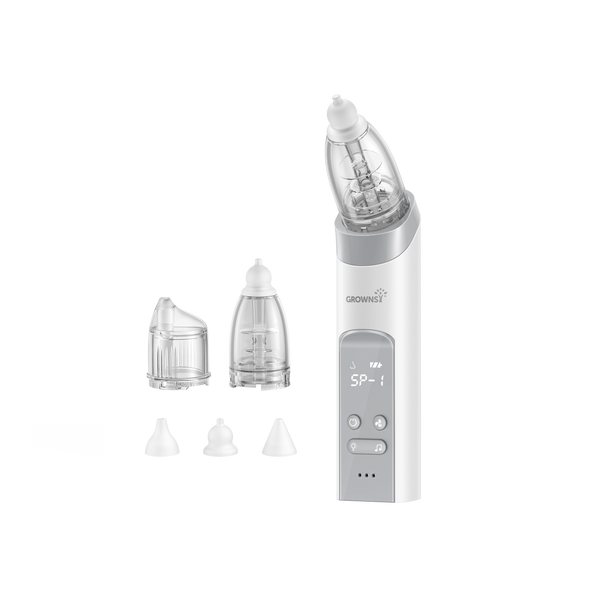
For families who prefer powered suction, Grownsy electric nasal aspirator may offer steady suction settings and reusable tips in a compact device. Use it only as directed, begin with the lowest effective setting, keep the tip at the nostril entrance, and clean every milk- or mucus-contact part after use. No aspirator can treat RSV, bronchiolitis, pneumonia, or respiratory distress, so worsening breathing or feeding still requires medical care.

Conclusion
A stuffy nose is common in babies and, by itself, is rarely dangerous. Plain saline, gentle suction before feeds, smaller and more frequent feeds, a clean cool-mist humidifier, and close observation can make an ordinary cold easier to manage.
The safest approach is to watch the baby, not just the mucus. Normal color, comfortable breathing, alertness, adequate feeding, and regular wet diapers are reassuring. Blue or gray color, pauses in breathing, severe retractions, unusual sleepiness, poor intake, dehydration, or fever in a baby younger than 3 months are reasons to act quickly.
This article is for general education and does not replace care from your baby's pediatrician. If you are unsure how hard your baby is working to breathe, seek medical advice.


