


Table of Contents
The Ultimate Guide to 8 Month Sleep Regression (2026): Signs, Causes & How to Handle
If your baby suddenly starts waking up more at night, starts taking shorter naps all of a sudden or starts clinging to you a bit more around the age of 8 months, then you're definitely not the only one going through this.
The 8 month sleep regression is a phase a lot of parents face. At this age, babies are just growing like crazy, learning new skills like it’s their job, and becoming way more aware of everything around them, which can impact their sleep.
The good news is that this is a temporary phase. In this blog post, we'll break down what the 8 month sleep regression is, why it happens in the first place, how long it usually lasts for, and what you can actually do to get your little one's sleep back on track.

What Is the 8 Month Sleep Crisis?
Pediatric sleep specialists consider the 8 month sleep regression to be a normal period of sleep disruption in healthy babies, usually kicking in somewhere between 7-10 months.
You've got babies who've been sleeping pretty well, but now they’re waking up more often, cutting their naps short & putting up a fight at bedtime. Nothing has changed in the home or how you're caring for your baby, but the babies themselves have grown and developed in some way, which is driving all the disruption.
Common Signs
More Frequent Night Wakings
Babies at this age are becoming much more aware of their different sleep stages than they used to be.
A baby who was happily sleeping through the night might suddenly start waking up every couple of hours because they're starting to be conscious of when they surface between sleep, and they need a hand getting back down to sleep.
Fighting Naps or Taking Shorter Naps
Short naps are a very common symptom of the 8 month sleep regression. Babies will fall asleep then wake up after just one short sleep cycle. It's usually around 20-30 minutes long, and then refuse to go back to sleep no matter what you try to do.
Crying or Fussiness at Bedtime
Those smooth bedtimes can turn into miserable, tear-filled ordeals almost overnight. The Merck Manual Of Pediatrics says that separation anxiety usually starts around 8 months, and that's probably the reason for all the bedtime tears.
Early Morning Wake-Ups
At 5:00 AM or before, parents often find it tough to get their baby to wake up normally, regardless of how late or early they went to bed the night before. There’s no real solution to this early rising problem during this phase.
What you can try to do is stick to a regular morning routine and resist the temptation to push bedtime back, because more often than not, it will make the early waking even worse rather than better.
Clinginess and Separation Anxiety
Daytime clinginess often comes hand-in-hand with sleep disruption. Your baby might start crying when you put them down, get all fussy when you leave the room, or just generally want to be glued to you, like, all the time. This is coming from a place of emotion, not just trying to get what they want, and it's a completely normal part of their development.
How Long Does It Last?
To be honest, it's really hard to say. But the experts suggest that these regressions usually sort themselves out over the course of two to six weeks. Though it can vary depending on what's going on developmentally and how consistent you manage to be with your routines.

What Causes Sleep Issues in 8-Month-Olds?
Developmental Milestones Like Crawling, Pulling Up, or Sitting
A study published in the Infant Behavior and Development journal found that when babies start hitting certain motor milestones, like crawling, it can really mess with their sleep, and even how long they sleep at night.
The study was published by Berger & Moore back in 2021. Another study, tracking babies for a few years from five to eleven months, found that when babies start crawling, it can make for some tough nights too. (Scher, 2015)
Separation Anxiety
Merck Manual of Pediatrics says that separation anxiety usually starts around eight months, when babies start to get the idea that even when they can't see you, you're still 'out there'. Before this happens, out of sight really does mean out of mind. Now babies know you're somewhere and they want you close by.
Changing Nap Needs
The transition to 2 naps from 3 usually starts anywhere between 6-9 months, according to the pediatric sleep guidelines. Getting the whole nap schedule right at this point can really make a big difference in your sleep at night.
Teething or Physical Discomfort
A prospective study published in Pediatrics and listed on PubMed discovered that teething symptoms tend to all come out at once, over an 8 day stretch, 4 days before a tooth comes in a tooth, the day it finally does, and then 3 days after.
Babies get a bit more restless, they drool more, get cranky, and sleep a bit lighter during this time, but there's no set of symptoms that can for sure tell you when exactly a tooth is going to pop through.

Sleep Regression vs Teething, or Something Else?
Signs of Sleep Regression
A sleep regression can often creep up on you out of the blue, with your baby suddenly switching to a completely different sleep pattern.
All of a sudden, you start to see all sorts of nighttime wakings, shorter naps and a whole lot of trouble settling down at bedtime, all without any apparent reason. The baby just doesn't seem to be sleeping like they used to.
Signs of Teething or Illness
A study on PubMed found that teething discomfort is actually quite time-limited and tends to cluster around the actual tooth eruption, not dragging on for weeks or anything. Illness, on the other hand, usually brings on a whole different bunch of symptoms fever, runny nose, loss of appetite or lethargy during the day.
Signs of Separation Anxiety
Separation anxiety can give you a bit of a clue as the baby might settle down well at first, but then freak out once they realize they’re on their own. And then as soon as their regular caregiver walks in the door theyre calm again.
When to Consult a Doctor
The American Academy of Pediatrics says to get a doctor check-up if your baby has a persistent high fever, is not feeding or is going to the loo a whole lot more than usual. You know your child best, trust your instincts and get them seen to if something doesn't feel right.
FAQs About the 8 Month Sleep Regression
Is There a Baby Leap at 8 Months?
Is Crying It Out During Sleep Regression Okay?
Can Babies Have Nightmares at 8 Months?
Can Co-Sleeping Make My Little One Sleep Better?
How Much Sleep Does an 8 Month Old Need?
 How to Handle Your Baby's Sleep Gently Like an Expert
Keep the Bedtime Routine Predictable
Even when everything else is falling apart, a reliable bedtime routine like bath, feed, sing a song, and dim the lights lets your baby know that it’s sleep time.
Adjust Naps and Wake Windows Slowly
Stretch out the wake windows by 15-20 minutes at a time. Keep an eye out for your baby's behavior and trust your instincts instead of genforcing strict timing.
Offer Comfort Without Creating Too Many New Sleep Habits
It’s perfectly fine to give them a cuddle when they need it right now, but its all about drawing a line between offering comfort and creating bad habits.
Give Your Baby Time to Practice New Skills During the Day
Research suggests that babies get back on track quickly after a sleep disruption when they get plenty of time to try out new physical skills during the day. Get down on the floor with your baby and give them some tummy time.
Create a Sleep-Friendly Room
A dark and quiet room with a comfy temperature is the perfect recipe for better sleep, especially during the 8 month sleep regression.
Soothe Teething Discomfort
A chilled teething ring, a bit of gentle massage or a damp wash cloth can work wonders for a baby in pain.
Ease Separation Anxiety
Games like peek-a-boo teach your baby a vital lesson. You disappear then reappear every time you pop out of the room and back in. Each time you do this, the idea becomes a little bit more second nature. As time goes on, your baby starts to get used to it.
At bedtime, try to keep your goodnights quick and to the point. Keep the same words, tone and routine every night. The more consistent you are, the more reassured your baby will be.
A Simple 8-Month Sleep Routine to Try
Example Two-Nap Schedule
Following the standard advice from the ped's sleep guidance, at this age, wake-up windows are 2.5 to 3.5 hours.
- Wake the little one around 6:30 AM.
- First nap between 9:00 and 9:30 AM for 60-90 minutes.
- Second nap between 2:00 and 2:30 PM.
- Bedtime by 7:00 to 7:30 PM.
A couple of mums have had success with this plan: waking the little one around 6:30 AM, then first nap between 9:00 and 9:30 AM for 60-90 minutes, second nap between 2:00 and 2:30 PM, and off to bed by 7:00 to 7:30 PM. Overnight feeds are still pretty normal for lots of babies at this age, don't you think?
If Your Baby Still Needs a Third Nap
Some babies just aren't ready for that two naps a day by 8 months. A short little snooze of 20 to 30 minutes in the late afternoon really helps prevent that overtired feeling, which makes those evening hours way tougher than they need to be.
Navigating the 8-Month Sleep Regression: Final Tips
Benefits of Using Baby Wipes
When the 8 month sleep regression hits, nappy changes at night start to happen a lot more often. Keep some fragrance-free baby wipes bedside, so those middle of the night clean-ups are quick and quiet.
When dealing with a regression, nighttime nappy changes can get a lot more frequent. Keeping fragrance free baby wipes right by the bed means you can get those changes done quickly.
Grownsy Night Feeding Support & Baby Camera
More wake-ups means more trips in the dark and more half-asleep decision-making. The Grownsy Baby Car Monitor with Dual Camera and Infrared Night Vision gives you a clear view of your baby in total darkness before you decide to go in. During the 8 month sleep regression, that information is genuinely valuable. Going in unnecessarily can turn a stirring baby into a fully awake one.

Utilize the Grownsy Baby Bottle Warmer: Your Complete Nighttime Feeding Guide
Nighttime feeds at 8 months are still normal, per pediatric guidance, and during a regression they often become more frequent.
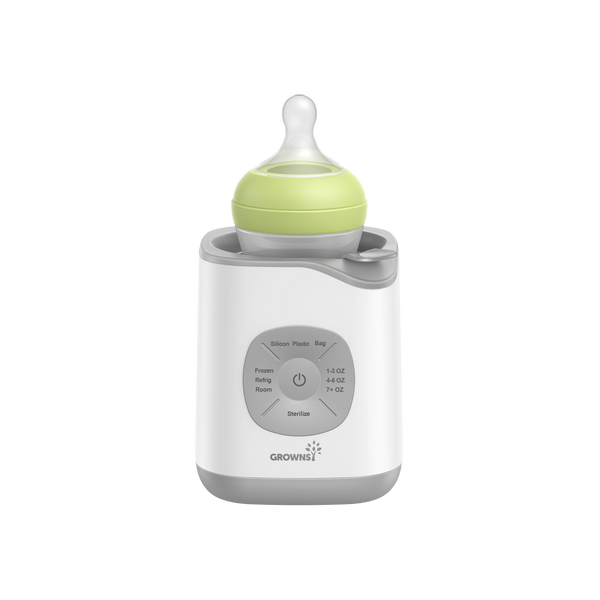
The Grownsy 10-in-1 Fast Baby Bottle Warmer takes most of the friction out of the process. Milk is ready in 2 to 4 minutes using gentle steam or water bath warming, which preserves breast milk nutrition far better than a microwave.
The 1 degree precision temperature control means no overheating and no guessing. The LED night light lets you operate it in a completely dark room without disturbing your baby or waking yourself up further.
The 24-hour keep-warm function is the standout feature for regression nights specifically. Prep a bottle before bed and it is ready whenever your baby needs it, no kitchen trip involved. Auto shut-off and an anti-scald basket keep things safe when you are running on very little sleep. Double bottle capacity handles twins or anyone warming two bottles at once.
Recommendation
The 8 month sleep regression is hard, but it is not forever. It is your baby's brain doing something genuinely impressive, and the disrupted sleep is just what comes with that territory.
Keep the routine steady. Respond with warmth. Give your baby space to practice new skills during the day.
And use whatever helps the nights feel more manageable, whether that is the Grownsy Baby Monitor that tells you when to go in and when to wait, or the Grownsy Bottle Warmer that has warm milk ready before you are even fully awake.
You have got this.
Disclaimer: The information in this article is for general info only, it's not a substitute for medical advice. Before you start panicking about your baby, take a deep breath and give your pediatrician a call with any questions or worries you might have about your little one's health, sleep patterns or how they're developing.
Related Articles
1.Best Bassinets and Cradles how to choose
2.Is the DreamNest Bassinet worth it
3.Baby Won't Sleep in Bassinet


