


You’re mid-feed, one arm dead asleep under your baby’s head, phone somewhere across the room, and it hits you. When does this kid start doing some of the work?
Fair question. Most parents have it around month five or six, usually while watching a friend’s baby casually grip their own bottle like it’s nothing.
Here’s what’s actually happening at that stage, when to expect it, and the one safety rule that never changes no matter how good your baby gets at it.
Table of Contents
Quick Answer
Most babies start holding their own bottle somewhere between 6 and 10 months. Some manage it closer to 6. Others take until 12 months or later. And a few skip it entirely, going straight from parent-fed bottles to a cup.
All normal. Bottle holding isn’t a required milestone, so a baby who isn’t doing it yet isn’t behind.
When Can Babies Hold Their Own Bottle?
The real answer to when can babies hold their own bottle is that it shows up in stages. Not one day where it clicks. Here’s roughly how the progression goes.

4–5 Months: Touching and Briefly Grasping the Bottle
Earliest phase. Your baby bats at the bottle. Rests a hand on it. Grabs for a second, lets go. They’re not holding anything yet. They’re noticing.
This is also a great time to hand them an empty bottle during floor play. No milk, no pressure, nothing to spill. They’ll bang it, mouth it, drop it, pick it back up. Looks like nothing.
It’s actually grip practice without the stakes of an actual feed, and a lot of babies figure out the shape of the thing this way well before they can manage it full.
6–7 Months: Holding the Bottle With Both Hands and Support
By 6 months a lot of babies can get both hands on the bottle and keep them there while you carry the weight. Angle, tilt, none of that yet. But the grip is real. Usually the first stage parents actually notice.
You might also catch them watching you drink. Coffee cup, water glass, doesn’t matter. Then they try it themselves with whatever’s in reach, tipping a toy toward their mouth or lifting an empty cup.
That mimicry is worth paying attention to. It means they’ve worked out the concept of bringing a vessel to your face, which is honestly the harder half of the skill.
8–9 Months: Adjusting and Holding the Bottle for Short Periods
Things speed up here. Core is stronger. Sitting is steadier. Plenty of babies can hold the bottle themselves for short stretches now and shift the angle a bit as the milk drops. Emphasis on short. Little arms tire fast.
10–12 Months: More Controlled Holding and Cup Practice
By 10 to 12 months, most babies who are going to hold their own bottle are doing it with decent control. This overlaps with cup practice, which pediatric guidance puts at around 6 months. So a lot of babies work both skills at once.
Using Corrected Age for Premature Babies
Baby born early? Track from the original due date, not the birthday. That’s corrected age, and it’s the standard for developmental tracking until age 2. A baby born at 34 weeks runs about six weeks behind a full-term baby the same actual age. Expected, not a problem. Same rule applies to other early milestones like rolling over.
Signs Your Baby May Be Ready to Hold a Bottle
Age helps, but readiness signs matter more. Here’s the quick version.
| What Your Baby Does | What It Actually Means |
|---|---|
| Bats at or grabs the bottle mid-feed | Hand-eye coordination is coming online |
| Stays steady in a seated or semi-upright position | Trunk control is strong enough to manage the weight |
| Brings toys to their mouth on purpose | The full reach-grab-mouth motor sequence is in place |
| Watches you drink, then mimics it | They understand the concept, not just the movement |
Now the longer version of each.
Steady Head and Trunk Control During Feeding
Head steady without support. Stable in a semi-upright position. Without that, grip strength doesn’t matter; they can’t manage a bottle safely.
Reaching, Grasping, and Bringing Objects to the Mouth
Watch what they do with toys. A baby who reliably reaches, grabs, and brings something to their mouth already has the motor sequence a bottle needs. Same movement, different object.
Placing Both Hands on the Bottle
Both hands. Not one. Two-handed is the realistic version at this age, and single-handed holding comes much later.
Adjusting, Releasing, or Pushing the Bottle Away
Gets overlooked, this one. A baby who pushes the bottle away when they’re done is showing you they understand they’ve got control over the feed. Cognitive readiness. Matters as much as the physical side.
Why Bottle-Holding Is Not a Required Developmental Milestone
Worth saying flat out. Bottle holding isn’t on any standard developmental checklist. The CDC doesn’t track it. Pediatricians don’t screen for it.
Some babies just prefer being held while they eat, and that’s a preference, not a delay. Plenty go straight from parent-fed bottles to holding a cup and never hold a bottle at all. If you’ve been quietly worried your 9-month-old is behind because the baby at daycare is doing it, they’re not.
How to Encourage Your Baby to Hold Their Own Bottle

If the readiness signs are there and you want to support it, staged works better than sudden.
Stage 1: Guide Both Hands Onto the Bottle
Hand over hand. Bring their palms to the bottle while you hold the weight. Every feed, for a while. You’re building familiarity here, not independence.
Stage 2: Release the Bottle Briefly While Supporting Its Weight
Once their hands stay put on their own, loosen your grip for a few seconds. Keep your hand right underneath. Bottle dips, you catch it. Bridge stage. Usually takes weeks.
Stage 3: Allow Short, Closely Supervised Practice
Let them hold it. Stay right there, hand on the bottle or an inch off it. Short bursts, then you take over. Arms tire, angles slip, and a tired baby with a tilted bottle is a choking risk.
Keep Practice Sessions Short and Pressure-Free
Thirty seconds counts as a win early on. Don’t stretch it into a whole feed. Hungry babies want milk, not a motor skills session.
What to Do When Your Baby Resists or Becomes Tired
Take the bottle back. That’s the whole answer. Resistance isn’t a problem to fix, it’s information. Try again in a week or two. Pushing it just turns feeds stressful for both of you.
Bottle Propping Dangers and Safe Self-Feeding Rules
Now the part that actually matters. Everything above assumes you’re right there. Here’s what happens when you’re not.
Why Pillows, Blankets, and Bottle-Holding Devices Are Unsafe
Propping means using something to hold the bottle in your baby’s mouth so they can feed hands free. Pillows, rolled blankets, stuffed toys, purpose-built devices. Every major health authority advises against all of it.
Here’s the part most parents don’t know. There’s an entire product category sold on Amazon for exactly this, marketed as safe self-feeding pillows, and in January 2026 the CPSC issued a formal warning telling people to throw them out. The problem is that they hold the bottle at a fixed angle so the baby physically can’t pull away from it. Roughly 4,400 had already sold.
The warning included one line worth remembering next time something like this shows up in your feed. Never leave a bottle propped in an infant’s mouth using a pillow, self-feeding pillow, blanket, or other support, even if the product is marketed as being safe or is used under the supervision of a caregiver.
Marketed as safe doesn’t mean safe.
Choking, Aspiration, Overfeeding, Ear Infection, and Tooth Decay Risks
Four risks come up consistently in CDC guidance, and the mechanics behind each one are worth understanding.
When a baby lies flat with a propped bottle, milk pools at the back of the mouth instead of going down the throat. From there it can reach the eustachian tubes, which sit more horizontally in babies than in adults, and that’s the ear infection route. That same pooled milk sits on emerging teeth for long stretches, which is the tooth decay route. If your baby falls asleep or stops sucking while the milk keeps coming, they can breathe it in instead of swallowing, which is aspiration. And a propped bottle just keeps flowing whether they want more or not, so overfeeding rounds out the list.
Johns Hopkins Medicine puts the whole thing in one sentence. Bottle feeding should be interactive, with the caregiver holding both the bottle and the infant.
Use a Safe Feeding Position and Appropriate Nipple Flow
Semi-upright, head supported, bottle angled rather than vertical. Keep the milk fully covering the nipple so your baby isn’t swallowing air along with it.
Nipple flow matters too, and it’s easier to read than you’d think. Gagging or gulping means too fast. Sucking hard and getting visibly frustrated means too slow. There’s no universal correct size, so you’ll adjust a few times as they grow.
Check Milk Temperature Before Every Feeding
Skip the microwave entirely. It creates hot spots that can burn your baby’s mouth even when the bottle feels fine on the outside. Running warm water or a bowl of warm water works, then test a few drops on the inside of your wrist. Should feel warm, not hot.
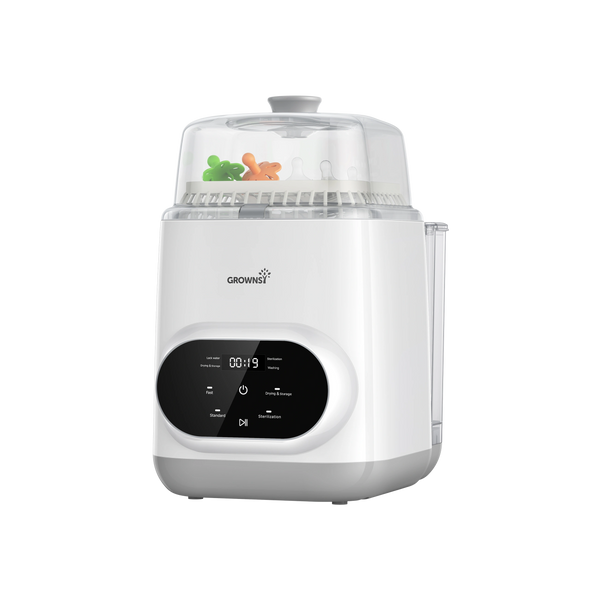
This gets trickier once your baby holds the bottle themselves, because you’re no longer feeling the temperature in your own hand first. A warmer with real temperature control removes the guesswork. The Grownsy 10-in-1 Fast Baby Bottle Warmer heats in under three minutes with precise control, so no hot spots and no standing at the stove testing over and over. If you’re feeding away from home a lot, this guide to portable bottle warming covers the same problem on the road.
Stay Within Reach Even When Your Baby Holds the Bottle
Independent feeding is not unsupervised feeding. Babies can choke quietly, no coughing, no noise at all. You need to be able to see their face. Stay in the room, keep watching, be close enough to take the bottle in a second.
Never Leave a Bottle With a Baby in a Crib or Bed
No bottle in the crib. Not propped, not handed over at bedtime, not as a sleep aid. Milk pools around the teeth overnight and that’s the fastest route to early decay. This one shows up in pediatric guidance at the 6-month well visit and it doesn’t come with exceptions.
Bottle-Holding Challenges, Easy-Grip Gear, and Cup Transition

What If Your Baby Will Not Hold Their Own Bottle?
Plenty of babies just don’t want to. Worth separating preference from something actually worth mentioning to a doctor.
Preference Versus a Broader Motor Development Concern
If your baby reaches for toys, brings things to their mouth, sits with support, and passes objects hand to hand, motor skills are fine. They just like being held while they eat. Preference, not delay.
The concern would be a baby not doing any of those by around 9 to 10 months. That’s not about bottles. That’s a broader pattern worth raising.
Other Ways Babies Can Practice the Same Motor Skills
Bottles aren’t the only route here. Teething toys. Soft blocks. An empty bottle during floor time. Cups at mealtimes. Anything two-handed that goes to the mouth builds the same grip and coordination. Tummy time helps too, since core and shoulder strength sit underneath all of it. Same strength base that supports rolling over and other early motor milestones.
Concerns to Discuss With a Pediatrician
Bring it up if your baby has very stiff or very floppy tone, consistently uses only one hand, shows a strong side preference, isn’t bringing objects to their mouth by 9 months, or has lost a skill they used to have. Earlier evaluation genuinely beats waiting.
Choosing an Easy-Grip Bottle and Moving Toward a Cup
Once your baby is close, gear starts to matter a little. So does thinking about what comes next.
Lightweight Bottles, Slim Shapes, Silicone Sleeves, and Removable Handles
Lighter is easier. Slim beats wide for small hands. Silicone sleeves add grip texture. Removable handles help some babies and annoy others, so treat them as optional. Change one thing at a time so you know what’s actually working.
Practical side effect nobody warns you about. Babies learning to hold bottles drop them constantly, on the floor, in the car seat, off the high chair. You’ll be washing a lot more than usual. The Grownsy Bottle Washer handles that load so you’re not parked at the sink between every feed.
Matching Nipple Flow to Your Baby’s Feeding Control
Older babies often need faster flow. But when they’re holding the bottle themselves, a steep tilt plus a fast nipple floods the mouth. Move up flow rates gradually and watch how they handle it before going further.
Introducing an Open, Sippy, or Straw Cup at Around 6 Months
Offer a cup when your baby starts solids, usually around 6 months. Open cup or straw cup both work fine. Cup drinking builds oral motor patterns that bottles don’t, which pays off later for speech and for eating table foods. That same oral motor work connects to how early sounds and babbling develop too.
Gradually Transitioning Away From Bottles Between 12 and 18 Months
Here’s something worth knowing early. The recommended window for weaning off the bottle entirely is 12 to 18 months, earlier end preferred. Which means the stretch where your baby holds their own bottle is fairly short by design.
Some parents find it easier to lean into cup practice rather than push bottle-holding hard at 10 or 11 months, since the bottle is on its way out anyway. Worth thinking about before you invest a lot of energy into a skill you’ll be phasing out in a few months.
Conclusion
So when can babies hold their own bottle? Usually 6 to 10 months, arriving in stages instead of all at once, with a wide normal range on both ends. Watch the readiness signs, not the calendar.
Practice in short supervised bursts. And whatever the timeline, never prop the bottle, never leave one in a crib, and stay within arm’s reach even after your baby has it down. Independent feeding is worth supporting. It’s never a reason to step away.
References
- U.S. Consumer Product Safety Commission. CPSC Warns Consumers to Immediately Stop Using Yiiektily Self-Feeding Pillows Due to Risk of Serious Injury or Death from Aspiration and Suffocation. January 15, 2026. CPSC source
- Centers for Disease Control and Prevention. About Feeding From a Bottle. Last reviewed March 11, 2026. CDC source
- American Academy of Pediatrics, HealthyChildren.org. Bottle Feeding Basics. HealthyChildren.org source
- American Academy of Pediatrics. Bright Futures Information for Parents: 6 Month Visit. AAP source
- American Academy of Pediatrics, HealthyChildren.org. From Bottle to Cup: Helping Your Child Make a Healthy Transition. HealthyChildren.org source
- American Academy of Pediatrics / CDC. How to Prepare and Store Powdered Infant Formula. AAP source
- Johns Hopkins Medicine. Feeding Guide for the First Year. Johns Hopkins Medicine source
- Nationwide Children’s Hospital. Bottle Feeding. Nationwide Children’s Hospital source
- UCSF Benioff Children’s Hospitals. FAQ: Baby Bottle Weaning. UCSF source
- Kennedy Krieger Institute. Transitioning from Bottle to Cup. Kennedy Krieger Institute source
- Cleveland Clinic. 5 Reasons Not To Give Your Baby a Bottle In Bed. Cleveland Clinic source
- National Academies of Sciences, Engineering, and Medicine. Feeding Infants and Children from Birth to 24 Months. NCBI Bookshelf. NCBI Bookshelf source
- Minnesota Department of Health. Paced Bottle Feeding. Minnesota Department of Health PDF


