

Table of Contents
When Do Babies Get Kneecaps? Everything Parents Need to Know
Parenting & Baby Development
You are cuddling your baby, squeezing those chubby little legs and then you realize the knees are soft! Squishy, even. No hard bone at the point you would expect to find one. If this moment has just had you scooting to a search bar, you are not the only one. It's one of those things that nobody warns you about before you have your baby.
So when do babies get kneecaps, anyway? What does that softness mean? A red flag to worry about? The answer is no, not even close. The longer answer is quite interesting, and it does speak to the ingenuity of the human body from the start.
Do Infants Have Kneecaps at Birth?
Yes, babies have kneecaps, but they are not made of bone. At birth the kneecap (patella) consists of cartilage, a firm but flexible tissue like the ears.
It is real, but you can't see it on an X-ray, and it doesn't feel hard. Research from the National Institutes of Health states that the majority of infants are born with a completely cartilaginous patella that gradually is turned into bones in the first few years of their lives.

The Myth About Babies Having No Kneecaps at Birth
The saying "babies are born without kneecaps" may come across your mind. It's been hyped, it's been passed around, it's so believable and it just goes around and around on the internet. But that is a myth — or at least a half truth.
The confusion is the result of a definition issue. Most people think of a hard bony disc when they think of a kneecap. A newborn's patella is not bone but cartilage, so it doesn't show up on a standard X-ray and can be mistaken for being empty. However, cartilage is tissue. It's structured, it cushions and it's definitely in the count.
In fact, babies' kneecaps are made of cartilage, not bone. The cartilage then hardens over the next few years, a process known as "ossification." But it does not occur all at once; it takes years.
When Does Kneecap Cartilage Form in the Womb?
Development of the baby kneecap actually starts long before birth.
Embryological studies cited by Britannica's article of human fetal development indicate that in the lower limbs the cartilaginous precursors of the patella and the rest of the skeleton start to develop as early as the embryonic and early fetal period, typically during weeks 8 to 12 of gestation.
The cartilage patella already matures and becomes functional by the time a baby is born.

When Do Babies Get Kneecaps? The Ossification Timeline
This is the query which most parents are pondering on. Ossification refers to the slow transformation of cartilage to bone, and for the patella, it takes years to occur.
Research cited in the NIH's National Library of Medicine indicates that ossification of the patella typically begins about age 2 to 6, with a high degree of variability among children. Many children begin to experience it around the ages of 3 to 5.
It's not a single-day occurrence; ossification takes time. It starts at one or more small places in the cartilage and gradually spreads outwards until all of the patella has turned to bone.
The kneecap is fully ossified by early adolescence, and it has been suggested that most children will have a completely bony kneecap by about 10 to 12 years of age.
Common Signs of Healthy Kneecap Development
For the most part, healthy kneecap development is invisible. However, there are some common indicators that things are going well:
- Your infant is developing gross motor skills — such as rolling, sitting, pulling to stand, crawling and then walking — about as expected based on the CDC's developmental milestones.
- Knees are symmetrical and move freely in both legs.
- Your child doesn't seem to favor one leg or avoid putting weight on a knee.
- No evidence of swelling, redness or persistent pain around the knee joint is visible.
The Development Process of Kneecaps: Stage by Stage
The best approach is to consider kneecap development in broad stages. These are general windows and not set time limits — children develop at their own rate.
- Before birth Cartilage patella forms during fetal development. By birth, it's fully cartilaginous and functional.
- Birth – Age 2–3 The kneecap is completely cartilage. This is quite natural and normal. Babies cruise and start walking using cartilage kneecaps.
- Ages 3–6 (Approx.) Ossification centers start to show up in the cartilage in most kids. Bone begins to develop from the center.
- Ages 6–10 Ossification continues and increases. The kneecap becomes more and more bony, but may still have cartilaginous parts.
- Ages 10–13 Most kids have ossified and their patella is now completely bony.
Causes and Effects
Why Are Baby Kneecaps Made of Cartilage?
This is not a mistake in biology; this is rather a feature. Cartilage is flexible, light and compressible; bone is not. It enables structures to develop and change more readily than bones.
The stability of the knee during this phase is not achieved by the patella, but rather by the muscles, ligaments, and tendons around the knee. So, the softness of the kneecap isn't really indicative of how mobile your baby might be.
Do Soft Kneecaps Affect Crawling or Walking?
Usually not. The American Academy of Pediatrics (AAP) developmental recommendations indicate that there is no evidence of infant kneecaps being cartilaginous and causing delays in motor milestones or problems in normal early movement. The cartilage is actually a good shock absorber on hard floors.
Can Babies Feel Pain in Their Kneecaps?
Cartilage is less sensitive to painful stimuli than bone because there are fewer nerve endings in cartilage than in bone. The soft tissues around the knee joint, however, are extremely nerve rich, and babies can feel when the knee joint is being stressed or hurt.
If your infant is in pain around the knee or isn't bearing weight on a leg, or there's swelling, those are indicators to tell your pediatrician. Not because cartilage kneecaps cause pain on their own, but because the surrounding structures can still be affected by falls or unusual strain.

How to Support Your Baby's Kneecap Development
Good news here: supporting healthy baby kneecap development doesn't require any special interventions. It's essentially a matter of the basics of proper baby care.
Nutrition That Supports Bone Development
The American Academy of Pediatrics recommends that most breastfed infants probably need a vitamin D supplement because breast milk doesn't contain enough vitamin D. Fortified formula is likely the main source of vitamin D for most formula-fed babies.
Once babies begin to eat solid foods, add calcium to their meals, such as calcium fortified meals, milk, yogurt, and leafy greens, that will help build healthy bones over time.
Safe Movement and Physical Activity
Tummy time, floor time, crawling and cruising are all good ways to strengthen the musculoskeletal system.
WHO's motor development guidelines have been used to study children's physical development and suggest that newborns with regular and diversified chances for activity tend to develop motor abilities within the healthy range.
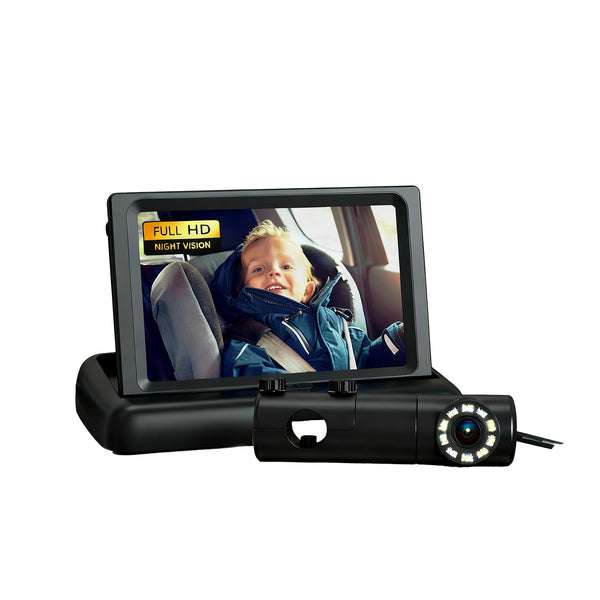
Here a baby monitor or camera can be highly beneficial, particularly after your baby starts to move. With Grownsy's baby monitors you won't have to sacrifice your baby's independence for your ability to watch them.
Creating a Safe Crawling Environment
When your baby starts crawling, the surface on which he crawls goes beyond what you suspect. Hard floors are fine and are completely safe for your baby's cartilage kneecaps and if your baby spends a lot of time crawling on all fours, a soft play mat can make it more comfortable for extended crawling times.
Remove small objects from floor surfaces, cover sharp corners of furniture, and be sure the floor is sufficiently warm so that bare knees are not resting against a cold hard tile surface for extended periods of time.
Potential Issues with Kneecap Development
In most children the development of the kneecap is normal. Knowing what condition exists, though, even if it's rare, is helpful.
Patellar Instability
Patellar instability occurs when the kneecap doesn't track well in the groove of the knee joint and may go partially or completely out of place. This is sometimes the case in children and young people, particularly when growing up, and following a trauma injury.
Bipartite Patella
Bipartite patella is a variation in which a patella develops from two distinct centers of ossification which fail to unite, creating a "two-piece" patella on imaging studies.
Per research cited by RadioGraphics via the Radiological Society of North America, this is present in an estimated 1 to 2% of the population and is usually an incidental finding. The majority of people with a bipartite patella are asymptomatic.
Osgood-Schlatter Disease
Osgood-Schlatter is a condition caused by overuse and is common among active teenagers, especially those who experience growth spurts. It is an irritation of the patellar tendon at the attachment point to the tibia, resulting in pain and sometimes a bony bump just below the knee.
Torn Meniscus in Children
Although it's not part of kneecap ossification, the meniscus is the cartilage pad in a child's knee that can also be injured, especially during sports or significant trauma.
In children, meniscus tears are not as prevalent as in adolescents or adults. Symptoms are usually associated with pain, swelling and restricted range of movement.
When to Call a Doctor
Although these are not often medical emergencies, you should consult your pediatrician if your baby has:
- Constant swelling, redness or heat around both knees.
- Your baby is refusing to bear weight on a leg or crawling asymmetcemment.
- An abnormal appearance of the knee that can be seen with the naked eye.
- Your toddler or older child is complaining about a pain in their knee that will not go away after resting.
- One knee is obviously bigger or different in shape than the other knee.
In most cases, the soft or slightly wobbly knee in an infant is perfectly fine. However, when something seems awry or your gut tells you to get it checked, talking with your pediatrician is always a good idea.
Frequently Asked Questions
Is it normal for baby knees to feel soft?
Is crawling safe for babies without bony kneecaps?
Do baby kneecaps show up on X-rays?
Can a baby be born with no kneecap at all?
How long does full kneecap ossification take?
Conclusion
So, when do babies get kneecaps? They have them from the get-go, but their construction is not of bone, but rather cartilage. It develops in the fetus, helps your baby through all those kicks, rolls, crawls and first steps, and slowly turns into bone during the first 10 years of life.
It's one of those yet-remarkable events that occurs in your child's body but without any noise. When you feel your baby's knees are soft, it's not a defect in their development. They are evidence of the body's knowledge of what it's doing.
Editor's Recommendation
Grownsy Baby Camera
Provides you a clear and reliable view of your baby as they explore and develop independently to give them space without losing peace of mind.
Grownsy Bottle Warmer
Warms feeds quickly and evenly; so snack and meal times between active play are always smooth and easy.
-
Featured
 All product Infant (6-12M)

They're both made with the busy, attentive parent in mind, since supporting your baby's development shouldn't be complicated.
This article is for informational purposes only and does not constitute medical advice; always consult a qualified healthcare provider with any concerns about your child's development.