Why a Stuffy Nose Can Make Feeding Harder for Babies
Your baby is hungry. The bottle is ready.
But after a few seconds of feeding, your baby stops.
They pull away. They become frustrated. They try again.
Then stop again.
Many parents assume the problem is the bottle, milk, or feeding routine.
But sometimes the real reason is much simpler:
A stuffy nose can make feeding difficult.
Why Babies Struggle to Feed With a Stuffy Nose
Adults can easily switch between breathing through their nose and mouth.
Babies are different.
During feeding, babies rely heavily on their ability to breathe comfortably through their nose.
When nasal passages are blocked, feeding can become challenging.
Parents may notice:
- frequent pauses during feeding
- pulling away from the bottle or breast
- shorter feeding sessions
- increased fussiness
The baby is hungry.
But breathing comfortably becomes harder.
The Connection Between Breathing and Feeding
Feeding requires coordination:
- sucking
- swallowing
- breathing
When congestion interrupts breathing, babies may need to stop more often.
This can lead to:
- longer feeding times
- frustration for baby
- stress for parents
Especially during the newborn stage, small changes can have a big impact.
Why Simple Suction Doesn't Always Solve the Problem
Many parents try a nasal aspirator immediately.
But sometimes the mucus is:
- thick
- sticky
- dried
- difficult to loosen
In these situations, suction alone may not work effectively.
Parents often experience:
“I know there is mucus there, but nothing comes out.”
The issue isn't always suction strength. Sometimes mucus needs preparation first.
Why Softening Comes Before Clearing
Think about dry mucus like anything else that has hardened.
Moisture helps loosen it.
Before suction, softening can help:
- loosen stubborn mucus
- make removal easier
- reduce repeated attempts
This is why an effective nasal care routine often follows:
Soften → Remove → Comfort
A More Complete Nasal Care Routine
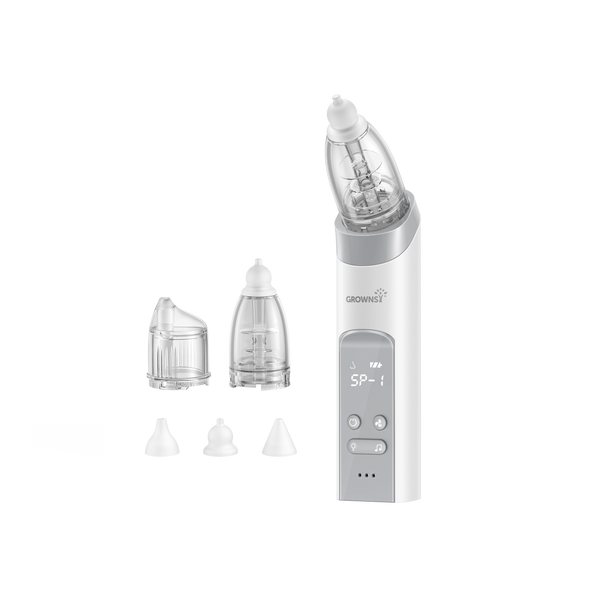
The GROWNSY SniffEase SPA combines three functions designed around real baby congestion challenges.
1. Gentle Spray
The spray function helps moisturize nasal passages and soften dry mucus before suction.
2. Strong Suction
After mucus is loosened, hospital-grade suction helps remove congestion more effectively.
3. Micro-Mist Care
The micro-mist function supports gentle nasal comfort as part of an ongoing care routine.
Together, these steps create a more complete approach than suction alone.
When Nasal Care Can Help Most
Parents often find nasal care especially helpful before:
Feeding
Helping clear the nose before feeding may support more comfortable eating.
Bedtime
A clearer nose can help babies settle more comfortably.
Dry Seasons
Indoor heating and low humidity can contribute to dry mucus buildup.
Beyond Sick Days: Everyday Baby Nasal Care
Nasal congestion isn't only caused by colds.
Babies may experience nasal discomfort because of:
- dry indoor air
- seasonal changes
- environmental factors
- overnight dryness
That is why many parents include gentle nasal care as part of their regular routine.
Final Thoughts
When a baby struggles during feeding, the problem isn't always hunger or the bottle.
Sometimes, it starts with something much smaller: A stuffy nose.
By combining softening, suction, and gentle care in one system, the Grownsy SniffEase SPA helps parents support more comfortable breathing, especially during the moments when babies need it most.
Clearer breathing can make feeding feel easier.