


Table of Contents
Choosing where your newborn will sleep can feel overwhelming with so many options on the market. Whether you are looking for a timeless classic, high-tech soothing support, or an all-in-one multi-functional piece, understanding the main categories will help you make the best choice for your family.
To help you curate your registry and design the ideal nursery setup, this guide breaks down the four primary bassinet categories, their key features, investment values, and essential safe-sleep considerations.
At a Glance: Finding the Sweet Spot for Newborn Sleep
| Bassinet Type | Convenience & Mobility | Parent-Child Connection | Long-Term Value | Overall Verdict |
|---|---|---|---|---|
| Portable Bedside Sleeper (Top Pick) |
⭐⭐⭐⭐⭐ (Wheels, multi-height, lightweight) | ⭐⭐⭐⭐⭐ (Zero-distance room sharing) | ⭐⭐⭐⭐⭐ ($200–$300 for 5-in-1 versatility) | The Ultimate Winner: Best balance of comfort, safety, and price. |
| Traditional Bassinet | ⭐⭐☆☆☆ (Static, hard to move around) | ⭐⭐⭐☆☆ (Standard room-sharing) | ⭐⭐⭐☆☆ ($100–$600, limited lifespan) | Budget Option: Classic look, but lacks daily functionality. |
| Smart Tech Bassinet | ⭐☆☆☆☆ (Heavy, wired to wall outlet) | ⭐⭐⭐☆☆ (App-monitored soothing) | ⭐☆☆☆☆ ($1,000–$1,700+, highly overpriced) | High Cost: Gimmicky features with an intimidating price tag. |
| Playard | ⭐⭐☆☆☆ (Bulky & heavy to maneuver) | ⭐⭐☆☆☆ (Deeper walls, harder to reach) | ⭐⭐⭐⭐☆ ($150–$350, travel focus) | Secondary Space: Great as a playpen, but less ideal bedside. |
1. Traditional Bassinets: Timeless Looks, Limited Functionality
When picture-perfect nurseries come to mind, traditional bassinets are usually front and center. These classic models operate completely plug-free—no wires, no screens, and no Wi-Fi connectivity required.
- Features & Movement: Traditional models offer minimalist, manual soothing. While some feature lightweight frames that bounce or sway gently when nudged, they rely entirely on parent interaction rather than automated motors.
- Materials & Investment: Prices generally range from $100 to $600. Entry-level options utilize durable plastic and steel components, while premium luxury models incorporate solid hardwoods and organic textiles.
- Safety & Compliance: Price differences primarily reflect material selection and brand design rather than structural safety. In North America, all certified bassinets must meet rigorous CPSC and ASTM safety standards, meaning an accessible $100 model is just as structurally safe as a $600 designer piece.
Pro Tip: Consider your room-sharing goals and whether you plan to save the bassinet for future siblings. If you want an heirloom-quality piece to pass down, a premium wooden model is a worthwhile investment. If you simply need a safe, fuss-free sleeping space for the early months, a budget-friendly option serves wonderfully.
While options like the Newton Baby Bassinet offer good mattress breathability, static designs fail to support parents needing night-feed convenience or daytime house mobility.

2. Portable Bedside Bassinets: The Versatile Multi-Tasker 🍼
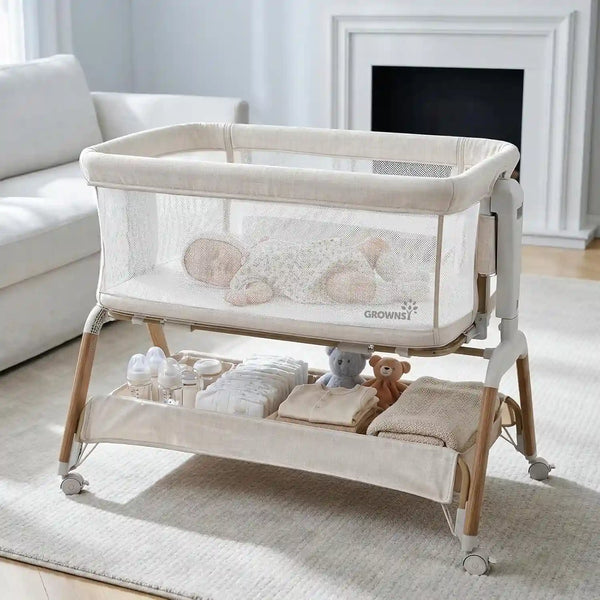
For parents seeking maximum convenience during frequent nighttime feeds, the portable bassinet with wheels offers an exceptionally practical sleep solution.
- Key Features & Mobility: Equipped with smooth-rolling swivel casters, adjustable height settings, and 360° see-through mesh sidewalls, these units transition effortlessly from bedroom to living room. Models like the Grownsy 5-in-1 Bedside Bassinet allow parents to keep a close eye on their sleeping baby from any angle while ensuring proper airflow.
- Adjustable Incline Functionality: Many bedside bassinets feature an adjustable micro-incline mode. Elevating the head slightly post-feeding can aid in reflux relief, digestive comfort, and quiet settling after midnight nursing sessions. (Note: For unsupervised overnight sleep, pediatricians and safe-sleep guidelines advise keeping the sleeping surface completely flat.)
- Investment: It is budget-friendly for most families, ranging from $200 to $300 to satisfy all the basic needs in daily life.
Pediatric Safety Note: The American Academy of Pediatrics (AAP) strongly recommends room-sharing (placing the bassinet adjacent to the parents' bed) rather than bed-sharing to significantly reduce the risk of SIDS while keeping nighttime feedings manageable.
3. Smart Bassinets: High-Tech Comfort at a Premium Price
For tech-conscious parents looking for automated soothing, smart bassinets bring advanced responsiveness directly to the bedside.
- Automated Soothing Features: Equipped with acoustic sensors, smart bassinets detect infant fussing in real-time. They automatically cycle through dynamic rocking speeds, soothing white noise, and gentle vibrations to help settle babies back to sleep without parental intervention.
- App Integration & Controls: Most smart units link directly to smartphone apps, allowing parents to track sleep duration, customize noise frequencies, and control movement remotely. Several models also utilize proprietary swaddling systems that secure to the bassinet frame to keep infants safely positioned on their backs.
- Investment & Rental Options: Because of the advanced technology, these require electricity and Wi-Fi, with price points generally starting around $1,000 up to $1,700. If you are hesitant about the upfront cost, many brands offer monthly rental programs, making it a lower-cost way to test if your baby responds well to automated movement. But as a bassinet for newborns, such a short lifespan, their prices are intimidating, and frankly, they even go way beyond any brand premium.
4. Playards with Bassinet Inserts: Great for Travel, Bulky for Bedside Sleep
Playards (such as Pack 'n Plays) are versatile workhorses for toddlerhood, but they are less suited as your primary newborn bedside sleeper.
- Secondary Role in the Nursery: While playards include raised bassinet inserts and changing stations, their main strength lies in serving as travel cribs for weekend trips or secure playpens for toddlers.
- Bulky & Hard to Reach: Their wide footprint takes up substantial bedroom space. Deep fabric walls and structural rails make reaching over to comfort your newborn during midnight feeds far more cumbersome than using a dedicated bedside sleeper.
- The Bottom Line: A playard is a great secondary investment for living rooms or grandparents' houses, but it cannot match the ergonomic comfort and proximity of a true bedside bassinet.
Understanding Sleep Surface Firmness 🛌
A common concern among new parents is mattress firmness. When testing bassinets in retail stores, infant mattresses often feel surprisingly firm compared to adult bedding.
- Safe Sleep Standards: All approved infant sleep surfaces must pass strict firmness tests required by safety regulators to eliminate soft-bedding hazards and minimize SIDS risks. Infants lack the motor control to push away from soft surfaces, making a flat, firm mattress non-negotiable for safe sleep.
-
Maintenance & Cleanliness: Convertible units, such as the Grownsy 5-in-1 baby bedside bassinet, frequently feature supportive, dual-sided mattress pads with removable zip-off covers, making midnight cleanup after unexpected spit-ups fast and hassle-free.
Featured All product Baby Bassinets


