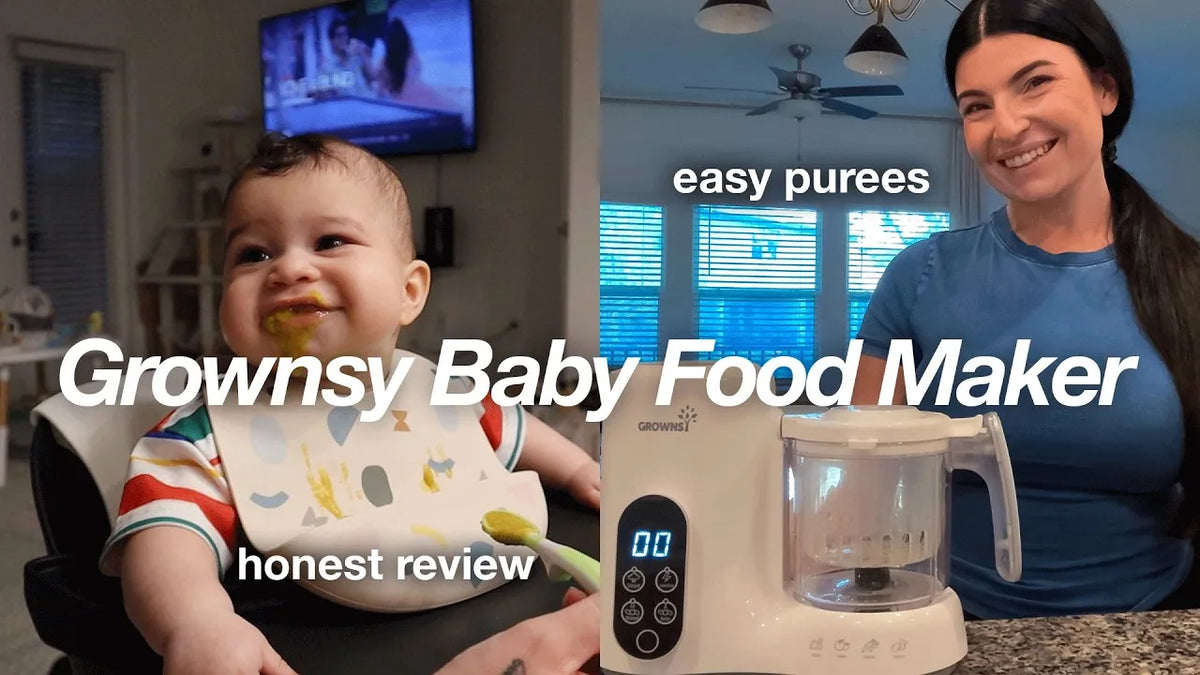
Mother preparing vegetable puree in a baby food maker while her baby watches from a high chair.](http://grownsy.com/cdn/shop/articles/grownsy-baby-food-maker-banner.webp?v=1792396761&width=2400)
Want to make homemade baby food for your little one regularly? You may already have a blender on your counter. So is it still worth investing in a baby food maker? What would a baby food maker actually make easier?
The answer depends on what steps are simplified before blending and how much control you have afterward. Cooking ingredients, adding milk, and adjusting texture all affect whether preparing fresh meals feels manageable enough to do regularly.
This guide will uncover the prescription for easier baby food preparation. To find the best baby food maker for your routine, we'll compare three things: a dedicated processor vs a regular blender, elevated vs non-elevated steaming designs, and an appliance that steams and blends vs the blending-only Nutribullet Baby.
What Is the Best Baby Food Maker?
The best baby food maker should help you save more time and reduce repeated household. Imagine you still need to clean many plates or bowls, handle the extra ingredients; It sounds like a nightmare. So choosing the best baby food maker is key. What features do the best baby food processors have on the market? We researched types of baby food makers and concluded:
For parents making fresh meals regularly, three features deserve particular attention:
- Built-in steaming: Softens ingredients without requiring a separate cooking appliance.
- An elevated steam basket: Keeps food above the cooking water.
- Automatic and manual blending: Gives you options for preparing smooth purées and gradually introducing more texture.
These features address different parts of the same meal. Steaming prepares the food for blending. The basket separates ingredients from the water below. Blending controls help determine the final consistency.
Furthermore, if a baby food processor combines these functions in one machine, it is a great choice when you compare the complete preparation routine with the alternatives. A useful machine should also match the amount you normally prepare. Small, fresh batches and large freezer batches place different demands on an appliance. Start with your usual meals rather than the longest feature list.

Baby Food Maker vs. Regular Blender: What Gets Easier?
While a regular blender can prepare baby food, a dedicated steamer and blender offers the clearest advantage when your ingredients need cooking first.
Simplify the cooking prep
Consider making carrot purée. With a conventional blender that has no cooking function, you first soften the carrots in separate pot or bowl. Then you transfer them into the blending container, following the manufacturer's temperature and loading instructions.
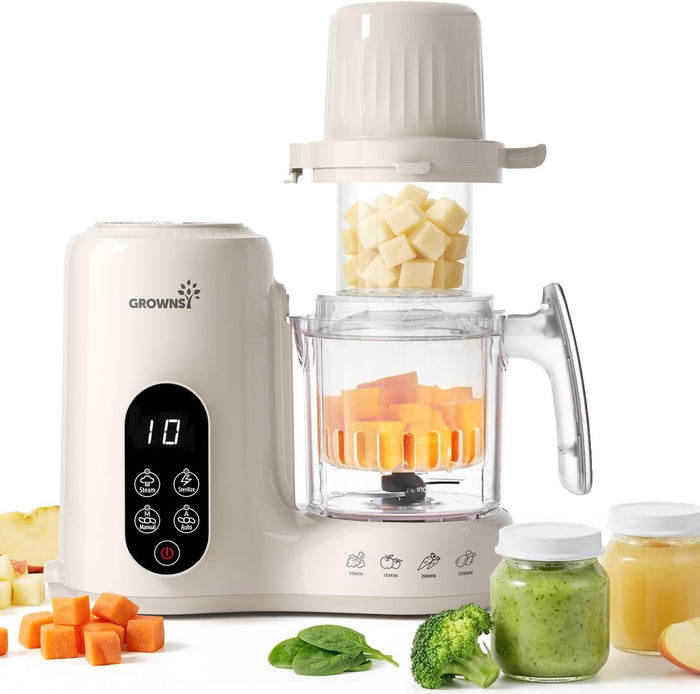
A baby food processor with steaming and blending often simplifies all these preps in a machine. The cooked ingredients are tipped from the removable basket into the blending container before processing. You avoid a separate cooking setup for that batch, while retaining control over the transition from steaming to blending.
That difference matters when getting out extra cookware is the reason you put off making a fresh meal.
If you already steam vegetables for dinner and set some aside for your baby, however, your existing blender may fit naturally into the routine.
What If You Only Want a Few Spoonfuls?
Check your blender's minimum recommended batch before assuming it can handle that amount.
Depending on the container and blade design, a small serving may need scraping or extra liquid to circulate properly. Adding more ingredients increases the batch; adding liquid changes its consistency.
Neither adjustment is necessarily a problem. But both matter if your goal is to prepare a small amount with a particular texture.
Before buying a baby food blender, ask yourself:
- How much food do I usually prepare at once?
- Does that amount fit the appliance's recommended working capacity?
- Am I making fresh meals frequently or filling the freezer occasionally?
A compact processor can suit a few fresh meals. A larger blender may be more practical for bulk preparation.
What Happens When Your Baby Is Ready for More Texture?
A smooth purée works for those first spoonfuls. But what happens when your baby is ready for something thicker?
This is where blending control becomes useful.
An automatic mode provides a convenient processing cycle. A manual mode lets you blend in shorter intervals, check the result, and stop when you reach the consistency you want.
With thoroughly cooked sweet potato, for example, you can vary the processing and liquid to prepare a smooth purée or a thicker mixture. The result still depends on the ingredients and their softness---not just which button you press.
The CDC recommends introducing solids at about six months and offering thicker, lumpier foods as eating skills develop. Follow your baby's readiness rather than treating each texture as a fixed age milestone.
The takeaway: choose a dedicated steamer and blender if separate cooking makes daily preparation harder. Keep using your regular blender if your cooking routine and usual batch size already work well.
Elevated Steam Basket vs. No Elevated Basket
Before you compare steaming settings, look inside: will the food sit above the water or in it?
That distinction tells you more than the word "steam" on the control panel.
An elevated basket holds ingredients above the cooking water. A design without one needs closer inspection: it may separate food and water another way, or it may leave ingredients in contact with the liquid.
Why Water Separation Matters
Compared with boiling, steaming limits direct water contact during cooking, which can help reduce the loss of water-soluble nutrients such as vitamin C and some B vitamins into liquid you later discard --- although the result depends on the ingredient and cooking time. Research comparing cooking methods found that vitamin retention varied with both the vegetable and the cooking technique, so no method preserves every nutrient equally well.
For shopping purposes, the practical question is whether the appliance provides the cooking arrangement you want. An elevated basket makes that arrangement easy to identify: ingredients sit above the cooking water.
Keep Cooking and Diluting as Separate Decisions
Once food is cooked, the next question is how much liquid you need for blending.
A juicy pear and a dense sweet potato will behave differently. Starting with the same amount of liquid for every recipe can leave one mixture too thin and another too thick.
The published sweet potato and broccoli demonstration describes cooking liquid collecting beneath the basket and being used during blending. That gives you an opportunity to consider the liquid before combining everything.
Use the quantity appropriate for the recipe and appliance, then adjust gradually. It is easier to loosen a thick mixture than to correct one that has become too watery.
This becomes especially useful as you move toward thicker meals. Thoroughly softened ingredients do not always need to become a thin purée.
The takeaway: prioritize a design that separates food from cooking water and lets you manage the final consistency. Judge the actual arrangement rather than the presence or absence of a removable basket alone.
Grownsy Steam-and-Blend Processor vs. Nutribullet Baby
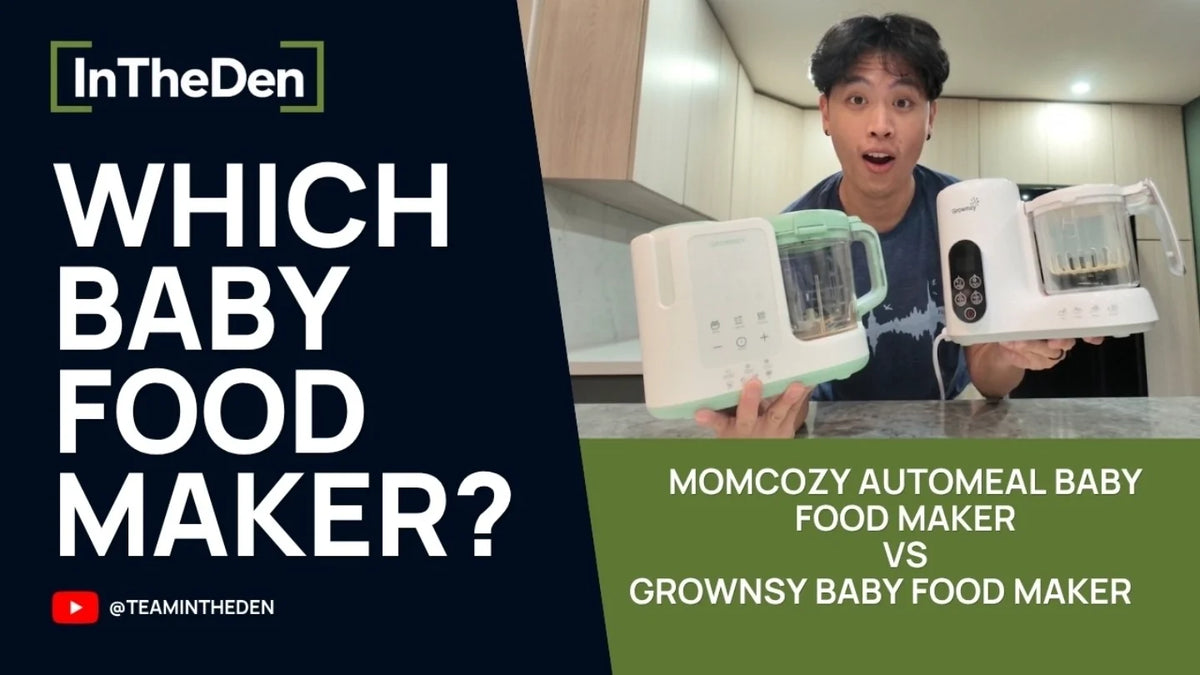
As we know, there are various types of baby food makers on the market. Grownsy is a top-rated baby food maker. Meanwhile, as a popular brand, Nutribullet also offers a blending-only appliance, so which one is better at handling baby food puree.
Who Handles the Cooking?
If the vegetables are already cooked, you're only comparing part of the job. Who handles the cooking? For the blending-only Nutribullet Baby, ingredients that need softening must be cooked separately. A processor with built-in steaming handles that step within the appliance.
Start your comparison with raw sweet potato, and the difference becomes clear: one setup includes cooking; the other depends on additional equipment. This is the deciding question if you are choosing between the two approaches: do you need help with the whole meal, or mainly with blending?
The Actual Performance
We have tested the applicances of Grownsy baby food maker and Nutribullet Baby food maker. The food stayed near the top of the Nutribullet container, requiring repositioning and leaving some pieces unblended during that demonstration. It reports a smoother result from the other processor's automatic blending cycle.
Those observations describe that example. They do not mean every Nutribullet recipe will produce the same result; ingredient softness, liquid, quantity, and technique all affect blending. In contrast, Grownsy often controls the modes like auto blending or manual blending to decide the texture of baby puree. Not only it is smart and flexible, but also is convenient. For instance, it always achieve sterilzation, steaming, blending functions in one machine.
Count the Dishes From Start to Finish
Cleanup should include everything used to make the meal.
If a blending-only appliance requires separate cookware for your recipe, count that cookware alongside the blending container, blade assembly, and utensils.
A steamer and blender keeps both functions together, although its basket, lid, container, and blade area still need cleaning. The meaningful comparison is the total equipment used for your usual recipe. If you already have a pot steaming family vegetables, the extra cleanup may be minimal. If you cook a separate small batch each day, an integrated setup may be more convenient.
The takeaway: built-in steaming offers more value when you regularly start with uncooked ingredients. A dedicated blender can be sufficient when cooking is already covered.
The Verdict: Why Grownsy Is the Best One
Put the three comparisons together and a clear picture emerges.
- Against a regular blender, a machine that steams and blends in one unit removes the separate pot, the transfer step, and the extra cleanup that so often derail good intentions on busy days.
- Against non-elevated steaming designs, an elevated basket keeps food above the cooking water --- protecting water-soluble nutrients and letting you add liquid gradually instead of guessing.
- Against the blending-only Nutribullet Baby, an all-in-one processor covers the whole meal from raw ingredient to finished purée, with automatic and manual blending that grows with your baby from first spoonfuls to thicker, lumpier textures.
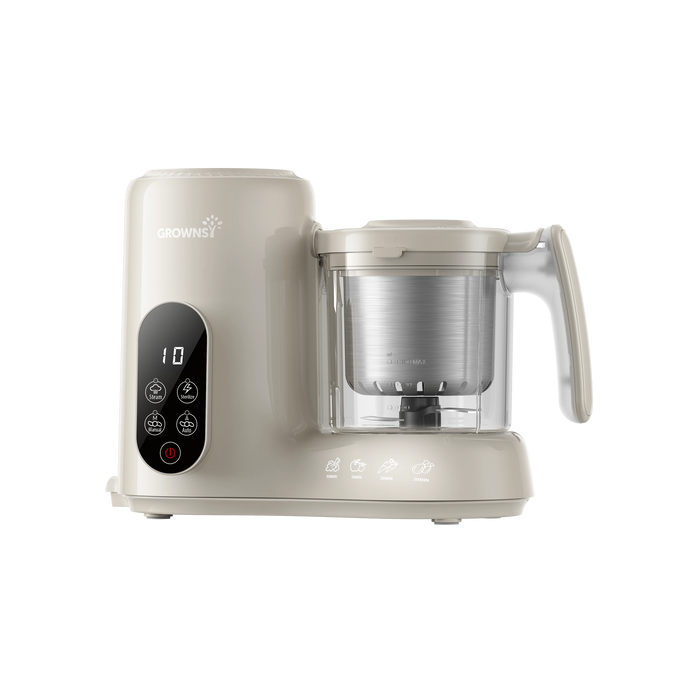
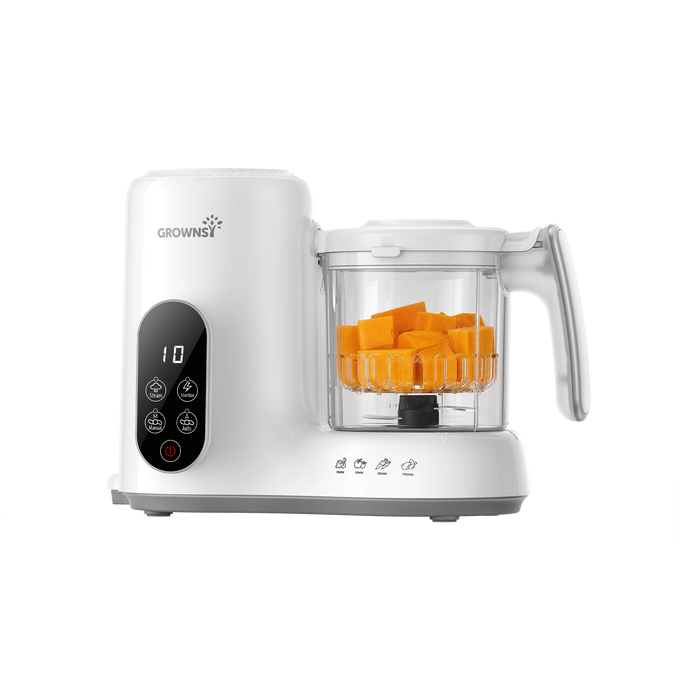
The Grownsy baby food maker checks every one of those boxes: built-in steaming covers the cooking step, the elevated basket separates food from water, and Auto and Manual Blend modes help you adjust consistency throughout your baby's feeding journey.
If you want to prepare fresh meals from raw ingredients regularly --- and make the whole routine simple enough to actually stick with --- the Grownsy baby food maker is the best baby food maker for you.
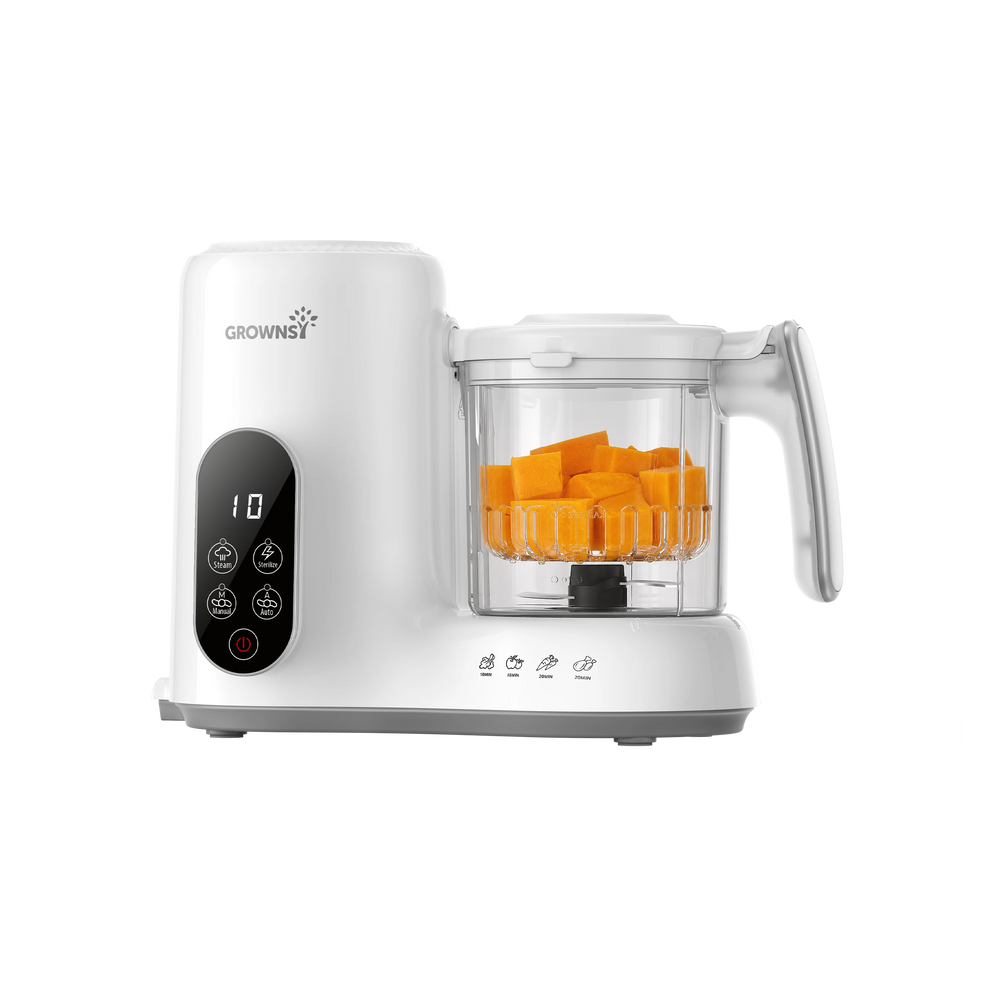
NutriChef Steam & Blend Baby Food Processor
Skip the pot-to-blender mess! Grownsy baby food processor steams, blends and fine-tunes puree textures with easy-clean parts. Show now!