


Preparing for a newborn comes with a surprisingly long shopping list, and baby bottles are one of those items that can be hard to judge.
Do you need four bottles? Six? Eight? Ten?
Buy too few, and you may find yourself washing bottles after every feeding. Buy too many, and you may end up with bottles your baby rarely uses.
For most families, 6--8 bottles is a practical starting point for a newborn, but the right number depends on how your baby is fed, how often you wash bottles, and how much cleaning you want to do each day.
How Many Bottles Does a Newborn Need?
| Feeding Routine | Suggested Starting Point |
|---|---|
| Occasional bottle feeding | 2–4 |
| Breastfeeding + occasional pumping | 4–6 |
| Regular pumping | 6–8 |
| Formula feeding | 6–8 |
| Combination feeding | 4–8 |
| Less frequent washing | 8–10 |
These numbers are a starting point, not a rule.
A simple way to think about it is: Buy enough bottles to cover the longest period between your washing cycles, plus a couple of extras.
If you plan to wash bottles after every feeding, you can get by with fewer.
If you'd rather wash once or twice a day, having 6--8 or even 8--10, gives you more flexibility.

How Many Bottles Do You Need for Different Feeding Routines?
Breastfeeding + Occasional Bottles
If your baby primarily breastfeeds, 2--4 bottles may be enough for occasional expressed milk or supplemental feeding.
There's no need to buy a large bottle set before you know how often you'll actually use it.
Regular Pumping
If you're pumping several times a day, 6--8 bottles can make bottle rotation easier.
You'll also need to clean your breast pump parts regularly, so your actual cleaning workload may be larger than the number of bottles suggests.
Formula Feeding
If bottles are used for most or all feeds, 6--8 bottles is a practical starting point.
Families who prefer to wash less frequently may choose 8--10.
Combination Feeding
If you're combining breastfeeding with formula or expressed milk, 4--8 bottles may be enough, depending on how many feeds involve a bottle.
Why Does the Number of Bottles Matter?
The number of bottles you own isn't just a shopping decision.
It's also a cleaning decision.
Baby bottles need to be cleaned after use, which means every bottle eventually becomes another item to:
Disassemble → Wash → Rinse → Dry → Store
And a bottle isn't usually just one piece.
Depending on the design, you may be cleaning:
- Bottle
- Nipple
- Ring
- Cap
- Valve or other small components
So six bottles can mean dozens of individual parts moving through your sink or dishwasher over the course of a day.
This is why having more bottles can make your routine more flexible but it doesn't eliminate the cleaning workload.
How Often Do Baby Bottles Need to Be Washed?
The CDC recommends cleaning infant feeding items after every use.
That means if your baby uses six bottles in a day, those bottles will all need to be cleaned.
If you're also pumping, breast pump parts that come into contact with breast milk need regular cleaning as well.
This can quickly turn bottle cleaning into a repetitive daily task.
For families using several bottles every day, the bigger question may not be:
"How many bottles should I buy?", but "How can I make cleaning all those bottles easier?"
Do You Need More Bottles or a Better Cleaning Routine?
If you find yourself constantly running out of clean bottles, buying a few more can help.
But there's a limit.
Having 10 bottles instead of 6 gives you more time between washing cycles---but eventually, all 10 still need to be cleaned.
That's where your cleaning setup becomes important.
Hand Washing
Simple and accessible, but requires the most hands-on work.
Dishwasher
Convenient if your bottles and accessories are dishwasher-safe, but you still need to load, run, and unload the dishwasher.
Dedicated Bottle Washer
A bottle washer can automate more of the routine, especially when you're cleaning multiple bottles and feeding accessories every day.

Can a Bottle Washer Make 6--8 Bottles Easier to Manage?
Yes, and this is where the number of bottles and your cleaning routine come together.
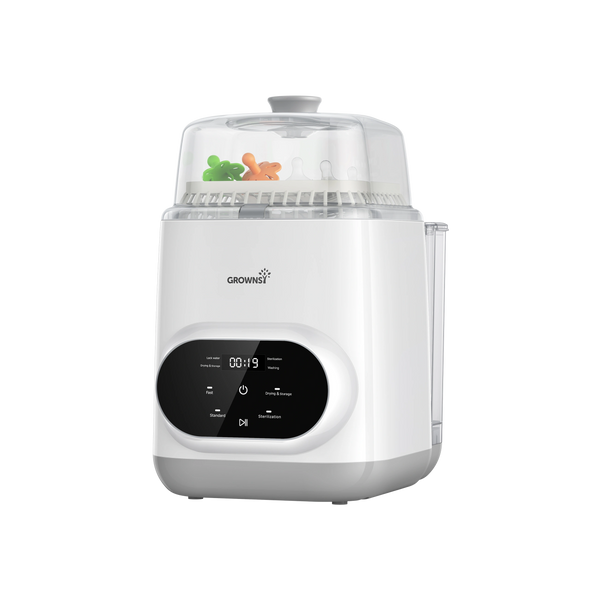
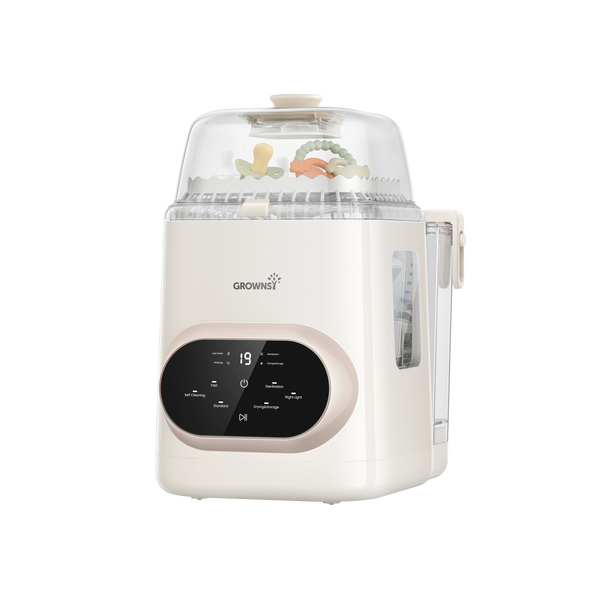
Grownsy's 4-in-1 EaseClean Feeding Bottle Washer Pro is designed to take bottles through:
Wash → Sterilize → Dry → Store
It features 26 spray jets and up to 24,000 Pa of water pressure for targeted cleaning, followed by steam sterilization, heated drying, and enclosed storage. Grownsy 4-in-1 EaseClean Feeding Bottle Washer Pro
With a system like this, having 6--8 bottles doesn't mean creating a larger pile of bottles to hand-wash. Instead, you can build a simple rotation:
Use → Collect → Load → Wash → Sterilize → Dry → Store → Repeat
For parents who are feeding frequently, the goal isn't necessarily to own more bottles. It's to make the bottles you already own easier to manage.
How Many Bottles Should You Buy Before Your Baby Arrives?
If you're still building your registry, a reasonable starting point is:
4--6 bottles if you're unsure how often you'll use bottles.
6--8 bottles if you expect regular bottle feeding.
8--10 bottles if you know you'll use bottles frequently and prefer longer intervals between washing cycles.
Don't feel like you need to buy a huge set immediately.
Babies can be surprisingly particular about bottle shape, nipple flow, and feeding style. It's often smarter to start with a manageable number, see what works for your baby, and expand your collection if needed.
Bottom Line
For most newborn families, 6--8 baby bottles is a practical starting point.
You may need fewer if you primarily breastfeed or wash after every feeding. You may want more if you formula-feed, pump frequently, or prefer longer intervals between washing cycles.
But the number of bottles is only half of the equation.
The other half is how you clean them.
When you're washing multiple bottles every day, a dedicated system can make a bigger difference than simply adding more bottles to the cabinet.
With Grownsy's 4-in-1 EaseClean Feeding Bottle Washer Pro, compatible bottles and feeding accessories can move through washing, steam sterilization, heated drying, and storage in one workflow. Explore Grownsy EaseClean Feeding Bottle Washer Pro
Start with the right number of bottles. Then build a cleaning routine that makes having them manageable.
Frequently Asked Questions
Is 6 bottles enough for a newborn?
For many families, yes. Six bottles provide a reasonable rotation if you're washing bottles regularly.
Is 8 bottles enough for a newborn?
Yes. Eight bottles can be a practical choice for families using bottles frequently or washing once or twice a day.
Do I need 10 baby bottles?
Not necessarily. Ten can be useful if you want a larger rotation, but most families don't need that many from the beginning.
How many bottles do I need if I exclusively breastfeed?
If your baby primarily breastfeeds, 2--4 bottles may be enough for occasional expressed milk. Regular pumping may require more.
How many bottles do I need for formula feeding?
6--8 bottles is a practical starting point for many formula-feeding families. If you prefer less frequent washing, you may want 8--10.
Does having more bottles mean less washing?
It can mean less frequent washing, but not less total washing. Every bottle eventually needs to be cleaned.
Is a bottle washer worth it if I have 6--8 bottles?
If you're cleaning several bottles and feeding accessories every day, a bottle washer can help automate washing, sterilizing, drying, and storage. For occasional bottle use, hand washing may be sufficient.


