


If you pump several times a day, you probably know the routine: finish pumping, take everything apart, rinse the parts, wash the tiny valves and membranes, and find somewhere for everything to dry.
Now add baby bottles to the same routine.
For pumping parents, cleaning breast pump parts isn't a one-time task.** So the question isn't just how to clean them properly, it's how to make the process easier to repeat.
The basic routine is simple: disassemble, wash, rinse, dry, and store. Depending on your pump and daily routine, you can do this by hand, in a dishwasher, or with a dedicated bottle washer.
How to Clean Breast Pump Parts at a Glance
After each pumping session:
- Disassemble all washable parts.
- Rinse components that came into contact with breast milk.
- Wash with soap and hot water, or use a compatible appliance.
- Rinse thoroughly.
- Air-dry completely.
- Store in a clean, protected place.
The CDC recommends cleaning pump parts that come into contact with breast milk after every use. Always follow your breast pump manufacturer's cleaning instructions.

Which Breast Pump Parts Need to Be Cleaned?
Depending on your pump, washable parts may include:
- Breast shields
- Milk collection bottles
- Valves
- Membranes
- Connectors
- Backflow protectors
Disassemble the pump according to the manufacturer's instructions before cleaning.
Pay particular attention to small parts such as valves and membranes, where milk can collect in narrow openings or folds.
Never immerse electrical components unless the manufacturer specifically says they are washable.
How to Wash Breast Pump Parts by Hand
Hand washing is a practical option, especially if you pump occasionally.
1. Disassemble
Separate all washable components.
2. Rinse
Remove remaining breast milk residue.
3. Wash
Use dish soap and hot water according to the manufacturer's instructions. A clean brush can help with narrow openings.
4. Rinse
Remove any remaining soap.
5. Air-dry
Place parts on a clean, protected surface and allow them to dry completely.
6. Store
Store or reassemble once completely dry.
The process is straightforward. The challenge is repeating it after every pumping session.
Can You Put Breast Pump Parts in the Dishwasher?
Sometimes.
Some pump parts are dishwasher-safe, while others aren't. Always check the manufacturer's instructions first.
For dishwasher-safe parts, secure small components such as valves and membranes in a closed-top basket or mesh bag.
A dishwasher can work well if you're already running regular loads. But for parents pumping several times a day, pump parts can end up waiting for the next dishwasher cycle.
That's where a dedicated bottle washer can become useful.
Can You Wash Breast Pump Parts in a Bottle Washer?
Yes, if the specific pump parts are compatible with the bottle washer.
A dedicated bottle washer can bring compatible pump parts and baby bottles into the same cleaning workflow:
Load → Wash → Sterilize → Dry → Store
Grownsy's 4-in-1 EaseClean Feeding Bottle Washer Pro is designed for baby bottles and compatible pump parts. It features 26 spray jets and up to 24,000 Pa of water pressure, followed by integrated sterilizing, drying, and storage functions. Grownsy 4-in-1 EaseClean Feeding Bottle Washer Pro
The key benefit for pumping parents isn't simply that it can wash pump parts. It's that bottles and compatible pump components can become part of the same automated routine.
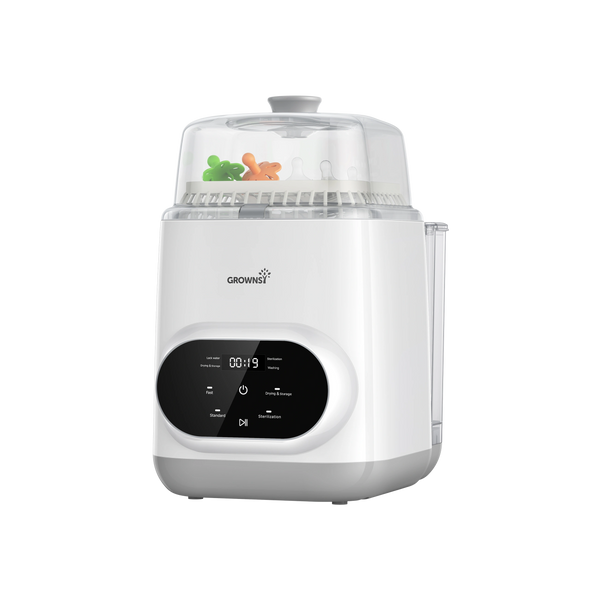
Hand Washing vs. Dishwasher vs. Bottle Washer
| Cleaning Method | Best For | Main Consideration |
|---|---|---|
| Hand washing | Occasional pumping | Most hands-on |
| Dishwasher | Regular household loads | Parts must be dishwasher-safe |
| Bottle washer | Frequent pumping + bottle feeding | Parts must be compatible |
If you pump occasionally, hand washing may be enough.
If your pump parts are dishwasher-safe, a dishwasher can reduce some manual work.
But if you're pumping frequently while also washing multiple baby bottles, a dedicated bottle washer can consolidate more of the daily cleanup.

How Often Should You Clean Breast Pump Parts?
For parts that come into contact with breast milk, the CDC recommends cleaning them after every use.
That means four pumping sessions can mean four cleaning cycles---before you even count your baby's bottles.
For babies younger than 2 months, babies born prematurely, or babies with weakened immune systems, additional sanitizing may be recommended. Follow CDC guidance, your healthcare provider's recommendations, and your pump manufacturer's instructions.
How Should You Dry Breast Pump Parts?
After washing, allow pump parts to air-dry completely on a clean, protected surface unless the manufacturer allows another method.
Avoid drying them with a kitchen towel.
If compatible with your equipment, heated drying can make this step part of an automated cleaning routine.
With Grownsy, compatible feeding parts can move through:
Wash → Steam Sterilize → Heated Dry → Store
The system also provides up to 72 hours of enclosed storage, helping keep clean items organized after the cycle. GrownsyBottle Washer Product Details
What About Valves and Membranes?
Small components deserve extra attention.
Use the basic sequence:
Disassemble → Wash → Rinse → Inspect → Dry
Check for remaining milk residue and inspect parts regularly for damage or wear.
Most importantly, don't assume every valve, membrane**, or connector is safe for a bottle washer**. Always check both the breast pump manufacturer's instructions and the bottle washer's instructions.
Is a Bottle Washer Worth It for Pumping Parents?
If you pump occasionally, hand washing may be perfectly manageable.
But if you're:
- Pumping several times a day
- Feeding your baby with bottles
- Cleaning multiple bottles daily
- Managing numerous small pump components
then the biggest benefit of a bottle washer is workflow consolidation.
Instead of managing:
Pump Parts → Wash → Dry
and
Baby Bottles → Wash → Sterilize → Dry
compatible feeding equipment can potentially follow one routine:
Pump Parts + Bottles → Wash → Sterilize → Dry → Store
That's where the Grownsy 4-in-1 EaseClean Feeding Bottle Washer Pro fits into the daily feeding routine: not simply as a bottle cleaner, but as a centralized system for washing, sterilizing, drying, and storing compatible feeding equipment. Explore GrownsyEaseClean Feeding Bottle Washer Pro
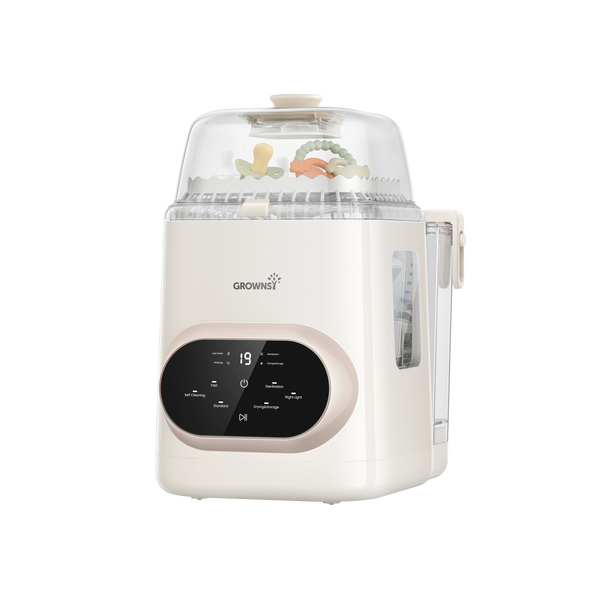
Bottom Line
Cleaning breast pump parts doesn't have to be complicated:
Disassemble → Wash → Rinse → Dry → Store
Hand washing, a dishwasher, or a bottle washer can all work---the right choice depends on your pump, compatible equipment, and how often you pump.
For parents who pump frequently and also wash multiple baby bottles every day, a dedicated bottle washer can simplify more of the routine.
With Grownsy, compatible bottles and feeding parts can move through washing, steam sterilization, heated drying, and storage in one system.
Less time cleaning. Fewer steps between pumping and the next feed.
Frequently Asked Questions
How often should I wash breast pump parts?
Clean parts that come into contact with breast milk after every use, following CDC guidance and your pump manufacturer's instructions.
Can breast pump parts go in the dishwasher?
Some can, but not all. Always check the manufacturer's instructions.
Can I put breast pump parts in Grownsy's bottle washer?
Only if the specific parts are compatible. Check your breast pump manufacturer's instructions before using them in the machine.
Can I wash bottles and breast pump parts together?
If both are compatible with the cleaning system and their manufacturers allow it, they can potentially be cleaned in the same cycle.
Does Grownsysterilize and dry pump parts?
The EaseClean Pro includes steam sterilization and heated drying. Whether a specific pump component can undergo these processes depends on its manufacturer's instructions. GrownsyEaseClean Product Information


