


What Should a Baby Bottle Cleaning Station Include?
A basic bottle cleaning station typically needs:
- Bottle cleaning area — a sink or dedicated wash basin
- Bottle brush — for bottles and narrow areas
- Small-parts brush — for nipples, valves, and other components
- Dish soap — use one appropriate for your feeding equipment
- Drying area — a clean surface or dedicated drying rack
- Storage area — a clean, protected place for completely dry bottles
The CDC recommends taking bottles apart before cleaning and allowing feeding items to air-dry completely before storage.
How to Organize Your Bottle Cleaning Station
A simple setup can follow the same order as your cleaning routine:
Dirty → Wash → Sterilize → Dry → Store
Keeping these steps physically organized can prevent clean and dirty bottles from getting mixed together.
1. Keep Dirty Bottles Separate
Choose one designated area for used bottles and feeding parts.
Don't let used bottles sit mixed with clean equipment.
2. Keep Cleaning Tools Together
Store your bottle brush, small-parts brush, and other cleaning supplies in one place.
If you hand wash bottles, the CDC recommends using a clean basin and a brush specifically for infant feeding items rather than washing directly in the sink.
3. Give Clean Parts Room to Dry
Bottles, nipples, caps, and other components should be allowed to dry completely before storage.
Avoid wiping them dry with a kitchen towel, which can transfer germs back onto clean feeding items.
4. Keep Clean Bottles Protected
Once completely dry, store clean bottles and feeding parts in a clean, protected area.
Can a Bottle Washer Replace a Bottle Cleaning Station?
It can simplify the station considerably.
Instead of creating separate areas for hand washing, sterilizing, drying, and storing, a dedicated bottle washer can combine several of these steps into one system.
For parents who use multiple bottles every day, this can turn:
Sink → Drying Rack → Sterilizer → Cabinet
into a much simpler workflow:
Load → Wash → Sterilize → Dry → Store
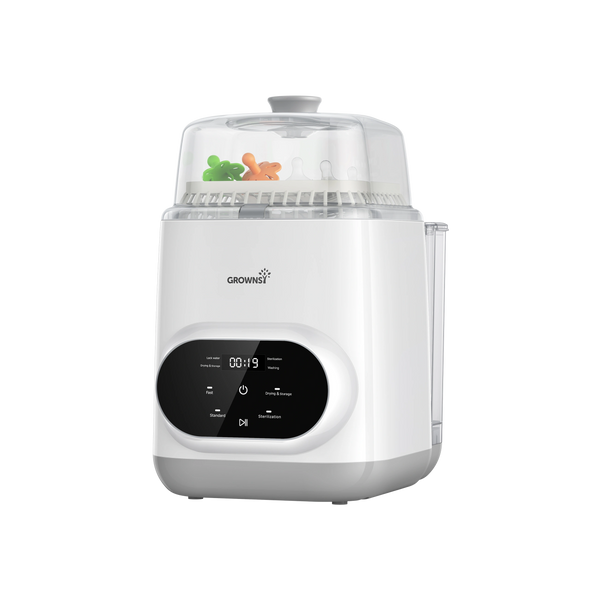
That's the idea behind the Grownsy 4-in-1 EaseClean Feeding Bottle Washer Pro. It combines washing, steam sterilization, heated drying, and storage in one appliance, with 26 spray jets and up to 24,000 Pa of water pressure for cleaning.
For families feeding with bottles several times a day, the benefit isn't simply saving counter space. It's reducing the number of separate steps you have to repeat.
A Simple Bottle Cleaning Station Setup
If you're building your station from scratch, start with:
Option 1 — Hand-Washing Setup
Bottle brush + small-parts brush + clean basin + drying area + storage
Option 2 — Automated Setup
Grownsy Bottle Washer + detergent + storage area
The second setup can consolidate washing, sterilizing, drying, and storage, while still keeping your daily feeding equipment organized.
Just remember that every bottle, nipple, and feeding component should be cleaned and used according to its manufacturer's instructions.
Bottom Line
A good baby bottle cleaning station doesn't need to be complicated.
What matters is having a clear workflow:
Separate → Clean → Sterilize When Needed → Dry → Store
If you're only cleaning a few bottles a day, a simple sink-and-drying setup may be enough.
If you're formula feeding or using several bottles every day, a dedicated bottle washer can make the entire routine easier to manage.
With Grownsy's 4-in-1 EaseClean Feeding Bottle Washer Pro, washing, steam sterilizing, drying, and storing can happen in one dedicated system turning your bottle cleaning station from a collection of separate tools into one streamlined routine.
Explore Grownsy EaseClean Feeding Bottle Washer Pro
Frequently Asked Questions
Where should I set up a baby bottle cleaning station?
Set up your baby bottle cleaning station in a dedicated, low-traffic corner of your kitchen counter—ideally right next to the sink and away from raw food preparation areas. Keeping dirty bottles isolated in a basin on one side and washed items drying on a dedicated rack on the other prevents cross-contamination and streamlines your daily feeding routine.
Do I need a separate bottle cleaning station?
Not necessarily. A clean sink, appropriate cleaning tools, and a drying area can be enough. Families using many bottles may benefit from a dedicated setup.
Can a bottle washer replace a drying rack?
If the specific bottle washer includes a drying function, it can reduce the need for a separate drying step. Always follow the appliance and bottle manufacturer's instructions.
Do I need to sterilize bottles after every use?
Not necessarily for every healthy older infant. CDC guidance recommends daily sanitizing for babies under 2 months, babies born prematurely, or babies with weakened immune systems; follow current guidance and your healthcare provider's recommendations.


