


It's another feeding, another bottle, and another pile of small parts by the sink. You wash everything, then wonder: Do I still need to sterilize it? And if I already have a sterilizer, do I really need a bottle washer? The confusion is understandable because these two appliances do different jobs.
A bottle sterilizer sanitizes feeding items that have already been cleaned. A bottle washer starts with the cleaning step, and some models can then sterilize, dry, and store the items.
So, do you need both?
Not necessarily. If you already have an easy way to wash bottles, a standalone sterilizer may be enough when extra sanitizing is appropriate. If washing, sterilizing, and drying bottles are all part of your daily workload, an all-in-one bottle washer may make more sense.
Bottle Washer vs. Sterilizer at a Glance
| Feature | Bottle Washer | Bottle Sterilizer |
|---|---|---|
| Removes milk/formula residue | ✓ | ✕ |
| Washes bottles | ✓ | ✕ |
| Sterilizes | Some models | ✓ |
| Dries | Some models | Some models |
| Stores | Some models | Some models |
| Main purpose | Clean and simplify bottle care | Sanitize already-clean items |
The simplest way to remember it:
Sterilizer: Clean → Sterilize
Bottle Washer: Wash → Sterilize → Dry → Store
What Does a Bottle Sterilizer Do?
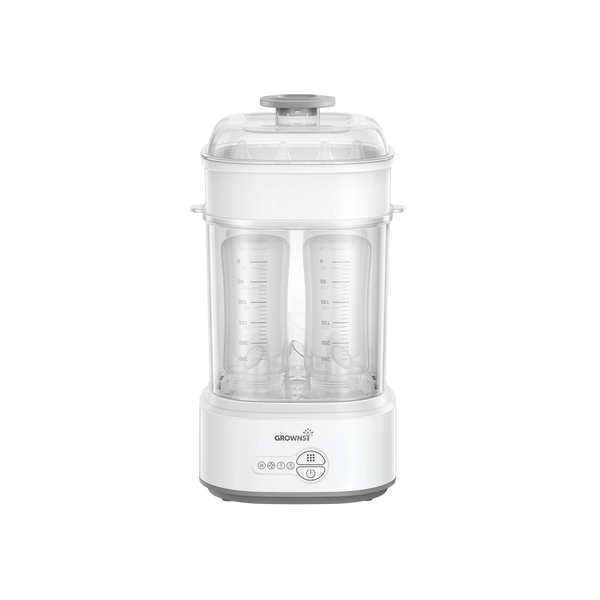
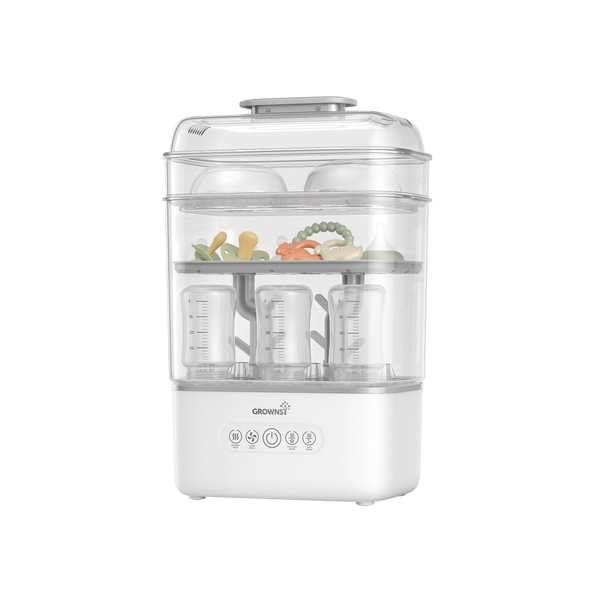
A sterilizer is designed to sanitize feeding items after they have been cleaned.
It does not replace washing. Milk and formula residue should be removed before sanitizing. The CDC recommends thoroughly cleaning infant feeding items before sanitizing them when sanitizing is needed. (CDC)
A typical sterilizer routine is:
Disassemble → Wash → Rinse → Sterilize → Dry → Store
A standalone sterilizer can therefore work well if you already have a simple bottle-washing routine, whether you wash by hand or use a dishwasher for compatible items.

What Does a Bottle Washer Do?
A bottle washer is designed to handle the cleaning step that comes before sterilization.
This can be especially useful when you regularly clean multiple bottles, nipples, caps, valves, and other small feeding parts.
GROWNSY's bottle washer uses 26 spray jets and up to 24,000 Pa of water pressure for bottle cleaning. Its 4-in-1 system combines:
Wash → Sterilize → Dry → Store
That means you don't have to move bottles from a washer to a separate sterilizer and then find another place for them to dry.
Can a Sterilizer Clean Baby Bottles?
No.
This is the most important difference.
Cleaning removes milk and formula residue. Sterilizing is an additional sanitizing step.
Putting a bottle with leftover formula residue into a sterilizer does not replace proper cleaning.
That's why the order matters:
Clean first. Sanitize afterward, when appropriate.
The CDC notes that extra sanitizing is particularly important for babies younger than 2 months, babies born prematurely, or babies with weakened immune systems. Follow your healthcare provider's advice and the manufacturer's instructions for your feeding equipment. (CDC)
Do You Need Both a Bottle Washer and a Sterilizer?
Usually, no.
If your bottle washer already includes a sterilizing function, buying a separate sterilizer may simply duplicate the same step.
Instead of:
Wash → Transfer → Sterilize → Transfer → Dry
an all-in-one bottle washer can handle:
Wash → Sterilize → Dry → Store
For parents cleaning several bottles every day, reducing these transfers can make the routine easier to manage.
However, a bottle washer isn't necessary for everyone.
A Standalone Sterilizer May Be Enough If You:
- Already have an easy bottle-washing routine
- Use a dishwasher for compatible feeding items
- Only clean a few bottles each day
- Mainly want an additional sanitizing step
A Bottle Washer May Make More Sense If You:
- Wash multiple bottles every day
- Formula-feed or combination-feed
- Pump frequently
- Clean multiple feeding parts
- Want washing, sterilizing, and drying in one workflow
- Want to reduce repetitive bottle-cleaning tasks
Bottle Washer vs. Sterilizer: Which Saves More Work?
The difference isn't simply about speed.
A sterilizer automates one part of bottle care:
Wash → Sterilize
An all-in-one bottle washer can automate more of the routine:
Wash → Sterilize → Dry → Store
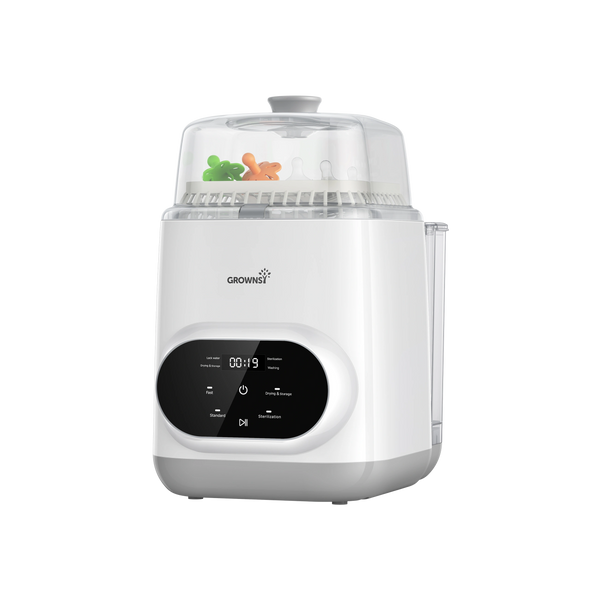
For example, Grownsy offers a 19-minute Quick Wash and 29-minute Standard Wash, followed by dedicated sterilizing and drying functions. Its 60-minute Dry & Storage cycle also allows the process to continue through drying and storage, with up to 72 hours of sterile storage.
So the main benefit is not necessarily that a bottle washer makes every individual cycle faster. It's that more of the daily bottle-care routine can happen in one place.

Bottle Washer or Sterilizer: Which One Is Right for You?
There isn't one answer for every family.
Choose a sterilizer if you already have a reliable way to wash bottles and mainly want a separate sanitizing step.
Choose a bottle washer if washing multiple bottles and feeding parts is the repetitive task you want to simplify.
Choose an all-in-one bottle washer if you want washing, sterilizing, drying, and storage handled as one continuous workflow.
The key difference is simple:
A sterilizer adds a sanitizing step. A bottle washer can simplify the entire bottle-care routine.
Frequently Asked Questions
Can a Bottle Sterilizer Replace a Bottle Washer?
No. A sterilizer sanitizes already-clean feeding items. It does not replace washing, which removes milk and formula residue.
Do I Need a Sterilizer If I Have a Bottle Washer?
Not if your bottle washer already includes a sterilizing function. Check the specific model's features and follow your baby's healthcare provider's recommendations.
Do I Need a Bottle Washer If I Already Have a Sterilizer?
Not necessarily. If you have a simple and reliable way to wash bottles, a sterilizer may be all you need. A bottle washer becomes more useful when frequent washing is the part of the routine you want to simplify.
Do Baby Bottles Need to Be Sterilized After Every Use?
Not necessarily for every healthy, older baby. The CDC recommends extra sanitizing in certain situations, including for babies younger than 2 months, babies born prematurely, or babies with weakened immune systems. (CDC)
Can a Bottle Washer Replace a Dishwasher?
No. A bottle washer is designed for baby bottles and compatible feeding equipment, while a dishwasher is a general-purpose appliance for household dishes.


