


Bottle Washer,Dishwasher, or Hand Washing? Which One is Best for Your Baby?
When it comes to washing baby bottle washer, you maybe fall a dilemma between your time and your space. Rinsing bottles, taking them apart, scrubbing the hard-to-reach spots. Hand-washing feels like a repeat and boring thing but you have to do everyday after caring your baby. Sometimes a inspiration hit you: Are there any method to change the situation and let me take a rest? Furthermore, you maybe wonder: Am I really making these bottles clean enough? Is it worth to invest a baby bottle washer?
How about Bottle Washer
Bottle washer is a washing machine take the hassle out of cleaning baby bottles, nipples, and accessories. Nowadays, most bottle cleaners in the market can combine several tasks, such as washing, sanitizing, and drying in one cycle. This automatic, hands-off system ensures that every nook and cranny is thoroughly scrubbed and sanitized with zero effort on your part.
How about Dishwasher
Rather than hand-washing, dishwasher always serve as ubiquitous household fixtures adept at sanitizing routine tableware during our daily life.

The differences between bottle washer and dishwasher
Although both appliances specialize in sanitation and cater to household chores, they diverge significantly in their functionality and target use cases.
Professional Adaptability
Let us return the essence of their original design intentions.
Dedicated bottle washers are tailor-made for infant gear, featuring specialized racks and custom attachments that securely anchor bottles, nipples, and pacifier during the washing process. Conversely, traditional dishwasher are build for general-purpose kitchenware, offering broader versatility to handle a diverse array of household items.
Clean Principle
Bottle washers employ gentle yet high-pressure water jets and spinning spray arms engineered to penetrate deep into narrow bottle necks. This setup is uniquely optimized to dissolve stubborn formula and breast milk residue. In contrast, traditional dishwashers rely on blistering heat and aggressive wash cycles to break down the heavy grease, baked-on food, and sauces typically found on everyday cookware.

Occupied Space
Bottle washers generally feature a sleek, space-saving footprint, making them highly portable and perfect for setups in nurseries, master bedrooms, or tight kitchen corners. Standard dishwashers, however, are bulky built-in or countertop units that demand a permanent plumbing connection and a generous amount of dedicated space. Easy to install and use also should be considered.
Your dishwasher might be a workhorse for cleaning plates and cups, but it's no match for baby bottles. Standard high-heat cycles are great, but they still fail to address the intricate shapes and could not satisfy meticulous hygiene demands of baby products.
Disinfected Capability
Premium bottle washers often incorporate built-in UV sterilization or medical-grade steam cycles, easily surpassing the rigorous hygiene standards required for infant feeding. While dishwashers do utilize high-heat rinses that sanitize standard dinnerware, they often fall short of providing the deep, clinical sanitization that delicate baby gear demands.
Especially for premature babies, they have a more delicate and fragile immune system. Washing their bottles or baby syringes along with other kitchen utensils can easily lead to cross-contamination.
Smell Transfer
As we know, in the washing process, dishwasher can easily trap food odors and need toss special soap that transfer onto silicone nipples and plastic bottles. Picky babies are highly sensitive to these lingering scents and may refuse to feed altogether. On the other hand, because bottle washers exclusively handle infant accessories, they virtually eliminate the risk of cross-contamination and weird odor from family dinnerware.
Dry Function
A frequent complaint among parents is that the bottle is always damp out of the dishwasher. In contrast, professional baby bottle washers utilize an active, targeted drying system. They force filtered, high-temperature HEPA air directly upward through dedicated nozzles positioned inside each inverted bottle. This continuous, focused blast of dry heat actively drives moisture out of the narrowest nooks and crannies. Because the heated air is constantly vented and replenished in a compact chamber, humidity cannot saturate, ensuring that plastic, silicone, and glass parts alike come out completely moisture-free and ready for immediate use.
Water Consumption
To help you better understand, we collect and compiled first-hand data on the water consumption of various bottle washing:
- Hand-washing will use about 10+ gallons water
- New eco-friendly dishwashers can are about 3 gallons, older units around 6
- Bottle washer uses 1 gallon. Even if you run it twice a day, you're saving a few hundred gallons per year
To sum up, bottle washers are exceptionally water-wise, consuming only what is necessary to get baby gear spotless- making them a high sustainable option. Conversely, traditional dishwashers run on heavy water loads. Powering up a full cycle just to wash a handful of baby bottles is incredibly wasteful and inefficient.
Time-saving
According to the researching date, normal dishwasher cycle is between 1.5 and 3.0 hours. Adding a sanitizer cycle adds another 30-60 minutes. Just a quick wash in the Grownsy Baby Bottle Washer is approximately 19 minutes.
In conclusion, bottle washer is a high-value investment for parents. It delivers a level of gentle, clinical cleanliness that a multi-purpose dishwasher simply cannot replicate. While household dishwashers excel at versatility, they ultimately fail to meet the exacting, sterile standards required to keep a newborn's feeding gear safe.
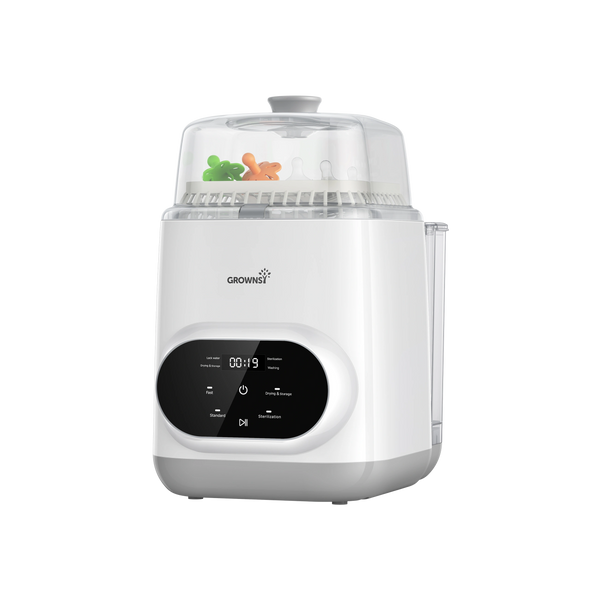
How to choose a professional bottle washing product
Selecting the optimal bottle washer is significant to guarantee that your infant's feeding tool remains impeccably clean, sterile, and safe. Below are the pivotal criteria you can consider as a reference:
Material Safety
It is imperative that the device is constructed from food-grade, BPA-free polymers that exhibit exceptional thermal stability. This material ensures the machine can withstand high sanitizing temperatures without leaching any harmful substances. (AAP guidance on food-contact materials)
Easy to install, Hands-Off Operation
Opt for complete automated systems that require minimal manual intervention. By delegating the scrubbing and drying to a smart appliance, you can take time back and concentrate on the most important thing--nurturing your little one.
Multi-function
As you know, your baby will grow up by time. Maybe you want to have more cute baby. A big bottle washer serves as your storage unit too. When your little one become toddle and step into the next stage, you still can use it to sterilize baby food utensils such as pacis, syringes, spoon, baby bowl, and so on. So, you can choose a machine with enough space to hold and storage much bottles.
All-in-one Care
A premium unit should seamlessly integrate washing, sanitizing, and drying into a single, cohesive process. This multi-stage automation not only streamlines the daily routine but also significantly mitigates the risk of post-wash contamination.
Brand Credibility and Support
Align your purchase with distinguished manufacturers backed by a proven track record of quality and glowing consumer testimonials. Furthermore, reliable after-sales service and a solid warranty provide peace of mind for long-term ownership.

How to maintain bottle washer daily
-
Drain and Rinse Post-Cycle
Promptly evacuate any remaining water and rinse the internal chamber after each cycle to preemptively thwart the accumulation of milk residue.
-
Conduct Routine Wipe-Downs
Periodically sanitize both the interior chamber and the exterior housing using a clean, damp, non-abrasive cloth to maintain pristine surfaces.
-
Inspect Filters and Inlets Weekly
Perform a weekly inspection of the filtration system and water inlets, clearing away any trapped debris to stave off blockages and sustain optimal water flow.
-
Execute Monthly Descaling
Deep-clean the system on a monthly basis using designated descaling solutions or a mild vinegar mixture. For unparalleled safety and a thorough clean, utilize specialized formulations such as Grownsy Detergent Tablets to dissolve mineral buildup safely.
-
Promote Passive Airflow
Leave the appliance door slightly ajar between uses to facilitate thorough air-drying, which effectively stifles the growth of mold and lingering musty odors.
Other Points for Baby feeding
Clean Bottles After Every Feeding
Do not simply rinse and refill a used bottle. Milk and formula residue can support rapid germ growth. Take the bottle apart and clean every component before reuse. (CDC infant feeding-item guidance)
Follow Formula Time Limits
Prepared formula should be used within two hours of preparation and within one hour after feeding begins. If it has not been used within two hours, refrigerate it immediately and use it within 24 hours. Throw away formula left in the bottle after feeding. CDC formula preparation and storage guidance
Store Breast Milk Safely
The CDC’s general storage guidance for freshly expressed breast milk is:
- Up to four hours at room temperature at 77°F or colder
- Up to four days in the refrigerator
- About six months in the freezer for best quality, although up to 12 months is acceptable
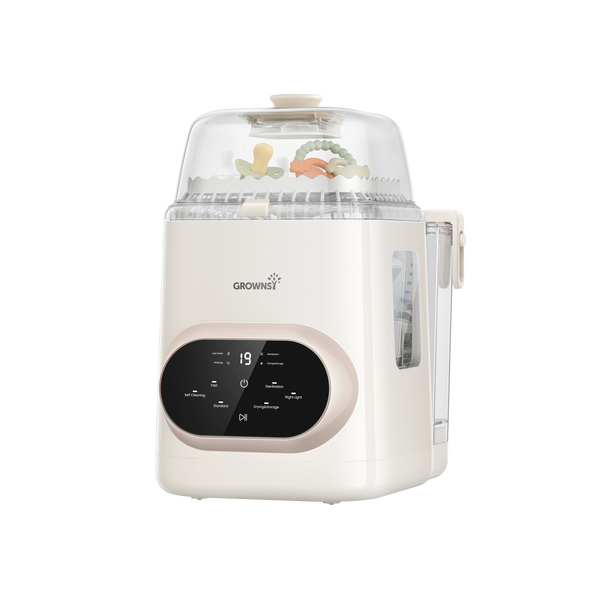
Conclusion
There is no single cleaning method that every family must use.
Hand washing is inexpensive but requires more energy to invest into the thing. A household dishwasher is a efficient choice when bottles are dishwasher-safe, small parts are secured, and hot-water and heated-drying settings are used correctly. A dedicated bottle washer becomes valuable when bottles and pump parts need to be cleaned frequently, in smaller batches, and on a predictable schedule.
FAQs
Can Baby Bottles Be Washed With Regular Dishes?
The CDC does not require a separate dishwasher load. Make sure the bottles are dishwasher-safe, disassembled, positioned correctly, and completely dry afterward. Keep the dishwasher filter and spray arms clean. (CDC infant feeding-item guidance)
Can a Bottle Washer Clean Breast Pump Parts?
Many models can clean washable pump flanges, valves, membranes, and collection cups. Always check both the washer manual and breast pump instructions.
CDC guidance says pump tubing that contains milk or mold should be discarded because it is difficult to clean safely. Tubing that never contacts milk usually does not require routine washing. (CDC breast-pump hygiene guidance)
Can I Use Regular Dish Soap in a Bottle Washer?
Usually not. Hand dish soap creates more foam than automatic-machine detergent. Use only the detergent type approved for the appliance.
Glass Vs Plastic Baby Bottles: Which Is Better for Your Baby?
if your main concern is chemical purity and longevity, glass is the superior option—especially during the newborn stage when the bottle doesn't leave your hands. However, as your baby grows and starts holding their own bottle, transitioning to a high-quality, shatterproof plastic bottle is often the most pragmatic move. (AAP guidance on food-contact materials)
Sources
- CDC: How to Clean, Sanitize, and Store Infant Feeding Items
- CDC: Infant Formula Preparation and Storage
- CDC: Breast Milk Storage and Preparation
- CDC: How to Clean and Sanitize Breast Pumps
- ENERGY STAR: Dishwashers Key Product Criteria
- HealthyChildren.org (AAP): Food Additives and Food-Contact Materials
- GROWNSY: EaseClean Feeding Bottle Washer Pro
- GROWNSY: Baby Bottle Washer Collection


