


11 Month Old Sleep Schedule: Is Your Baby Ready for One Nap?
If you're reading this at midnight and your 11-month-old is not in bed, you likely aren't the only one. This is an interesting in-between phase when your baby is past some sleep habits but not quite ready for others. The plan that was successful at 9 months suddenly fails, and nobody tells you that.
The bright side: sleep is actually more predictable, with a few changes. You'll find all of this information right here.

What Does a Healthy Sleep Schedule Look Like at This Age?
According to the American Academy of Pediatrics, infants aged 4-12 months require 12 to 16 hours of sleep in 24 hours, including naps. Most babies sleep 11 hours to 14 hours at 11 months, most of the time at night.
If your baby isn't getting the full 11 hours, there's a problem with the schedule.
Sample Daily Schedule (2-Nap Version)
The majority of 11-month-olds are still taking two naps. Here's a realistic starting point:
| Time | Activity |
|---|---|
| 7:00 AM | Wake up |
| 9:00 – 9:45 AM | Nap 1 |
| 12:30 – 2:00 PM | Nap 2 |
| 7:00 – 7:30 PM | Bedtime |
This is more of a guideline than a schedule. Your baby's temperament, the quality of their sleep, and their natural wake time will gently ease them just a little bit in one direction or the other.
Wake Windows: The Key to Timing Everything Right
Wake window is the period of time your baby can be awake without becoming drowsy or overtired. That window is generally within 3 to 4 hours at 11 months.
Get this timing right, and naps get a lot easier. If your baby is put down too early, they will resist it. If you wait too long, you will end up with an overtired baby, who, paradoxically, will take longer to fall asleep and wake up more during the night.
If you see the common signs such as rubbing their eyes, pulling their ears, sudden fussiness, or the glazed-over look, then this is the end of a wake window. The whole process is calmer when you start your wind-down at that point, as opposed to after a full meltdown.
Having a regular sleep and wake schedule helps put the baby's body clock on track, as described by the Mayo Clinic.
Nap Schedule at 11 Months
Most babies at 11 months take 2 naps in a day. According to the AAP, the transition to one nap is usually completed between 13 and 18 months. Some babies show signs earlier, but it often does not help if you act on the signs too soon, because this leads to overtiredness and poor sleep.
If one nap is being resisted on a regular basis, experiment with a little change in the nap time schedule before deciding it's time to eliminate it.
How Long Should Each Nap Last?
Morning nap: Aim for 30 to 45 minutes. A long morning nap will tend to delay the afternoon nap, and it can even take it away.
Afternoon nap: This one may last for 1-1.5 hours. It's generally the more restorative of the two.
If your baby consistently naps for 20 minutes and wakes up crying, chances are that they did not get enough sleep. It typically indicates a timing problem or a sleep environment problem.
What Time Should Nap 1 and Nap 2 Fall During the Day?
First nap should be around 9 to 9:30 AM, and second nap around 12:30 to 1:00 PM. Do try to get that second nap done by 3:30 PM. After that, bedtime is delayed again, and you fall into a late-night/early-morning cycle.
Is Your Baby Ready to Drop to One Nap?
Not yet, but here's how to find out.
Signs they might be ready:
- Refusing 1 nap consistently for 2 full weeks or more
- Taking a very long time to fall asleep at nap time, despite being awake for 3+ hours
- Even if one nap is missed, night sleep remains intact.
Signs they're not ready yet:
- If you miss your nap, you will have a 5 pm meltdown.
- On days when the only nap is taken in the daytime, night waking becomes more of an issue.
- Does not regularly refuse naps
Stanford Children's Health notes that the one-nap transition isn't for most babies until well past their first birthday. At 11 months, pushing results in more problems, typically when sleeping, than it resolves.

Bedtime: Getting the Timing and Routine Right
For most 11-month-olds, bedtime between 7:00 and 7:30 PM works best. It feels early, especially in summer, but it aligns with where their circadian rhythm naturally sits at this age.
Keeping babies up later in hopes they'll sleep longer almost always backfires. Overtired babies produce more cortisol, which makes it harder to fall and stay asleep.
The AAP describes this cycle well, and most pediatric sleep specialists point to early bedtime as one of the highest-impact changes parents can make.
A short, consistent bedtime routine also matters a lot here. Bath, feed, book, sleep in that same order every night teaches your baby's brain what's coming. Over time, just starting the routine can trigger drowsiness before you've even dimmed the lights.
Why Is Your Baby Waking Up at Night?
Night waking at 11 months is common and usually comes down to one of these:
- Genuine hunger, especially in babies who aren't eating much solid food yet
- Habit-based waking from needing help returning to sleep
- Teething pain or mild illness
- A sleep environment that isn't dark or quiet enough
- Nasal congestion is disrupting breathing during sleep
That last one is easy to overlook. Stuffed babies have trouble breathing easily through their noses; this causes them to wake up over and over again.
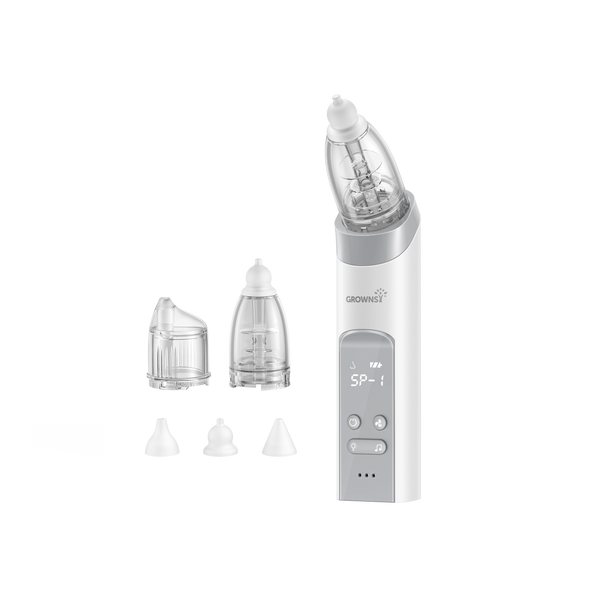
A quick saline rinse before the GROWNSY Nasal Aspirator before sleeping may help clear it up sufficiently to get a decent night's sleep. Just one easy thing to do that makes a world of difference when congestion is the problem.
Separation Anxiety
Stanford Children's Health says that separation anxiety usually is most intense at 9 to 12 months of age. Your baby is now aware of object permanence, knowing that if you're not in the room, you're still there, but they don't yet have the emotional control to feel comfortable with it.
When babies wake up at night in this stage, it's really upsetting. All of the above helps, but do brief contact or separation during the day and maintain the same routine at night. This phase does pass, typically in a few weeks or a couple of months.
Sleep Regression
The regression of 10-12 months is a true fact and can catch parents off guard. You can expect your baby to be pulling to stand, possibly cruising furniture, and perhaps beginning to say a few words.
The CDC tells us about the tremendous developmental strides that take place around this age, and all of that brain development really does impact a baby’s sleep cycle.
The most important thing is to stick to your sleep routine, do not use new sleep aids if possible, and realize that this should pass in 2 to 6 weeks.
Fighting Naps: Why It Happens and What to Try
If your baby suddenly starts refusing naps, timing is almost always the first thing to check. They may not be tired enough yet, or maybe they were already overtired before you got them to sleep.
A few things worth trying:
- Shift nap time by 15 to 20 minutes in either direction and see what changes
- Add a short pre-nap wind-down, even just 5 minutes of quiet time or a book
- Check the sleep environment: darkness and white noise can make a surprising difference for naps specifically
- Cap the morning nap if it's running long and eating into afternoon nap readiness
Overstimulation from a busy morning is also a real factor. A quiet, less stimulating pre-nap time helps babies fall asleep more easily.
Why Is Your Baby Waking Up So Early?
One of the more persistent sleeping problems at this age is getting up early, before 6 AM. Common causes include:
- Bedtime that's actually too late, making them overtired and prone to early waking
- The second nap ending too close to bedtime
- Sunlight creeping into the room early
- An undertired baby who genuinely doesn't need more sleep
First, try blackout curtains. Once the room is light at 5:30 AM, this is often sufficient to start wakefulness. If early rising is new, examine your nap schedule to see if it has gotten "late" and if bedtime should be moved a little earlier, not later.

FAQ: Sleep Questions Parents Actually Ask at This Stage
Can Babies This Age Sleep Through the Night Without a Feeding?
Many can, yes. Most healthy babies who are eating normally during the day will be able to sleep for 10-12 hours at 11 months. However, "sleeping through" means different things to different babies and is still a relative term.
Does Your Little One Still Need a Night Feed at 11 Months?
Some do, some don't. If your baby is getting lots of calories from solid foods and milk feeds during the day, a nighttime feed might be a feed for comfort rather than hunger. When in doubt, your pediatrician is the best person to consult according to your baby's weight and growth curve.
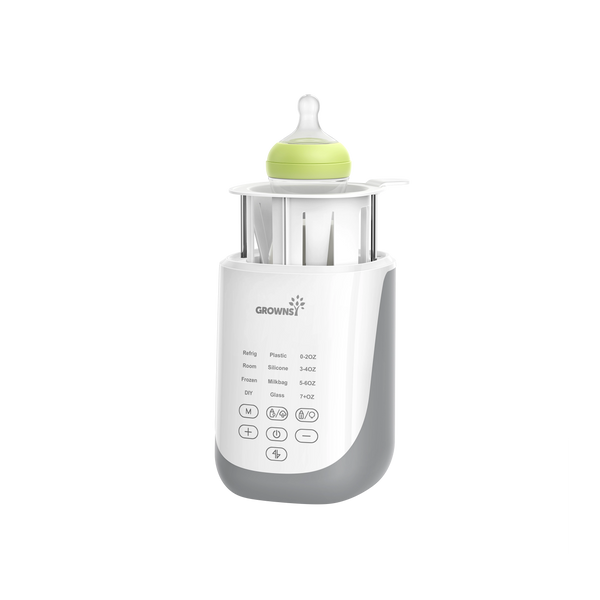
If a feed is still part of your night, the GROWNSY Bottle Warmer makes it far less disruptive. Warming milk quickly without needing to head to the kitchen keeps things calm and helps everyone get back to sleep faster.
Why Does Your Baby Cry Every Time You Put Them Down?
Typically, separation anxiety and sleep association. If a baby has always been held or nursed to sleep, they've learned that is how sleep begins. They call out when they emerge between sleep cycles when you're not doing that thing.
The fewer cues they have to help themselves to fall asleep at the beginning of the night, the fewer cues they have to use when waking at night.
Is It Too Late to Start Sleep Training Now?
Not at all. If your baby is healthy and you've got your pediatrician's approval, eleven months is a completely reasonable time to start. In fact, this is a time when many families see that this age responds well to gentle sleep training methods.
When Should You Loop In Your Pediatrician About Sleep Concerns?
The AAP recommends bringing up sleep concerns at routine well-child visits. Reach out sooner if your baby is consistently sleeping fewer than 11 hours total, snoring loudly, seems to stop breathing momentarily during sleep, or if nothing you try seems to help.
Conclusion
Almost all sleep problems at 11 months are temporary, and most can be solved. The three things that really move the needle are staying consistent with wake windows, protecting both naps, and keeping bedtime early. There is no need to have an ideal timetable. You should have one that's realistic and consistent.
You're in a hard stretch. Keep going.
Editor's Recommendation
A few products that genuinely help during this season:
-
Grownsy Nasal Aspirator: Congestion is a surprisingly common cause of night waking. Clearing your baby's airway before bed takes two minutes and can save hours of disrupted sleep.
-
Grownsy Bottle Warmer: For babies still taking a nighttime feed, this makes the whole process faster and less stimulating, so everyone gets back to sleep sooner.
-
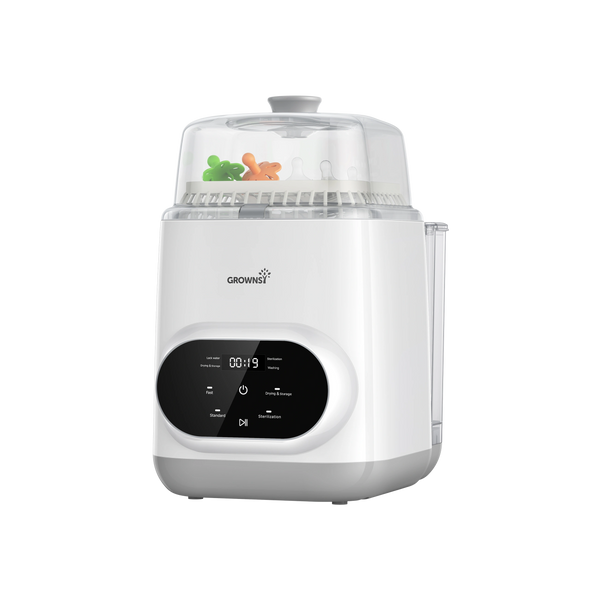
Grownsy Bottle Washer: Because cleaning bottles at midnight while running on four hours of sleep is its own kind of misery. A good bottle washer cuts that task in half.
Disclaimer
This article is intended for informational purposes only and does not replace professional medical advice. Always consult your pediatrician before making significant changes to your baby's sleep schedule, especially if you have concerns about their health, weight, or development. All sleep guidance in this article is based on recommendations from the American Academy of Pediatrics, Mayo Clinic, Stanford Children's Health, and the CDC.
Related Articles:
1. All You Need to Know About 3-Month-Old Sleep Schedule
2. 10-Month-Old Sleep Schedule: The Complete Parent's Guide
3. The Ultimate Guide to 8 Month Sleep Schedule
4. Baby Sleeps with Mouth Open


