


It's normal to feel nervous while bathing a newborn baby; it's tiny and slippery, so you will want to have baby bath essentials within arm's reach.
The best newborns bath essentials are a few products that are necessary and easy to use. Your newborn needs a safe place to be cleaned, warm water, a soft cloth, a clean towel, and your undivided attention. Actually, your newborn will have sponge baths (not tub baths) until the umbilical cord stump falls off and the area heals.
This guide categorizes the items a baby needs for bathing into three groups: items you need, items that can make bath time easier, and items you can leave on the store shelf.
Quick Answer: What Are the Baby Bath Essentials for Newborns?
The baby bath essentials for newborns include soft washcloths, clean towels, a basin, a safe infant tub for later use, a bath thermometer, a mild, fragrance-free cleanser, and clean clothes. The AAP recommends sponge baths until the cord heals. Three baths per week should suffice.
If you are building your newborn bath kit from scratch, we suggest spending your money on fewer, more useful items rather than filling your bathroom with specialized products. A soft cloth, a good towel, a safe bathing setup, and a calm, attentive parent are worth more than a shelf full of bath gadgets.
Key Takeaways
-
You do not need a long shopping list. A few basic supplies can handle most newborn bath routines.
-
Prepare everything first. Your baby should never be left alone while you reach for a towel, diaper, phone, or other item.
-
Keep baths short and infrequent. About three baths a week is usually enough for a newborn.
-
Choose gentle, fragrance-free products. Plain water may be sufficient for some washes, and you generally do not need heavily scented products.
-
The simplest setup is often the safest. Having everything within reach and focusing on your baby matters more than buying every available bath accessory.
Newborn Bath Essentials Checklist

Generally, plain water and a soft cloth are enough for many newborn washes. If you use soap, choose a mild, fragrance-free baby soap. To make things easy for you, we have prepared a checklist of must-have bath supplies:
Must-Have Bath Supplies
| Item | Purpose | Start with |
|---|---|---|
| Washcloths | Gentle cleaning | 3–5 |
| Towels | Drying and warmth | 2–3 |
| Basin | Sponge baths | 1 |
| Infant tub | Later tub baths | 1 |
| Bath thermometer | Temperature check | 1 |
| Fragrance-free cleanser | When water is not enough | 1 |
| Diaper and clothes | After the bath | 1 set |
You can also opt for helpful but optional bath accessories, such as a hooded towel or a rinse cup, to make your routine easier, but neither is essential.
Baby Bath Products You Can Skip
You can skip bubble bath, strongly scented washes, antibacterial cleansers, multiple shampoos, and newborn bath toys. The AAP recommends fragrance-free personal-care products. When we say "unscented", it does not necessarily mean fragrance-free, so check the ingredient list properly.
Newborn Bath Safety Before You Start

Bath safety matters more than having the "perfect" tub or the latest baby bath accessories. Before you undress your newborn, prepare everything in advance: the water, towel, diaper, clothes, so you never have to reach away from your baby during the bath.
Keep Bath Water Around 100°F or 38°C
Aim for comfortably warm bath water, around 100°F (38°C), rather than hot water. The American HealthCare Academy recommends setting your home's water heater so the hottest faucet temperature does not exceed 120°F (49°C) to mitigate the risk of scalding.
Use a Bath Thermometer and Double-Check With Your Wrist or Elbow
A bath thermometer gives you a more reliable way to check the water temperature before your baby goes in. You can also test the water with your wrist or elbow; if it feels hot rather than comfortably warm, let it cool before bathing your baby.
Set the Water Heater Below 120°F or 49°C
A water heater set at or below 120°F (49°C) can help reduce the chance of serious burns from hot tap water. This is especially important if older children or other family members in your home may also use the same faucets.
Fill the Tub Before Placing Your Baby in the Water
Always prepare the bath water before bringing your baby to the tub. Never place your newborn in water while the faucet is running, as the temperature can change suddenly and hot running water or the faucet itself can cause burns.
Use About 2 Inches of Water and Keep Your Baby's Face Above the Surface
You do not need a deep tub to bathe a newborn. The AAP recommends about 2 inches of water, with your baby's head and neck properly supported and the face kept well above the water at all times.
Prevent Slips, Falls, and Bath Seat Accidents
Choose a stable infant bath setup to help keep your baby from sliding. Bath seats and bathing supports are not substitutes for hands-on supervision, so do not rely on the products to keep your baby safe.
Keep One Hand on Your Baby and Never Step Away
This is the most important bath-time rule: never leave your newborn alone in or near water, even for a moment. Keep your baby within arm's reach and have towels, diapers, clothes, and other supplies ready beforehand, because an infant can slip beneath the water very quickly.
Sponge Bath or Tub Bath: Which Setup Does Your Newborn Need?
Well, the answer depends on whether the umbilical cord stump of your newborn has healed yet or not.
Use Sponge Baths Until the Umbilical Cord Falls Off and Heals
A sponge bath is easiest when everything is ready before your baby gets undressed. Place a basin of warm water, a soft washcloth, a towel, a clean diaper, and clothes within reach, then keep your baby wrapped in a towel and uncover only the area you are washing.
The American Academy of Pediatrics recommends sponge baths until the umbilical cord stump falls off and the area heals. Keep the cord clean and dry rather than soaking it, and if it becomes dirty, gently clean around it with a damp cloth before patting the area dry.
Move to a Baby Tub After the Cord Has Healed
Once the umbilical area has healed, you can introduce your baby to a routine tub bath. Choose a stable, easy-to-clean infant tub that provides appropriate support without replacing your hands-on supervision.
Note: Always check the manufacturer's age, weight, and usage instructions before using it.
Can You Bathe a Newborn in the Sink?
Yes. A clean sink can be a practical option when space is limited, but it requires extra attention to safety. Hot faucets, slippery surfaces, and the sink's height can all pose hazards, so prepare the water first, turn off the faucet, and keep your baby securely supported and within arm's reach throughout the bath.
Follow Your Doctor's Bathing Instructions After Circumcision
If your baby has been circumcised, follow the specific bathing and wound-care instructions provided by your baby's healthcare provider. Depending on the procedure and healing process, your doctor may recommend temporarily avoiding certain types of bathing. Contact your pediatrician if you notice persistent bleeding, increasing redness or swelling, or unusual discharge.
How to Bathe a Newborn Step by Step

A newborn bath is simple if you prepare everything in advance. Move slowly, support your baby throughout, and focus on gentle cleaning rather than scrubbing every part of their skin.
Step 1: Prepare the Room and Place Every Supply Within Reach
Make sure the room is comfortably warm and prepare the bath water before you undress your baby. Keep the towel, washcloth, diaper, clean clothes, cleanser, and any other supplies within reach so you never need to leave your baby unattended.
Step 2: Undress and Position Your Baby Safely
To prepare for a sponge bath, keep your baby wrapped in a towel and uncover only the area you are washing to help them stay warm. While giving a routine tub bath, gently undress your baby only after the water and supplies are ready, then lower them into the water while supporting the head and neck.
Step 3: Clean the Face and Eyes With Plain Water
Start with your baby's face using a clean, soft washcloth dampened with plain water. Gently wipe around the eyes and face without rubbing, using a clean section of the cloth for each eye.
Step 4: Wash the Neck Folds, Body, Hands, and Diaper Area
Work gently through areas where milk, sweat, and moisture can collect, including neck folds, behind the ears, underarms, fingers and toes, and the diaper area. Pay attention to skin folds, but avoid vigorous rubbing to avoid irritating delicate newborn skin.
Step 5: Protect the Umbilical Cord and Circumcision Site
Avoid scrubbing, pulling, or soaking a healing umbilical cord stump unless your healthcare provider has given different instructions. If your baby is uncircumcised, never force the foreskin back; it should only be cleaned externally.
Step 6: Wash the Scalp and Hair Last
Gently wash your baby's scalp with plain water or a mild baby shampoo as needed. If your newborn has a cradle cap, soften and gently loosen the scales rather than scratching, picking, or forcefully removing them.
Step 7: Lift, Wrap, Pat Dry, and Dress Your Baby
When bath time is finished, lift your baby carefully and wrap them in a clean, soft towel right away. Gently pat the skin dry, paying particular attention to the folds, and apply a fragrance-free moisturizer to slightly damp skin if your baby has dry skin.
Note: The most important essential is not actually a product. It is your undivided attention. Never leave a baby alone in or near water, even for a few seconds.
How Often and How Long Should You Bathe a Newborn?
Newborn skin is delicate, and more bathing does not necessarily mean a cleaner baby. In fact, bathing too often can do more harm than good for delicate skin. A simple routine, with extra cleaning when your baby gets messy, is usually all you need.
Frequency of Newborn Bath
A newborn usually does not need a full bath every day. The American Academy of Pediatrics says about three baths per week may be enough, provided you clean areas such as the face, neck folds, hands, and diaper area as needed between baths.
Duration of Newborn Bath
Once bath time starts, there is no need to keep your baby in the water for long. Aim for a short, gentle bath, particularly if your baby has dry or sensitive skin. The American Academy of Dermatology recommends keeping baths to less than 10 minutes when caring for dry skin.
What If Your Baby Gets Dirty Between Baths?
A diaper leak, spit-up, or messy accident does not necessarily require another full bath; instead, clean the affected area with a soft, damp washcloth and give your baby a full bath at the usual time.
Could Bathing Your Newborn Too Often Dry Their Skin?
Yes. Frequent bathing, hot water, and heavily fragranced or harsh products can strip moisture from delicate newborn skin. If you notice dryness or irritation, try shortening baths, reducing how often you bathe your baby, and using a gentle fragrance-free cleanser only when needed.
How to Choose Cleansers and Moisturizers for Newborn Skin

Newborn skin is delicate, so bath time is less about getting your baby "squeaky clean" and more about protecting the skin barrier. You do not need a long list of specialty products, and using more cleanser or moisturizer is not necessarily better. A simple routine with gentle products, lukewarm water, and careful drying is usually enough.
Mild Baby Cleanser: Choose a gentle, fragrance-free cleanser with a simple formulation. You do not need a strong fragrance or a lot of foam.
Sulfate-Free, Paraben-Free, and Hypoallergenic Claims: These labels do not guarantee that a product will suit every baby.
Pat the Skin Dry Instead of Rubbing: Pat with a soft towel rather than rub, especially if your baby has delicate or dry skin.
Fragrance-Free Moisturizer: If skin is dry, apply the moisturizer soon after bathing, while skin is still damp, for better absorption.
Care for Cradle Cap: Cradle cap is common and usually needs no aggressive treatment. Wash gently and never pick at scales. If the scalp becomes weepy, swollen, or bleeding, or develops pus-filled bumps, contact your pediatrician.
How to Calm a Newborn Who Cries During Bath Time
Crying during a bath does not necessarily mean something is wrong. Newborns experience the transition from being warm and cuddled to being undressed and placed in unfamiliar water.
-
Try bathing when your baby is calm and alert and not hungry or overtired.
-
Keep the room, water and towel warm so your baby stays calm.
-
Support the head and neck and lower them gently, feet first.
-
Use a calm voice and gentle touch for reassurance.
-
Pause if the crying escalates, finish essential cleaning, wrap your baby safely, and try again later.
When to Pause Bathing and Call Your Pediatrician
Most newborn bath-time fussiness is harmless, but some signs deserve more attention. If you notice the changes mentioned below, contact your pediatrician.
Umbilical Cord Redness, Swelling, Bleeding, or Discharge: A few drops of blood can occur as the cord separates, but active bleeding, spreading redness, swelling, foul-smelling discharge, or yellowish drainage should be discussed with your doctor.
Circumcision Bleeding, Swelling, or Delayed Healing: Call the pediatrician if bleeding does not stop, redness worsens, swelling develops, or concerning discharge appears after circumcision.
Persistent Rashes, Blisters, Cracked Skin, or Signs of Infection: Persistent, painful, swollen, weeping, or infected-looking skin deserves medical advice.
Signs That Your Baby Is Too Cold or Unwell: If your newborn looks unusually unwell, is difficult to wake, or has a concerning change in appearance, stop the bath and seek medical advice promptly.
A Bath Product for Later, Not for the Newborn Stage
As your baby grows, your bathing routine will change too. Once your little one is older and ready for a more active bathing setup, toddler-friendly products can make everyday bath time more convenient.
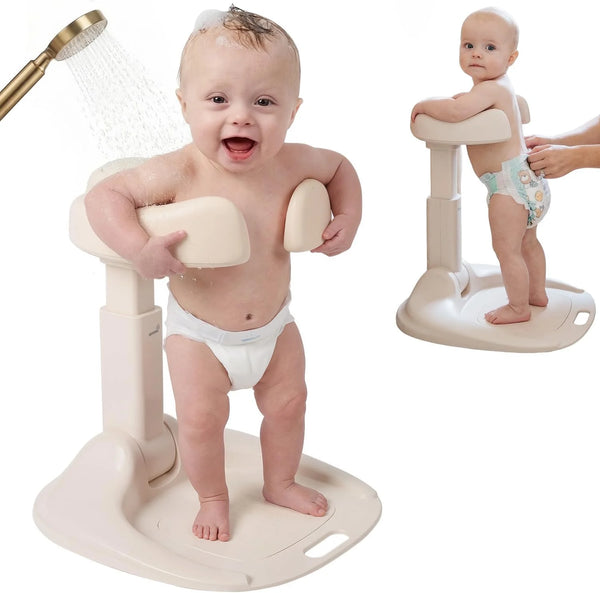
The Grownsy Baby Bath Stand is designed for babies and toddlers ages 6--36 months, so it should not be used for newborns. Instead, it can become useful later when your child has moved beyond the newborn stage and needs a more practical bathing setup.
Conclusion
The best baby bath essentials for newborns are simple. Usually, a few soft washcloths, clean towels, proper bathing container, a safe way to test the water temperature, and a mild and non-irritating soap are sufficient to get started. Plan a cozy, comfortable environment where you can gently and safely clean your baby.
During the early weeks, stick with sponge baths while the umbilical cord stump falls off and the area heals, then transition to routine tub baths when your baby is ready. Try to keep baths short, and have all the equipment ready before you begin. Avoid bathing too frequently if your baby's skin becomes dry.
Always hold your baby close to you during the bath! It is far more important to have a simple routine, to be well prepared and to give it your undivided attention than to have all the bath accessories on hand.
Medical Disclaimer
This article is for general educational purposes and is not a substitute for individualized medical advice. Newborns may have different needs based on their health, gestational age, procedures, or skin conditions. Follow your pediatrician's instructions when they differ from general guidance.
References
American Academy of Pediatrics (AAP). Umbilical Cord Care in Newborns. HealthyChildren.org. AAP source
CPR AED Course. First Aid for Scalding. CPR AED Course source
American Academy of Pediatrics (AAP). Bathing Your Newborn. HealthyChildren.org. AAP source
American Academy of Pediatrics (AAP). How to Care for Your Baby's Penis. HealthyChildren.org. AAP source
American Academy of Pediatrics (AAP). Care for an Uncircumcised Penis. HealthyChildren.org. AAP source


