


Babywearing is such a wonderful means of bonding with your child. It helps keep your child close to your heart, freeing up your hands again. But keeping your little one so close also raises an important question of whether you have your child correctly positioned in the carrier. Correctly positioned baby-wearing is much more than just ensuring your child is comfortable in your arms. It is an absolute must for the developing hips and spinal cord of your baby.
At GROWNSY, we are dedicated to providing high-quality baby care products to support you on this journey.
Why Does Proper Positioning Matter So Much?
During the first few months, your baby’s body is still developing rapidly. The spinal cord has a gentle C-shaped curve. The hip joints are made up of cartilage, which is very flexible and tender. If carried in the incorrect position, unnecessary pressure can be placed on these tender areas.
A baby carrier that makes it possible for a baby's legs to dangle straight down may be putting pressure on a baby's hip joints. This can be a problem in terms of hip dysplasia, a hip joint problem where it will not develop the right way. But a baby carrier that fails to support the spinal curve will be uncomfortable for a baby too. An ergonomic baby carrier will keep your baby in the right position. It is just the same as if you were holding a baby in your arms.
What Is the Optimal "M-Position" and Why Is It So Important?

The first rule for baby-wearing your child safely is what is referred to as the “M-Position.” It is often described with names such as “spread-squat” or “froggy” positions. This is the most recommended position for healthy babywearing. When you observe your child from the front, the shape they ought to form is the shape of the letter “M.”
With a proper M-position baby carrier, their bottom is the lowest part of the M-shaped configuration. Their legs would be positioned higher, forming the peaks of the M shape. They can be positioned in this manner when you have a wide-seated baby carrier capable of holding their thighs from one knee to the other. This resting position promotes the hip joint being in its socket. It is the most stable and sound position of a developing hip.
How Should You Position Your Baby at Different Ages?
Your baby's support needs change as they grow. A good hip-healthy baby carrier will adapt to these different stages.
At this stage, your baby has very little head and neck control. They must be carried high and snug against your chest. They should always face you. Their head should be close enough for you to kiss the top of it. Their back should also be fully supported in its natural C-shape. Many carriers need a special infant insert to position a newborn correctly. Understanding these principles aligns with learning the correct holding method for newborns to ensure their safety.

Once your baby has great head control and can sit up on their own, you have more options. You can still carry them facing you. Many carriers will now also allow for a hip carry or a back carry. No matter the position, the M-position rule still applies. Their knees should always be higher than their bottom, with their thighs fully supported. Proper support becomes even more crucial as you learn how active your baby can be at different stages.
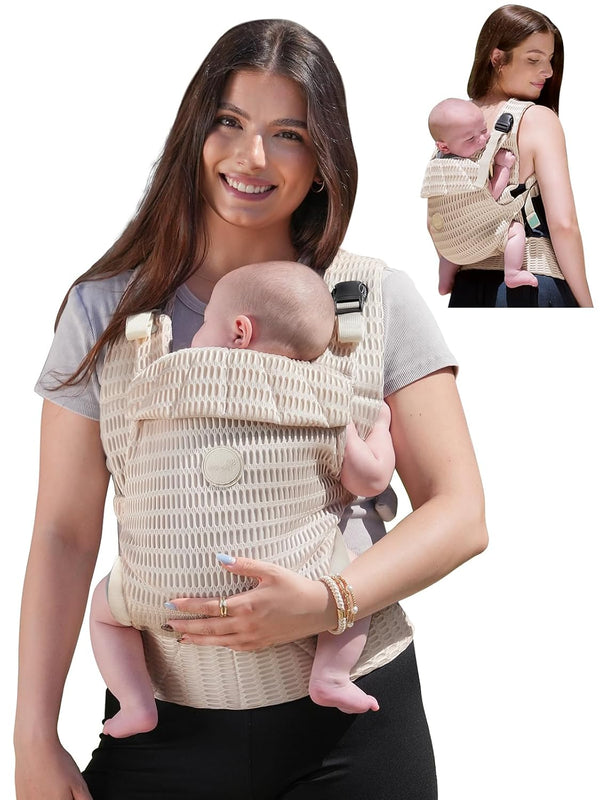
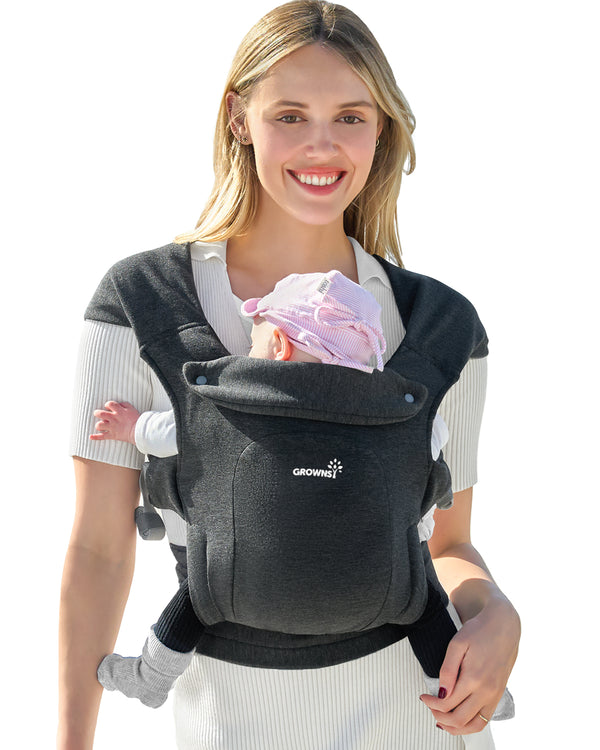
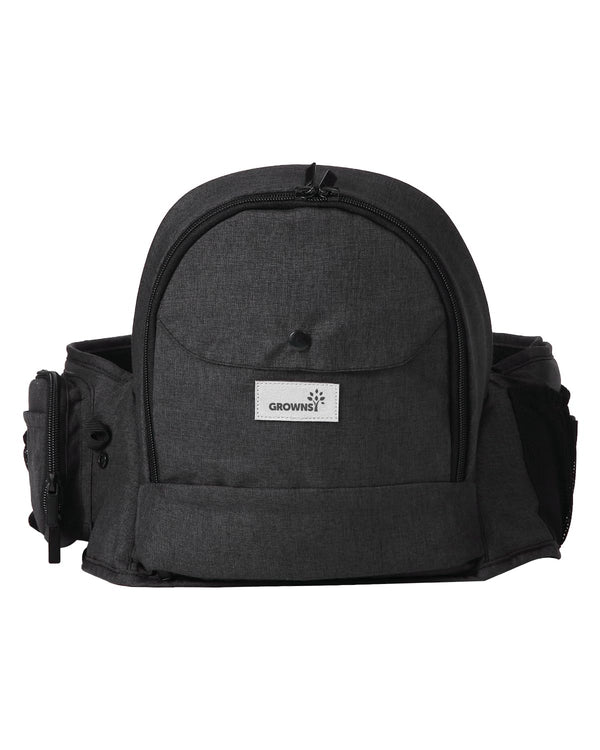
Use This Checklist to Confirm a Perfect Fit
After placing your baby in the carrier, run through this quick checklist. It will help you make sure they are safe and comfortable. This checklist is a great tool, much like having an ultimate baby care set to cover all your needs.
- Is the carrier snug enough? Your baby should be held securely against your body. They shouldn't be slumping down, as this could make it hard for them to breathe.
- Are their knees higher than their bottom? Check for that classic M-shape. The carrier's fabric should reach all the way to their knee pits. This gives them full "knee-to-knee" support.
- Is their back supported in a gentle curve? Their spine shouldn't be forced into a straight line. The carrier should be snug enough to support this natural "C" curve.
- Can you see their face? Their face should not be pressed into your chest or covered by fabric. You should always be able to see their face by simply looking down.
- Are they close enough to kiss? This is a simple test for height. Your baby should be positioned high on your body. You should be able to easily kiss the top of their head.
Avoid These Common Positioning Mistakes
Even the best ergonomic baby carrier can be used incorrectly. Be aware of these common mistakes to keep your baby safe. Choosing the right carrier is a key item on any baby essentials list.
The most common error is letting the baby's legs dangle straight down. This happens when the carrier's seat is too narrow. It doesn't support their thighs from knee to knee. This is often seen in carriers sometimes called "crotch-danglers" and should be avoided.
Another mistake is positioning the baby too low on your body. This can cause them to slump. It can also lead to back pain for you. Always make sure the waistband of the carrier is high and snug. This will keep your baby in the right position.
Frequently Asked Questions About Baby Carrier Positioning
What is the M-Position and why is it important?
The M-position is the ideal way for healthy babywearing. A baby’s legs would be lower than the knees, with the thighs being supported from knee to knee. This is important because a baby’s hip joint would be in its most stable position.
How can I ensure my baby carrier is positioned correctly?
Use the "close enough to kiss" rule for height. It is necessary to make sure the fabric supports your child's thighs from one knee to the other. Your child's bottom must be placed deeper in the carrier than your child's knees.
Is it safe to carry my baby in a carrier for long periods?
Yes, provided they are placed in the right location in a good carrier, it is absolutely safe. It's important for you and your baby to be comfortable. Take regular breaks if you think you are straining, and always make sure your baby is happy.
What are the signs that my baby carrier may be harming my baby’s spine or hips?
The most significant warning is a carrier with a design wherein your child’s legs will be straight down. Other signs may include slumping of your baby when in the carrier or looking fussy with discomfort.


