


Baby Leaps Explained: What They Are, When They Happen, and How to Help Your Baby Through Them
Your baby's been weird for days. Crying way more than usual. Won't let you put them down. Sleep is shot.
Someone said "oh that's a leap" and now here you are, googling at 2am like the rest of us. So what is a leap, really. Is it a real thing or just an internet word.
Here's what the science actually backs up, what it doesn't, and what to do until your baby comes out the other side.

What Baby Leaps Actually Are (And What They're Not)
So baby leaps. The term comes from a book called The Wonder Weeks, written in the Netherlands by two researchers, Hetty van de Rijt and Frans Plooij.
Their idea. Babies go through 10 predictable mental and developmental leaps in the first 20 months. Each one shows up with a stretch of fussiness before a new skill lands.
It's wildly popular with parents. It's also worth saying upfront, the framework isn't really validated by mainstream pediatric science.
So we'll cover what parents mean when they talk leaps, and we'll stay honest about what's well supported and what isn't.
The Brain Change Behind Every Leap
Wonder Weeks describes each leap as a brain change. New perceptions come online, the world looks different to your baby, and the disorientation makes them clingy and cranky for a stretch.
The more clinically grounded version of this comes from Dr. T. Berry Brazelton's Touchpoints theory, built on over 60 years of research at Boston Children's Hospital.
Brazelton called these "touchpoints," predictable periods of disorganization right before a developmental gain. Same general idea. Way more research behind it.
Baby Leaps vs. Growth Spurts — Key Differences
A growth spurt is physical. More feeds, more sleep, more weight gain in a few days.
A leap is cognitive and emotional. Your baby's clingy and miserable, but there's no fever, no obvious physical reason. The two can overlap. The shorthand. Growth spurts make babies hungrier. Leaps make them clingier.
Why Baby Leaps Happen: The Science Parents Need to Know
Some of the leaps narrative has actual research behind it. Some of it is framework. Worth knowing which is which.
Why Leaps Are Tied to Your Due Date, Not Birthday
This part is well supported. For babies born early, developmental milestones get tracked from the original due date, not the birthday.
The American Academy of Pediatrics recommends adjusting for prematurity until age 2. The CDC does the same for babies born more than 3 weeks early.
If your baby came at 36 weeks, their leap timing runs roughly 4 weeks behind a full-term baby the same actual age. This applies to all developmental tracking, not just leaps.
Why Fussiness Before a Leap Is a Good Sign
This is where Brazelton's work helps. Disorganization and regression often show up right before a developmental jump.
A baby who's been sleeping fine, eating fine, smiling at strangers, who suddenly turns into a clingy little disaster, isn't necessarily sick. They might be on the edge of something new. Doesn't mean every fussy phase is a leap.
But fussiness paired with new skills landing soon after is a pattern clinicians have been watching for decades.

The 10 Baby Leaps: Timeline and What to Expect at Each Stage
The Wonder Weeks framework lays out 10 baby leaps in the first 20 months, all timed from your baby's due date.
Leaps 1–5: The First Half-Year Milestones (Weeks 5–26)
The first five leaps cluster in the first 6 months. Around week 5, sensory awareness ramps up. Week 8, patterns. Week 12, smoother movement. Week 19 is the rough one most parents flag, when babies discover cause and effect. Week 26, object permanence kicks in, which is also when separation anxiety often starts.
The CDC's 2022 milestone updates cover the same window with different language. Rolling, sitting attempts, babbling, and reaching for things all show up across this period.
If you're tracking when babies start cooing and babbling, that progression sits right in the middle of these early leaps.
Leaps 6–10: The Second Half and Beyond (Weeks 36–72)
The later leaps land around weeks 36, 44, 53, 61, and 72. These line up with the big real-world milestones. Crawling, pulling up, first words, walking. Most babies hit these somewhere in this window, per CDC milestone tracking.
How Long Each Leap Lasts
No fixed duration. Most parents report fussy phases of anywhere from a few days to several weeks. The longer ones, like weeks 26 and 37, can feel relentless.
The Three Phases of Every Leap: Brain Change, Fussy Phase, and Sunny Breakthrough
Wonder Weeks splits each leap into three parts. First, a brain change phase, where your baby starts processing the world differently. Second, the fussy phase, with the clinginess, crying, and crankiness.
Third, the sunny breakthrough, when the new skill clicks and your baby seems happier, more capable, sometimes a touch more independent.
Signs Your Baby Is in a Leap
You'll notice the behavior first. The new skills come after.
The Three C's — Crying, Clinginess, Crankiness
Wonder Weeks calls these the three C's. More crying. More clinging to you specifically. More general crankiness. None of these alone mean anything. The pattern matters, and the absence of fever or visible illness matters more.
Sleep Disruption During Leaps: What's Normal and What's Not
Sleep often falls apart during these stretches. There's real overlap here with the well-documented 4-month sleep regression.
Around 3 to 4 months, infant sleep architecture matures into more adult-like patterns, with distinct sleep cycles and lighter wake periods between them. That's permanent biology, not a phase that ends.
What feels like a "leap-related" sleep meltdown at 4 months is mostly this maturation kicking in.
That said. If the sleep disruption comes with feeding refusal, fever, breathing changes, or extreme lethargy, that's not a leap. Call your pediatrician.
If you're not sure whether what you're hearing is normal fussiness or something else, this guide on baby gasping sounds walks through the difference between normal sounds and real warning signs.
How Leaps Affect Your Baby's Development After They End
The hopeful part. After a rough stretch, parents often see a sudden burst of new skills.
New Skills That Appear Right After Each Leap
This is the pattern that gives the framework its appeal. Week your baby was at their worst, they suddenly roll for the first time. Or babble a real consonant. Or grab a toy on purpose.
Brazelton's Touchpoints model formalizes this same observation. Disorganization often comes right before forward progress.
Even physical milestones like when babies get their kneecaps follow this kind of quiet, gradual development that becomes visible all at once.
What Leap 4 Brings and Why It Hits the Hardest
In the Wonder Weeks framework, Leap 4 (around week 19 from due date) is often the one parents find brutal. It overlaps with the 4-month sleep regression, which has real clinical support.
So you're potentially dealing with sleep architecture maturation, separation awareness building, and big motor changes happening at once. No wonder it feels like the wheels are coming off.

How to Support Your Baby Through a Leap
No magic fix. But there are things that help.
Everyday Comfort Strategies That Actually Work
Extra cuddles. Skin-to-skin if your baby is small enough. Babywearing if you like it. Predictable routines, lower stimulation. Quiet evenings, dimmer lights. Don't fight the clinginess too hard. It passes.
Activities to Stimulate New Skills During Each Stage
Tummy time, peekaboo, mirrors, talking to your baby all day long, simple cause-and-effect toys. All support the kind of development baby leaps are loosely organized around. The activity itself matters less than the engagement.
How to Protect Your Own Rest During Tough Leap Weeks
Part most articles skip. Tough leap weeks wreck parents. Night wakings come back. Naps shrink. You're back to newborn-level exhausted at month 4.
Anything that shaves time off the 3am routine helps.
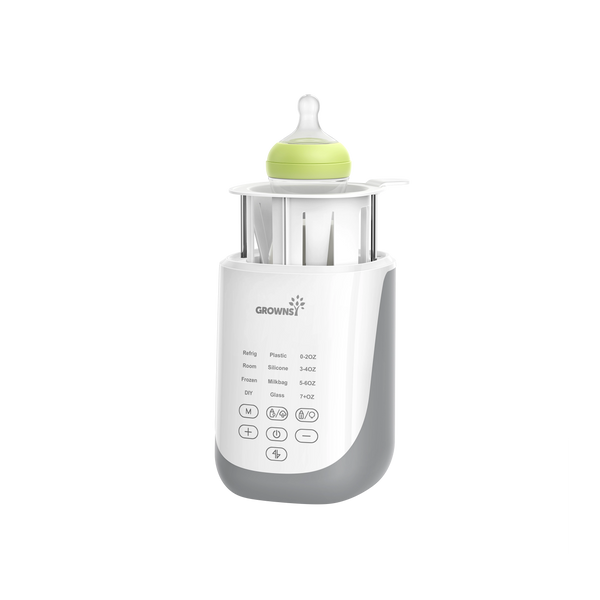
The Grownsy 10-in-1 Fast Baby Bottle Warmer heats milk in under three minutes with a soft built-in night light. Middle-of-the-night feeds stop being 20-minute kitchen marathons. (If you're feeding on the road too, this portable bottle warmer guide is worth a skim.)
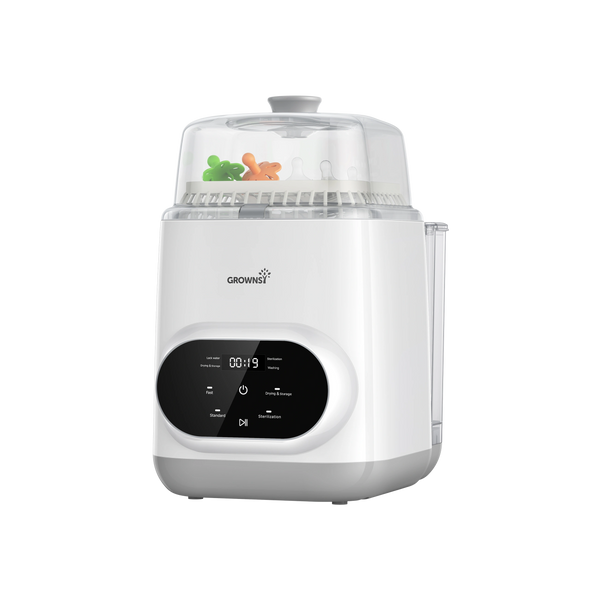
And during weeks when feed frequency spikes, the bottle pile gets out of control fast. The Grownsy Bottle Washer takes sink-scrubbing off your plate entirely. Neither of these fixes the leap. They just make the part you actually live through less brutal.

FAQs About Baby Leaps
Does tracking by due date also apply to preemies?
Yes. Per the American Academy of Pediatrics and the CDC, corrected age (counting from the due date) is the standard for tracking development in babies born more than 3 weeks early. Applies until age 2, when most preemies catch up to the typical timeline.
Can two leaps overlap?
Per the Wonder Weeks framework, they're meant to be separated. Real life is messier. Sleep regressions, growth spurts, teething, and developmental bursts can all pile up at once, which is why some weeks feel especially rough.
Is the Wonder Weeks theory scientifically proven?
Honest answer, not in the rigorous peer-reviewed sense. The original work was based on chimpanzee observations, and a replication attempt by Plooij's own PhD student Carolina de Weerth failed to support the strict 10-period pattern.
Many pediatric researchers consider the framework useful as a general parenting guide, not as a precise developmental timeline. The Brazelton Touchpoints model covers similar ground with much stronger clinical backing.
Conclusion
Baby leaps are a framework that helps a lot of parents make sense of fussy stretches that come out of nowhere. The exact 10-leap timeline isn't hard science.
The underlying pattern of disorganization before developmental gains, though, is real and well documented across decades of pediatric work. Most useful takeaway. Fussy phases happen. They pass. New skills usually show up right after. Your baby is almost always fine.
Editor's Recommendation
For the tough sleep stretches that often come with leap weeks, the Grownsy 10-in-1 Fast Baby Bottle Warmer is worth keeping on the counter. Fast warming, soft built-in night light, low-stress middle-of-the-night feeds.
For weeks when feed frequency ramps up and the bottle pile gets ahead of you, the Grownsy Bottle Washer takes a real chunk of work off your day. Neither solves leaps. Both give you back time you don't have.
Disclaimer
This article is for informational purposes only and is not a substitute for professional medical advice. If you have concerns about your baby's development, sleep, or feeding, please consult your pediatrician.
Related Articles
You might also want to read when babies start cooing and babbling, the guide on baby gasping sounds versus normal breathing, and the deep dive on when babies get their kneecaps.


