


When Do Babies Cry Real Tears — And What It Means for Growth
Your newborn is in a full-on meltdown. Red face, scrunched up, the works. But the cheeks are dry. Nothing flowing. And you're sitting there going, wait, are babies actually supposed to do that. Yes. Completely normal. Real tears take a few weeks to show up.
So here's the timeline, why it happens, and the small handful of things that actually deserve a pediatrician call.
The Newborn Tear Timeline at a Glance
Before getting into why, useful to know roughly when do babies get tears. Range is wider than most new parents expect.
Birth to 2 Weeks: Tearless Cries Are Completely Normal
First two weeks, your baby's tear glands are making just enough fluid to keep the eyes moist. That's it. Per a 2002 study in the American Journal of Ophthalmology, total tear secretion in newborns is way lower than it'll be even a few weeks later.
So dry-cheeked screaming is exactly what's supposed to happen. Not a problem. Just biology doing its thing.
2 Weeks to 1 Month: Tear Production Begins Ramping Up
Same study found total tear secretion in term infants jumps significantly at 2 weeks, then again at 4 weeks. So somewhere in this window, the lacrimal gland (the tear factory above your baby's eye) starts producing real volume.
You might catch a glimpse of dampness during a hard cry. Or nothing yet. Both fine.
1 to 3 Months: Visible Tears on Cheeks Finally Appear
This is when most parents actually see tears rolling down. Usually somewhere between 1 and 3 months. By 2 to 3 months, full-on cheek-streaking is common. Earlier or later inside that window, still fine.

Why Newborns Cry Without Tears
If newborns have tear glands at all, why no tears for the first couple weeks. Comes down to how the gland matures after birth.
How the Lacrimal Gland Develops After Birth
Lacrimal gland sits under the bone of your baby's eyebrow. It's there at birth. Just not really working yet. Per Boston Children's Hospital, tears come out of the lacrimal gland, drain through tiny ducts along the eyelid, and head into the nasolacrimal duct. All those parts have to mature together. That takes time.
The Difference Between Lubricating Tears and Emotional Tears
This part trips up a lot of parents. Two kinds of tears. Basal tears are the constant lubricating film keeping the eyes from drying out. Babies make those from day one.
Reflex and emotional tears are the ones triggered by crying or irritation, the visible kind that run down cheeks. Those take weeks. So technically your newborn is making tears already. Just not the kind you can see.
Why Premature Babies Take Even Longer to Produce Tears
Preemies are on a slower clock. A 1998 study in Archives of Ophthalmology found preterm infants (30 to 37 weeks gestation) had reduced tear secretion compared to full-term babies, and the gap tracked directly with birth weight and gestational age.
The 2002 study echoed it, preterm infants don't hit a significant tear production increase until around 4 weeks, versus 2 weeks for term. So with a preemie, expect a few extra weeks before tears show up (for parents wondering when do babies get tears). Still normal.
3 Common Reasons Your Baby Still Has No Tears
Past the 2 to 3 month window and the cheeks are still dry. A few specific things might be going on.
Underdeveloped Lacrimal Glands
Some babies are just on the slower side of the curve. If everything else looks fine (eating well, gaining weight, alert, plenty of wet diapers), late tears alone aren't a red flag. Mention it at the next well visit. Don't panic.
Blocked Tear Duct: What It Looks Like and How to Help
Surprisingly common one. Per Boston Children's Hospital, as many as 6% of newborns have a blocked tear duct, technically called dacryostenosis. Signs are usually obvious. Watery eye even when baby isn't crying. Mucus or crust at the inner corner. Sometimes mild redness.
Good news, per Children's National Hospital, most clear up on their own in the first 6 to 8 months without surgery. Some pediatricians recommend gentle massage at the inner corner. Don't start doing that without their guidance though.
Dehydration as a Hidden Cause of Reduced Tears
This is the one to take seriously. Per AAP HealthyChildren.org, fewer tears when crying is one of the warning signs of dehydration in infants. Others, fewer than six wet diapers a day, dry mouth, sunken soft spot, unusual sleepiness.
If your baby was making tears and suddenly stopped, paired with any of those signs, call your pediatrician same day.

What Tears Mean for Your Baby's Growth
Beyond the basic eye plumbing, tears showing up tracks with something bigger. Your baby's emotional and social world is opening up.
Tears as an Early Form of Emotional Communication
Around the same time visible tears arrive, babies are also starting to coo, smile socially, and respond to voices.
If you've been tracking when babies start cooing and babbling, you'll see the timelines overlap. Tears are just one of several communication tools wiring up at once.
How Crying Strengthens the Parent–Baby Bond
Every time you respond to your baby's cry with food, warmth, or calm, you're building a feedback loop researchers call attuned caregiving. Baby learns the world responds. You learn to read your baby's signals. Early weeks of dry-cheeked screaming, training for both of you.
Tearless Cries vs. Tears from One Eye Only
After visible tears show up, parents sometimes notice a weird pattern. One side does the work, the other doesn't. Worth knowing what that usually means.
When Tears Appear in Only One Eye
Tears from only one eye is almost always a blocked tear duct on the watering side. That eye looks wetter than the other, sometimes constantly, even when baby isn't crying.
Per Children's Hospital of Philadelphia, the blockage stops tears from draining properly. So they pool. Then overflow.
How to Tell a Blocked Duct from a Normal Developmental Difference
Simplest check, does the watering side have any other blocked-duct signs. Crust at the inner corner, mucus, occasional mild redness.
If yes, probably a duct. If both eyes look clean and one just tears more during certain cries, usually nothing.

How to Soothe a Crying Baby — Tears or No Tears
Tears flowing or not, the crying is real. The soothing toolkit is the same.
Skin-to-Skin Contact and Gentle Motion
Single most reliable thing for almost any crying baby. Hold them against your chest, skin to skin if possible. Walk. Sway. Warmth plus rhythm plus your heartbeat usually calms most newborns within minutes.
Feeding, Temperature, and Sensory Checks
Run the list. Hungry. Wet. Too hot or cold. Too much light or noise. Sometimes the fix is just one of those. For night feeds, anything that shortens the kitchen routine helps.
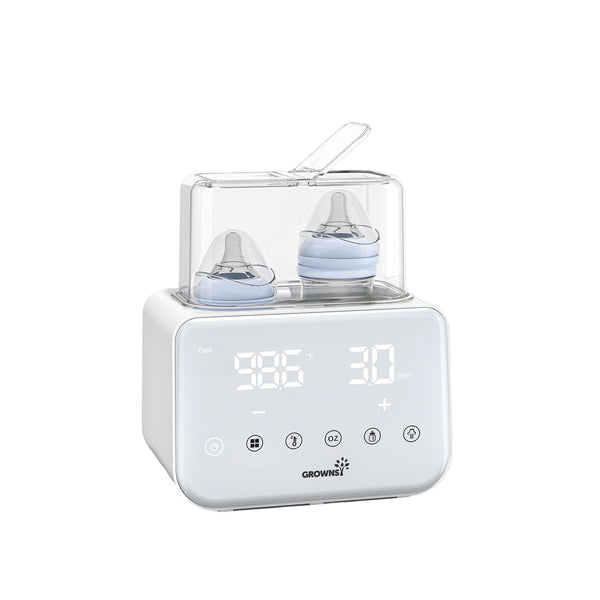
The Grownsy 10-in-1 Fast Baby Bottle Warmer heats milk in under three minutes with a soft built-in night light. So you're not escalating a half-calm baby into a full crisis while you wait around.
When Nothing Seems to Work: the 6-Week Crying Peak
Sometimes you've tried everything and your baby's still going. There's a reason for that. Per Seattle Children's Hospital, healthy babies cry the most around 6 to 8 weeks of age, averaging 2 to 3 hours a day, sometimes more. Called the "PURPLE crying" period. Ends naturally by 3 to 5 months. Knowing it's a phase doesn't make the hours easier. Does make it easier to stop feeling like you're failing.
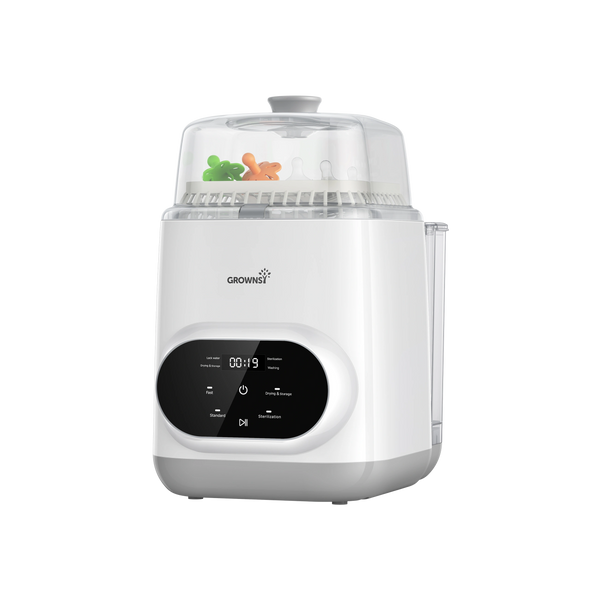
And during weeks when feed frequency is brutal and the bottle pile takes over the counter, the Grownsy Bottle Washer takes a real chunk of sink time off your day.
Red Flags: When to Consult the Pediatrician
Most tear stuff is normal. A few situations actually need a call.
No Tears at All After 3 Months
If your baby is well past 3 months and still no visible tears, mention it at the next visit. Usually nothing serious. Worth ruling out.
Eye Discharge, Swelling, or Crust Around the Eyes
Mild crust at the inner corner is usually a blocked duct, fine to manage at home. But noticeable redness, eyelid swelling, yellow or green discharge, or any sign the eye looks irritated, that needs a same-day call. Could be conjunctivitis or a duct infection.
Crying With Fever, Refusal to Feed, or Lethargy
This combo matters. Crying alone isn't a red flag. Crying paired with a fever (over 100.4°F in a baby under 3 months is automatic ER), refusal to feed, or weird sleepiness is.
Also, if your baby's cries sound off or come with breathing changes that don't seem right, this guide on baby gasping sounds versus normal breathing walks through what's actually concerning. Congestion piles on top of crying and makes everything harder.
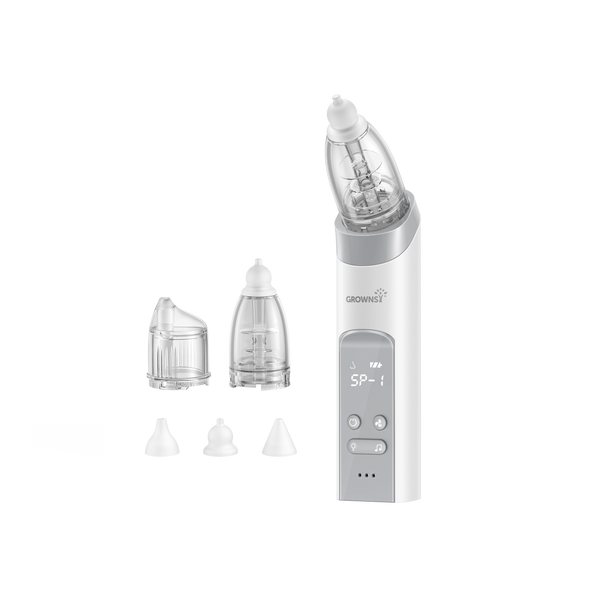
The Grownsy SniffEase Adjustable Suction Nasal Aspirator has three suction levels so you can clear a stuffy nose gently when needed.

FAQ
A few specific questions tend to come up over and over from parents at this stage.
Is it normal for my baby to cry without tears?
Yes, especially in the first 2 to 3 weeks. Tear glands just aren't producing visible volume yet. Totally normal.
What if my baby only has tears from one eye?
Most often a blocked tear duct on the watering side. About 6% of newborns have one. Usually clears on its own within 6 to 8 months.
Could no tears mean my baby is dehydrated?
Possible, if your baby was producing tears and suddenly stopped, plus other signs like fewer wet diapers, dry mouth, or sunken soft spot. In a young baby who's never produced visible tears yet, no tears is usually about age, not hydration.
Do premature babies cry tears later than full-term babies?
Yes. Per the 1998 Archives of Ophthalmology study, preterm infants have reduced tear secretion that correlates with birth weight and gestational age. Few extra weeks compared to full-term timelines.
Conclusion
Pulling it all together, tearless newborn cries look concerning but really aren't. Most babies start producing visible tears somewhere between 2 weeks and 3 months. Preemies on the later end.
Watch for the actual red flags, dehydration signs, one-sided tearing with discharge, or crying paired with fever. Bring those to your pediatrician. Everything else is your baby's body doing exactly what it's supposed to.
Editor's Recommendation
A few tools that genuinely help during the early months.
The Grownsy 10-in-1 Fast Baby Bottle Warmer is a quiet lifesaver for night feeds, warming milk fast with a soft built-in night light. The Grownsy Bottle Washer takes sink time off your plate during the high-feed weeks.
And the Grownsy SniffEase Adjustable Suction Nasal Aspirator is worth keeping on hand for the inevitable congestion that comes with these first few months.
Disclaimer
This article is for informational purposes only and is not a substitute for professional medical advice. If you have concerns about your baby's tear production, eye health, or hydration, please consult your pediatrician.


