


Frog Leg Position Baby: Why It Matters, and How to Support It
You're looking at your newborn lying on their back. Knees bent up and out. Looking, frankly, kind of like a tiny frog. And you're wondering, is that fine? Should I be stretching them out? Should I let them stay like that? Short answer, that's exactly how they're supposed to look.
Here's why the frog leg position matters, when it's normal, when it's not, and how to support healthy hip development from day one.

Introduction
Before getting into hip mechanics and red flags, useful to set the basic frame. The frog leg position is the natural posture most newborns settle into when they're relaxed. Knees bent, hips open, legs falling out to the sides. Looks awkward to adults. Completely normal for babies.
The Natural Resting Posture of Newborns
Newborn muscles aren't really built for full extension yet. Per the International Hip Dysplasia Institute, babies spend months in the womb with their legs tucked in the fetal position, hips and knees bent.
After birth, it takes several months for those joints to gradually stretch out. So the curled-up frog position you're seeing isn't a quirk. It's biology still in fetal mode.
Frog Leg Position vs. M-Position
These two terms come up a lot and they're basically the same thing seen from different angles. The frog leg position describes how a baby looks lying on their back, knees out, hips open.
The M-position, also called the spread-squat or jockey position, is the same posture seen from the front, usually when baby is being held or worn in a carrier.
Hips flexed, knees bent above hip level, thighs supported. Both names describe the hip-healthy posture pediatricians want to see.
Why Babies Naturally Curl Into a Frog Position
Beyond just looking cute, the curl has a real developmental reason behind it. The hip joints at birth aren't fully formed yet, and the frog leg position is what lets them finish the job.
The Womb Origins of This Posture
In the last weeks of pregnancy, your baby was tucked tight. Legs bent, knees up, basically zero room to extend.
Per the IHDI, this is the default resting position the entire third trimester. So when your baby is born and naturally returns to it, they're just defaulting to what their body knows.
Why the Hip Socket Still Needs Support After Birth
This part is the actual science. The hip joint is a ball and socket. At birth, that socket is lined with soft cartilage, not bone, and the ball can still slip around inside it. The socket finishes forming over the next several months.
What helps it form correctly is keeping the hips bent and slightly spread, which is exactly the frog position. Force the legs straight too early, the ball deforms the socket edge or slips entirely. That's how developmental dysplasia of the hip starts.

Normal vs. Concerning: How to Tell the Difference
Once you understand the why, the next question every parent asks is when this looks normal versus when it's worth flagging. Most of the time, it's normal.
Signs the Frog Leg Position Is Developmentally Normal
If your baby's knees bend out symmetrically, both sides look the same, and they can move their legs freely, you're looking at standard newborn anatomy. The position should be relaxed, not rigid. Legs should move when baby moves. The frog look is the baseline.
Red Flags That Warrant a Pediatrician Visit
A few specific things are worth a call. One leg appears shorter than the other. The thigh creases or buttock folds don't match between sides. A clicking or popping sensation when the hip is moved. One leg seems harder to spread out than the other, or moves less freely.
Per the American Academy of Orthopaedic Surgeons, these asymmetry signs are the most common early markers of developmental hip dysplasia.
When to Ask for a Hip Screening
Standard well-baby visits include hip checks. But ask specifically for a screening ultrasound or extra exam if your baby has any risk factors. Breech position at birth, family history of hip dysplasia, firstborn status, female sex, girls have 2 to 5 times the risk, or larger-than-average birth size.
Per the IHDI, a Norwegian study found that 90% of young adult hip replacements for dysplasia were never diagnosed during infancy. So early screening is genuinely worth pushing for if your gut says something feels off.
How Positioning Affects Hip Development
Beyond just the resting posture, how you handle, swaddle, and carry your baby in those first few months actively shapes how their hips develop.
What Happens When Legs Are Forced Straight
Per the IHDI, holding a baby's legs in a straight, pressed-together position for extended periods can cause the ball of the hip joint to slip or deform the soft cartilage of the socket.
The most dramatic real-world data on this comes from Japan, where a 1975 national campaign against extension-style swaddling dropped infant hip dislocation rates from 3.5% to under 0.2%. Same baby, different positioning, vastly different outcomes.
Why the Frog Leg Position Protects the Hip Socket
The opposite is also true. Keeping hips bent and spread, in that classic frog or M shape, lets the ball sit deep in the socket where it should. That depth pressure is what tells the socket to deepen and the joint to stabilize.
So, the position you're already seeing your baby default to is literally the position their body needs to finish forming correctly.

Hip-Safe Swaddling: The One Mistake Most Parents Make
Swaddling helps with sleep. No argument there. But how you swaddle matters way more than most parents realize.
The Right Way to Swaddle for Hip Health
The mistake most parents make, wrapping the legs tight and straight along with the upper body. That's the position the Japanese campaign specifically targeted.
Per the IHDI, proper swaddling keeps the upper body snug while leaving the hips and knees free to bend up and out. The arms can be wrapped tight if that's what soothes your baby. The legs need room.
You should be able to fit two or three fingers between the swaddle and your baby's chest, and the legs should be able to flex up easily.
What to Look for in a Hip-Safe Swaddle Product
The IHDI maintains a list of products certified as hip-healthy. Look for that certification specifically, or look for swaddles designed with a roomy leg pouch instead of a straight wrap. Sleep sacks generally do better than blanket swaddles on this metric because they're built to leave the legs open by default.
How to Carry Your Baby in the Frog Leg Position
Babywearing done right actively supports hip development. Done wrong, it can work against it. Same principles as swaddling.
The Four Checkpoints of Correct Carrier Positioning
Per the IHDI, a hip-healthy carry hits four things. Knees higher than the bottom. Thighs supported all the way out to the knees. Hips spread comfortably around the wearer's torso.
Baby facing inward toward the wearer, especially under 6 months. Together these four checkpoints recreate the natural M-position.
Knee-to-Knee Seat Support: Why It Matters
The fabric or carrier base needs to support your baby's thighs from one knee to the other. Not just under the bottom. If the fabric stops short and the thighs dangle, the weight of the legs pulls down on the hip joints instead of letting them sit naturally.
That sustained downward pull is what creates the same problem as straight-leg swaddling, just over a longer timeline.
Avoiding the "Crotch Dangler" Problem
This is the catchphrase babywearing educators use for carriers that don't have knee-to-knee seat support. Baby's legs hang straight down with no thigh support, weight on the crotch.
Per the IHDI, this carrier style is the most common positioning risk for hip development, especially when used for long stretches in the first 6 months.

Everyday Situations That Affect Hip Positioning
Beyond carriers and swaddles, plenty of everyday baby gear puts hips in less-than-ideal positions. Worth knowing which ones to limit.
Car Seats, Bouncers, and Swings: Limiting Passive Device Time
These devices are fine in moderation. The issue is cumulative time. A baby who spends hours a day strapped into car seats and bouncers has fewer hours in the free, hip-open positions their body needs.
Per the IHDI, the risk to hip development is greater when an unhealthy position is held for long stretches, so the principle here is balance, not avoidance. Use car seats for travel, not as a daily nap spot. Limit bouncer time to short play sessions instead of all-afternoon parking. Same idea for swings.
Tummy Time as a Balance to Frog Leg Carrying
Tummy time isn't a hip thing specifically, but it's the daily counterweight to all the seated and reclined positions baby ends up in. Per the Hewitt et al. 2020 systematic review in Pediatrics, regular tummy time supports overall motor development.
So, aim for short sessions through the day adding up to 15 to 30 minutes by 3 to 4 months. If you're tracking other early motor milestones like rolling and head control, tummy time fuels all of it.
A small practical thing too. A congested baby fights tummy time hard, because breathing prone with a stuffy nose is rough.
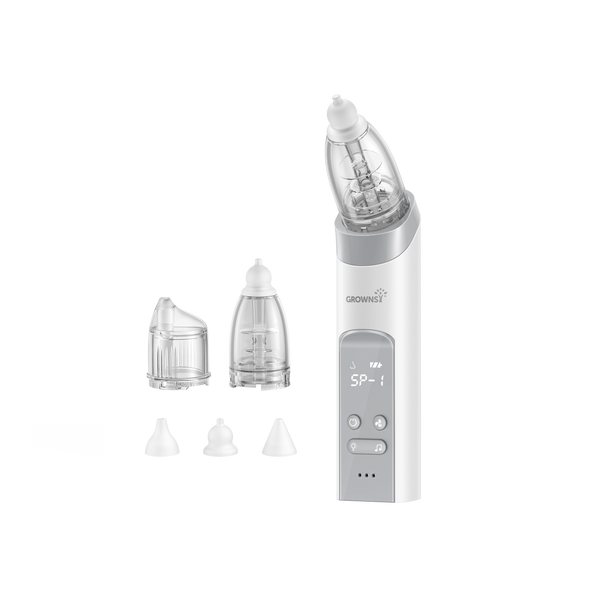
The Grownsy SniffEase Adjustable Suction Nasal Aspirator has three suction levels so you can stay gentle on a newborn and clear things up before floor time. Easier breathing, more tummy time, better overall motor development including the hip-and-leg muscle work.

FAQ
A few specific questions about the frog leg position come up over and over.
How long does the frog leg position last in newborns?
Typically the first 3 to 6 months. As babies grow, gain weight, and start moving more actively, the legs gradually extend on their own. By 6 months most babies aren't visibly frog-positioned anymore, though the hips are still developing for many months after.
Can the frog leg position cause hip dysplasia?
No. The opposite, actually. The frog leg position is the protective posture. Hip dysplasia risk increases when babies are held with their legs straight and pressed together for long periods, not when they're allowed to rest in the natural frog shape.
Is it okay if my baby sleeps in the frog leg position?
Yes. Babies should sleep on their back per AAP safe sleep guidelines, and the frog leg position is the natural resting posture in that orientation. Don't try to straighten the legs out.
Does front-facing carrying hurt my baby's hips?
It can, if it's done before about 6 months or for long stretches without proper knee-to-knee support. Per the IHDI, inward-facing carrying is recommended in the first 6 months because it lets your baby's legs wrap naturally around the wearer in the M-position. After 6 months, hip ligaments are stronger and the risk drops.
Conclusion
Putting it together, the frog leg position isn't something to fix. It's the position your baby's hips need to develop properly.
Most parents notice it, wonder if it's normal, and move on. The actual work is making sure the rest of your baby's day supports that same posture. Hip-safe swaddling. Knee-to-knee carrier support. Limiting passive time in car seats and bouncers.
Watching for the few real red flags like leg asymmetry or hip clicking. Everything else is your baby's anatomy doing exactly what it's supposed to.
Editor's Recommendation
A few tools that help during these early months.
- The Grownsy SniffEase Adjustable Suction Nasal Aspirator is worth keeping on hand because congestion gets in the way of tummy time, and tummy time is part of overall motor development.
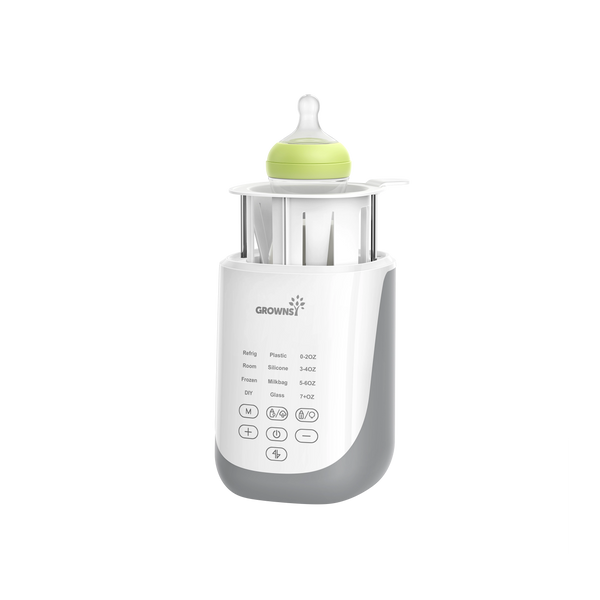
- The Grownsy 10-in-1 Fast Baby Bottle Warmer is a quiet lifesaver for night feeds, warming milk fast with a soft built-in night light.
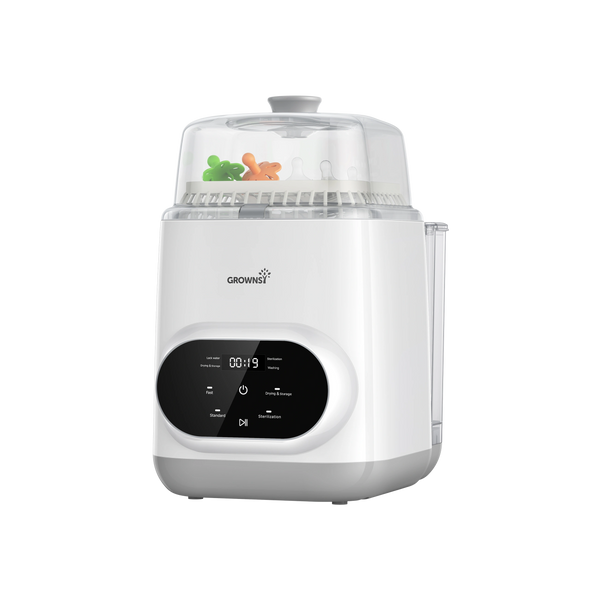
- And the Grownsy Bottle Washer takes sink time off your plate during the high-feed weeks so you have more energy for the day-to-day handling and positioning that actually supports hip development.
Disclaimer
This article is for informational purposes only and is not a substitute for professional medical advice. If you have concerns about your baby's hip development, leg positioning, or any signs of asymmetry, please consult your pediatrician.
Related Articles:
1. Infant Spits Up Through Nose: Don't Panic — Here's What to Do
2. Infant Sleeps With Eyes Open: What It Means and What to Do
3. Baby Making Gasping Sounds But Breathing Fine? A Overall Parent's Guide
4. Baby Spitting Up Clear Liquid: Causes, Red Flags, and What Parents Can Do
5. Arching of Back in Infants: What It Means and When to Worry


