


Baby Babbling Explained: What's Normal, What to Watch For, and How to Help
Okay so your baby just made an actual sound. Not a cry, not a coo, more like "ba-ba" or "da-da." You weren't expecting it. Now you're wondering if that counts as their first word. Probably not yet. But it's the start of something real.
So, let's get into what babbling is, the stages it moves through, and the few things actually worth flagging.
What Is Baby Babbling
Before getting into stages, useful to nail down what counts as babbling and what doesn't.
Babbling is just your baby messing around with sounds. Vowels, consonants, the way the lips and tongue move. Per Pathways.org, it's the early stage of communication where baby practices sounds before real words show up.
Babbling vs. Cooing: How to Tell the Difference
Cooing comes first. Around 2 to 3 months, you'll hear those long vowel sounds. "Oooh." "Aaah." Pure vowels. No consonants. Babbling shows up later, around 4 to 6 months, and that's when consonants enter the mix. "Ba." "Da." "Ga." "Ma." Simplest way to tell them apart. Cooing sounds soft and floaty. Babbling sounds like syllables.
If you're wondering when do babies start to babble, that consonant-vowel mix is your starting line.
Babbling vs. Squealing and Crying: Not the Same Thing
Babbling is intentional sound play. Squealing, growling, raspberries, all part of vocal exploration but not the same thing. Crying is communication, sure, but it's not language-track development.
Babbling specifically practices the mouth shapes that turn into real words later.

The Four Stages of Babbling
With the basics covered, the next thing parents want is the actual roadmap. Babbling moves through four pretty distinct stages, and most babies pass through all of them in roughly the same order.
Marginal Babbling (4–6 Months)
This is the start. Single syllables like "ba," "ma," "ga," plus vowel-consonant combos like "um." Per Pathways.org, this is also when you'll hear squealing, raspberries, growling, all that good stuff alongside the early syllables. So if you've been wondering when do babies start to babble in any real form, this is it.
Canonical Babbling (6–10 Months)
Syllables start repeating now. "Ma-ma-ma." "Ba-ba-ba." Reduplicated canonical babbling. Stage that makes parents wonder if their baby just said their first word. Usually they didn't. Still play. Canonical babbling is a milestone clinicians track carefully.
Per a 2017 study in Infant Behavior and Development, the emergence of canonical babbling is a foundational marker for later language development, and delays past 10 months are clinically significant.
Variegated Babbling (9–12 Months)
Around 9 to 10 months, baby starts mixing different sounds together instead of just repeating one. "Ba-da-ma." "A-ya-ba-ga." Variety expands. Babbling starts sounding less repetitive, more like real speech rhythm.
Conversational Babbling / Jargoning (10–12 Months)
This is the stage parents love. Long sequences of varied sounds with rising and falling intonation, like actual conversation. Genuinely sounds like they're telling you a story in a language you can't speak. First real words usually come out of this stage.
Why Babies Babble: The Brain and Body Behind the Sounds
Beyond just being cute, all that babbling is doing real work. It's how your baby's mouth, brain, and ears get wired for language.
How Babbling Trains the Muscles Babies Need to Talk
Speech needs really specific muscle coordination. Lips, tongue, jaw, soft palate, all moving together with precise timing. Babbling is practice. Every "ba-ba-ba" or "da-da-da" is your baby's mouth running drills on the movements that become words a few months later.
Why Your Baby Babbles More When You Talk Back
This part has real research behind it. A study published in PLOS ONE on canonical babbling and vocal turn-taking found that babies who get back-and-forth vocal interactions with caregivers produce more canonical babbling and pick up language faster.
So, when you respond to "ba-ba" with your own sounds, you're literally speeding up their development. They notice the turn-taking and try harder.
When Babbling Stops and First Words Begin
Once babbling is in full swing, next question is when it turns into real words. Spoiler. Line is blurry on purpose.
How to Know If a Sound Is a Real Word or Still a Babble
A "real word" has three boxes to check. Used consistently. Refers to something specific. Baby uses it on purpose to communicate that thing.
If your baby points at a dog and says "da" every time they see one, that's a word. If they say "da-da-da" while playing alone, still babbling. Same syllable can be both.
What Typically Happens Between 10 and 15 Months
Most babies say their first real word somewhere between 10 and 14 months. Lots of variation around that. Per a PMC review on speech and language milestones, babbling and first words overlap a lot during this window.
Babbling doesn't suddenly stop. It just gradually mixes in with actual words and fades over the next several months.
Red Flags: When to Talk to Your Pediatrician
Most babbling timelines work themselves out. But a few specific patterns are worth flagging early, because earlier intervention makes a real difference.
No Babbling by 8 Months: What Science Research Says
Clearest red flag. Per the PMC speech and language review, absence of babbling by around 8 months is one of the earliest indicators of potential speech, language, or hearing concerns. Worth a conversation at the next well visit. Doesn't automatically mean something's wrong. Worth ruling things out.
Babbling and Hearing Loss: Signs That Are Easy to Miss
A baby with hearing loss can start babbling right on time. Earliest sounds don't actually require hearing. But around 6 to 9 months, babbling usually expands because babies are imitating what they hear. A baby who can't hear well will often plateau or regress around this age.
Per research published in NeuroImage, permanent childhood hearing loss affects roughly 1 to 2 per 1,000 newborns, and early identification leads to dramatically better speech outcomes. If your baby was babbling and stopped, mention it. Same if they're not responding to their name or to sudden sounds.
Babbling Patterns That May Signal a Developmental Concern
Beyond hearing, atypical babbling patterns can sometimes flag other developmental concerns. The UC San Diego Autism Research Lab notes that babies at risk for autism may make vocalizations that don't vary much in pitch or tone, or sound more like non-word noises (humming, whining) than real babble.
Lack of babbling, lack of pointing, and not responding to their name are early signals worth raising with a pediatrician. None of these alone means much. Pattern matters.

Simple Ways to Encourage Your Baby's Babbling
Past the red flags, good news is supporting babbling at home is mostly just showing up and engaging. No special toys needed.
Talking Back: How to Mirror and Extend Their Sounds
Easiest thing you can do. Baby says "ba-ba," you say "ba-ba" back. Then add a bit. "Ba-ba, ball." That turn-taking research from earlier, in action. Baby feels heard. Then tries to match what you added.
Reading, Singing, and Narrating Daily Life
Read picture books out loud even if your baby doesn't get the story yet. Sing during diaper changes. Narrate what you're doing while you feed them or push the stroller. None of this has to be a performance. Volume of language matters more than the content.
If you're tracking when babies start cooing and babbling more broadly, this kind of input is what fuels both.
The Role of Peers and Social Environments
Adults aren't the only ones babies learn language from. Other babies and small kids matter too.
Research from the University of Washington's Institute for Learning & Brain Sciences, published in Current Biology in 2024, found that social interaction lights up attention regions in the infant brain in ways that nonsocial exposure doesn't, and that activation predicted language outcomes years later.
The peer angle works the same way. Babies watch other babies babble, react, and try to match it. So informal time around other little kids, cousins, neighbors' babies, library storytime, the park, gives your baby new sounds and turn-taking to imitate.
You don't have to engineer it. Playdates aren't just adult time. The babies are learning from each other too.

What Actually Helps
Short list of stuff that moves the needle. Face-to-face floor time. Eye contact when they're vocalizing. Slowing your own speech down a touch. Repeating their sounds back. Mixing in time around other babies and kids when you can.
The thing most articles skip. All of this needs your time and attention, which is the one thing new parents are short on.
Hours spent warming bottles at 3am, scrubbing bottle parts, and clearing stuffy noses are hours you're not on the floor practicing "ba-ba" back and forth. Anything that gives those hours back matters, because it means more bandwidth for the play and conversation that actually shape language.
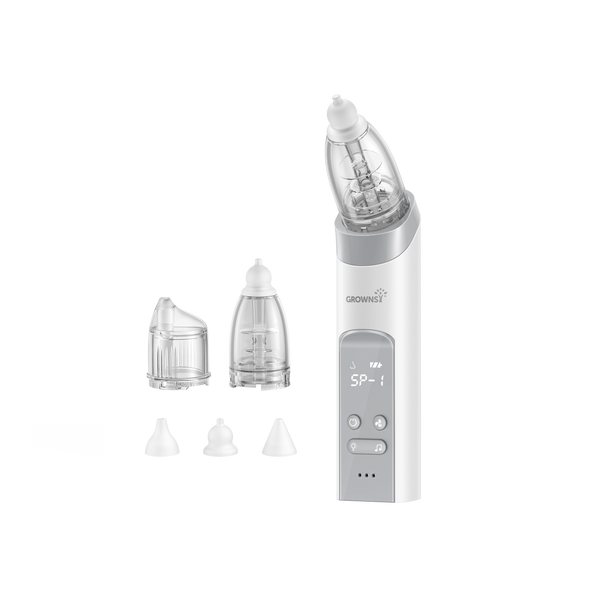
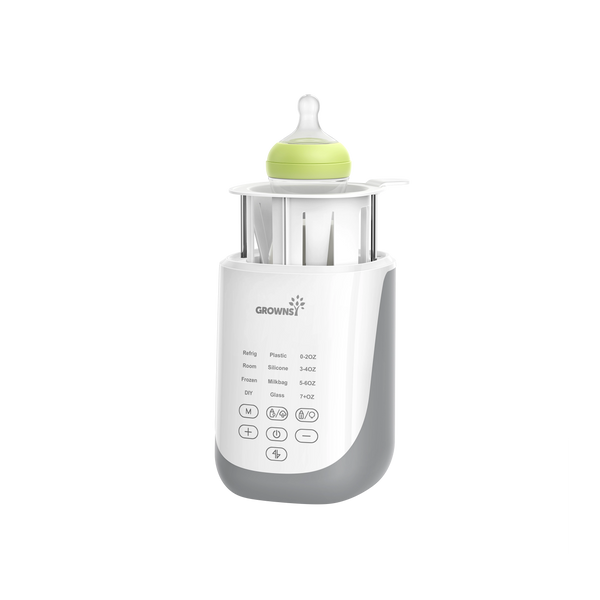
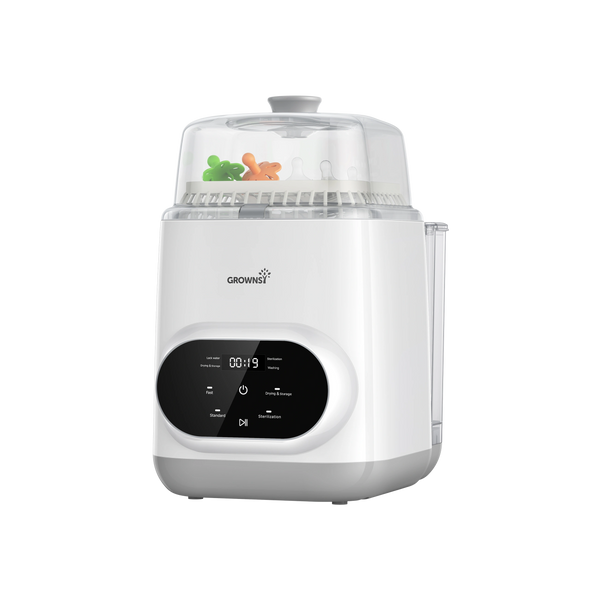
A fast bottle warmer shortens the middle-of-the-night routine. A bottle washer takes sink time off the day during high-feed weeks. A gentle nasal aspirator clears congestion so your baby can breathe and babble comfortably.
None of them teach your baby to talk. They just give you back time for the stuff that does. Reading. Playdates. Library trips. Back-and-forth babble conversations. The trade is less repetitive work, more real interaction.
FAQ
A few specific questions about when do babies start to babble come up over and over.
1. Is it good if my baby babbles a lot?
Generally yes. Lots of babbling means your baby is practicing the muscle and brain coordination that becomes real speech. Doesn't mean a quieter baby has a problem. Just means vocal babies tend to be doing exactly what they should at this stage.
2. Can screen time reduce babbling?
Yes, and there's real research on it. Screen time cuts down the back-and-forth verbal interactions babies need for language development. AAP recommends no screen media for babies under 18 months except for video chatting with family.
3. Does babbling mean my baby is smart?
Babbling is a language development marker, not an IQ marker. Quieter babies are not less intelligent. Earlier babbling doesn't predict later success.
4. When should I worry if my baby isn't babbling?
If your baby isn't babbling at all by 8 months, has stopped babbling after starting, or isn't responding to sounds or to their name, bring it up with your pediatrician. Earlier evaluation leads to better outcomes for both hearing and speech concerns.
Conclusion
Putting it all together, babbling is one of those milestones where the range of normal is wide and most babies get there on their own clock.
When do babies start to babble in any real form, usually 4 to 6 months. By 8 months almost all babies should be making some kind of babble sounds. By 10 to 12 months you're hearing full conversation-style jargon.
Talk to them, read to them, respond to their sounds, flag the real red flags early. Rest mostly sorts itself out.
Editor’s Recommendation
A few tools that genuinely help during these early months.
The Grownsy SniffEase Adjustable Suction Nasal Aspirator is worth keeping on hand because congestion gets in the way of comfortable vocal play.
The Grownsy 10-in-1 Fast Baby Bottle Warmer is a quiet lifesaver for night feeds, fast warming with a built-in soft night light.
And the Grownsy Bottle Washer takes a real chunk of sink time off your day during high-feed stretches.
Disclaimer
This article is for informational purposes only and is not a substitute for professional medical advice. If you have concerns about your baby's speech, language, hearing, or general development, please consult your pediatrician.


