Handling babies can be difficult, and it gets even more difficult when your little one gets gassy at night. They squirm all night and leave you exhausted as well. Honestly, gassy baby at night is common, especially in newborns. The good thing is that alleviating gas in newborns is easy if you know the right tricks and holding positions. So, let’s check how you can ease your little one and make sure they sleep peacefully.
Quick Answer
Gas is very normal in newborns, and it is harmless as well. This usually happens because your little one swallows air while crying and feeding. In addition, your baby’s digestive system is still learning how to digest food properly. For this reason, you should feed your baby calmly and burp them during and after feeding. It is recommended to hold your baby upright for 15 to 30 minutes. If your baby is up, gentle gas moves can help with baby gas relief.

Why Is My Newborn So Gassy at Night?
Experts do not fully agree on why gas feels worse at night. Many babies do seem gassier and fussier in the evening, though. A few things tend to pile up at the end of the day: babies often cluster feed, they cry more, and lying down makes trapped gas easier to notice. The AAP also says that gas in the gut is very common in newborns.
| Night-Time Cause | What Happens | What Helps |
|---|---|---|
| Swallowed air during feeds | Air enters with the milk, especially with a shallow latch or fast flow | Check the latch or bottle angle, and burp often |
| Crying and being overtired | Crying makes babies swallow more air | Feed before your baby is frantic |
| Cluster feeding in the evening | More feeds means more air and more milk to digest | Take short burp breaks |
| Lying flat with little movement | Gas can feel “stuck” | Hold your baby upright after feeds |
| A still-developing gut | Babies are not good at passing gas yet | Time, patience, and gentle moves |
An overtired baby can also look uncomfortable or “gassy” when sleep is the real problem, according to Taking Cara Babies.
Gassy Baby or Colic?
Parents often mix up normal gas and colic. Norton Children’s says a gassy baby tends to cry in short spurts after feeding, and the crying eases after a burp or passing gas. Colic is more intense and less responsive to usual gas relief. According to the Cleveland Clinic, colic is frequent, excessive crying in a baby who seems otherwise healthy.
| Gas | Colic | |
|---|---|---|
| Crying | Short spurts, often after feeds | Long, intense spells |
| After a burp or toot | Baby settles | Baby may stay upset |
| Feeding and weight gain | Normal | Normal |
| What helps | Burping, positions, feeding fixes | Soothing, support, and time |
If your newborn seems extremely gassy but is feeding well, gaining weight, and settling after gas passes, it is usually normal. Check the red flags at the end of this article if anything seems different.

Alleviating Gas in Newborns: A Step-by-Step Bedtime Routine
Here is how to relieve gas in a newborn without medicine. These steps work together to cut down on swallowed air and help move gas along.
- Feed calmly and early. A very hungry, crying baby gulps and swallows more air. Feed at the first hunger cues, not after a meltdown.
- Burp during and after the feed. Cleveland Clinic says gassier babies may need burping after every ounce or so. Happiest Baby suggests every 2 to 3 ounces for bottle-feeding.
- Hold your baby upright for 15 to 30 minutes. Norton Children’s recommends this after each feed. Gravity helps air rise as a burp.
- Try gentle gas moves while awake. Bicycle your baby’s legs, or gently massage the tummy in soft circles. You can offer gentle tummy massage to help your baby.
- Try a warm bath. A warm bath can soothe a fussy baby. Many parents also check that the diaper isn’t too tight around the belly.
- Settle your baby on their back. Once your baby is calm and drowsy, put them down on a safe sleep surface.
This is also how to help a newborn pass gas and how to soothe newborn gas. Change one thing at a time so you can see what works.
Positions to Relieve Gas in Babies
Use these positions to relieve gas in babies only while your baby is awake and you are watching. None of them are sleep positions, so be careful.
| Position | How to Do It | Safety Note |
|---|---|---|
| Upright on your shoulder | Hold your baby against your chest with head and neck supported. Gently pat or rub the back. | Stay with your baby |
| Bicycle legs | With your baby on their back on a safe flat surface, slowly move their legs like pedaling | Awake only |
| Tummy time | Place your baby tummy-down on the floor or on your chest for a few minutes | Awake and supervised only. Tummy time is recommended for neck strength. Any gas benefit is a bonus, not proven. |
| Tummy-down forearm hold | Lay your baby tummy-down along your forearm, with their head supported | You hold them the whole time. Stop if your baby gets sleepy. |
| Gentle tummy massage | Use soft circles on the belly | Wait a bit after a feed |
Best Sleeping Position for a Gassy Baby
The best sleeping position for gas relief for infant is the same as for every baby: on their back. The American Academy of Pediatrics (AAP) says babies should sleep on their backs on a firm, flat surface that is not inclined, with nothing but the baby in the sleep space. Taking Cara Babies adds that back sleeping is also fine for babies with gas.
Some “gas hacks” can be dangerous. Skip these if you have a gassy baby:
| Common Hack | Why to Skip It |
|---|---|
| Putting baby to sleep on their side or tummy | The AAP says every sleep should be on the back |
| Propping the mattress or using a wedge or pillow | The AAP says surfaces that tilt more than 10 degrees are not safe for sleep |
| Letting baby sleep in a swing, bouncer, car seat, or carrier | The AAP says to move your baby to a firm, flat surface as soon as possible |
| Sharing a bed so baby “moves around” | The AAP advises room sharing, not bed sharing |
| Using weighted swaddles or blankets | The AAP says weighted products are unsafe |
If you swaddle, always place your baby on their back, and stop when your baby shows signs of rolling.

Baby Gas Relief Starts With Feeding
The best way to cut down on gas is to cut down on swallowed air. Here is what to check when your infant or newborn is extremely gassy.
Breastfeeding
Check that your baby has a deep latch. It is recommended that you sit your baby as upright as possible while feeding. Burp during and after every feed. If milk flow is very fast and your baby gulps, a lactation consultant can help.
Bottle Feeding
Use a slow-flow nipple, and tip the bottle so the nipple stays full of milk. Vented or angled bottles may also help.
Formula Mixing
Mixing and shaking add air bubbles, according to HealthyChildren.org. Let the formula settle before feeding.
On top of everything, you should feed your baby before they become restless and upset. If you are breastfeeding, cutting out foods is usually not needed. Instead, you should talk to your healthcare provider first. A milk allergy can cause vomiting, blood or mucus in the stool, pain with feeds, or poor weight gain, according to HealthyChildren.org. Gas alone does not cause such issues.
Baby Gas Relief Products: What Works and What Doesn’t
For gas relief for an infant, the options are mixed. Ask your pediatrician before giving any product.
Simethicone Gas Drops
Simethicone drops are generally considered safe when used as directed. Research on whether they work shows mixed results. Happiest Baby, citing the AAP, says they are “not that effective.” If you try them, follow the label. Stop if they don’t seem to help.
Gripe Water
Gripe water is not regulated like medicine, and its ingredients vary from brand to brand. Solid Starts says there is not enough evidence that it works. Cleveland Clinic says its safety and effectiveness have not been well researched. Most experts suggest skipping it.
Probiotics
You should always ask your pediatrician before giving probiotics. A Banner Health doctor says they are not a go-to for gas alone. Ask your pediatrician before trying them.
Changing Formula
Some babies do better on a different formula, but the evidence is limited. Ask your pediatrician before you switch.
Rectal Gas Tools
On top of everything, you should not insert anything into a baby’s rectum, because they could cause harm if used the wrong way. This means you should skip them.
Does a Pacifier Help With Gas?
There is no strong evidence that a pacifier relieves gas. Sucking can soothe a fussy baby, and some say that sucking a pacifier can help some babies with colic. Babies can also swallow some air while sucking,
The best reason to offer a pacifier is safe sleep. The AAP says a pacifier at naps and bedtime is linked to a lower risk of sudden infant death syndrome (SIDS). If you breastfeed, wait until breastfeeding is well established. You do not need to put the pacifier back in once your baby is asleep.

When Does Gas Get Better?
Most babies get through this phase. Happiest Baby says gas discomfort often peaks around 6 to 8 weeks and improves by about 3 months. Every baby is different, so ask your pediatrician if you are worried.
Night Feeds Made Calmer
Crying adds swallowed air, and so does gulping when a baby is very hungry. So, feeding early, before your baby is frantic, may help. At 3 a.m., waiting for a cold bottle to warm up can turn a hungry baby into a screaming one.
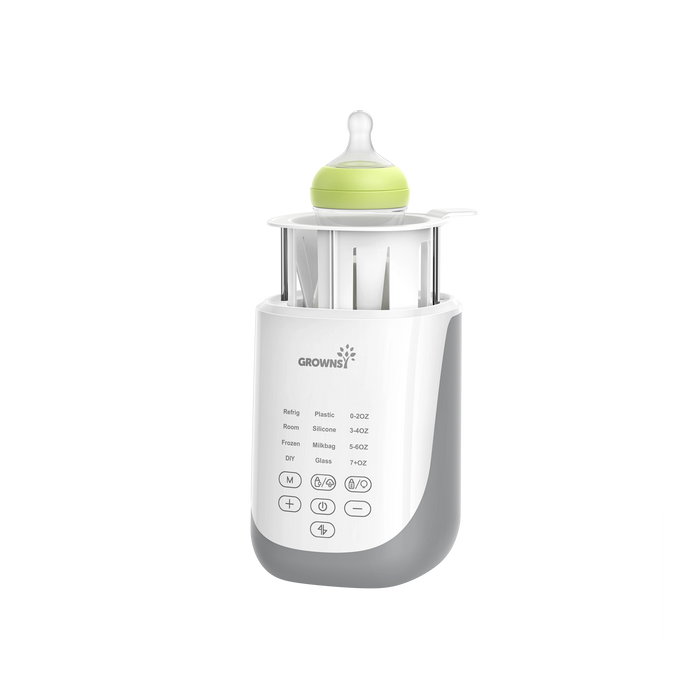
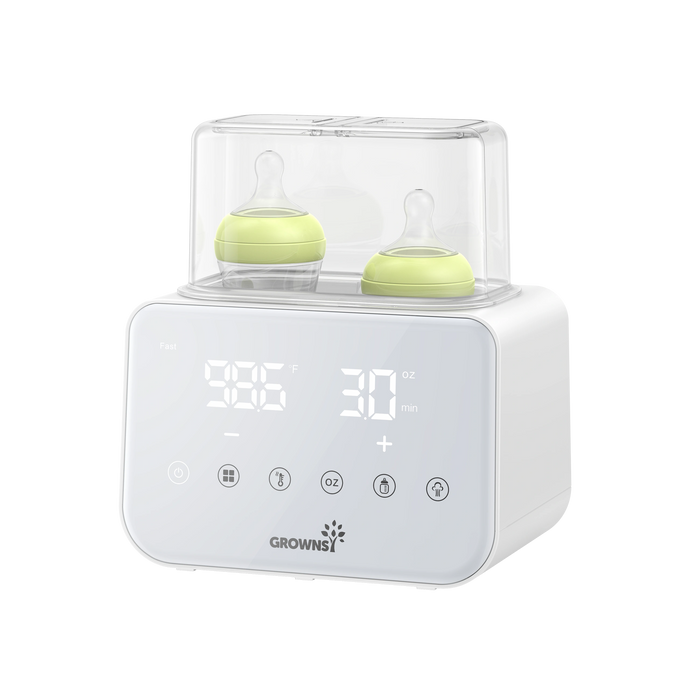
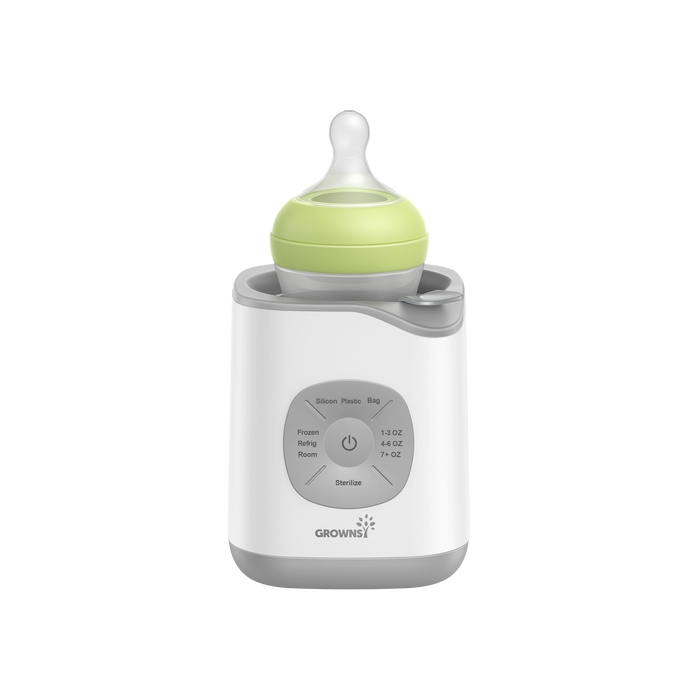
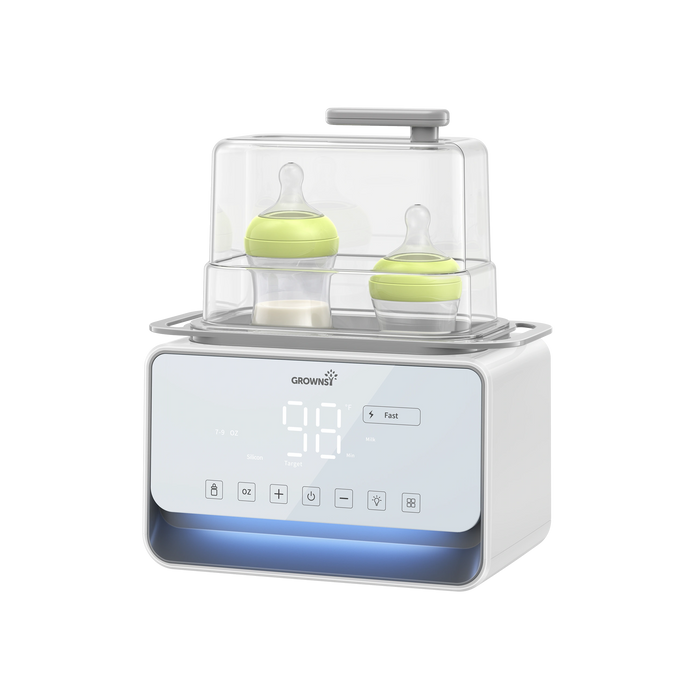
Grownsy’s 10-in-1 Fast Baby Bottle Warmer is designed for night feeds. The product page says it warms milk with steam in about 2 to 4 minutes. It has an LED screen and night light, and a preset timer so milk can be ready when needed. A bottle warmer does not reduce gas by itself. Feeding position, burping, and nipple flow matter most. But it can help you feed your baby sooner and in a calmer room.
When to Call Your Pediatrician or Get Help
Gas alone is not dangerous. But sometimes “gas” is something more. Get help right away if your baby has:
- A fever of 100.4°F or higher and is under 3 months old
- Bright green vomit
- Blood in the vomit or stool
- A hard, swollen belly, especially with crying that you can’t soothe
- Extreme sleepiness, or is hard to wake
- Trouble breathing
Call your pediatrician if your baby has:
- Forceful or repeated vomiting after feeds
- Poor feeding or poor weight gain
- Fewer wet diapers than usual
- Ongoing diarrhea
- Crying that is intense and won’t settle with usual soothing
Norton Children’s lists many of these as signs of something more than gas. HealthyChildren lists forceful vomiting and poor weight gain as signs of conditions like pyloric stenosis. It’s okay to ask someone to take a shift. If you feel overwhelmed, call your own doctor too.
Conclusion
A gassy baby at night is stressful, but it is usually normal and it passes. Cut down on swallowed air, burp often, keep your baby upright after feeding, and try gentle moves while awake. Then lay your baby on their back, on a firm, flat surface, every time. Skip risky hacks like tilted or side sleeping. If you see any red flags, call your pediatrician. You are doing a good job.
Related Articles






Editor's Recommendation