


If you pump several times a day, the routine can feel repetitive: pump, pour, take everything apart, wash, dry and then do it all again a few hours later.
So how often do you actually need to wash your breast pump parts?
The short answer: Breast pump parts that come into contact with breast milk should be cleaned after every pumping session. For extra protection, CDC recommends sanitizing pump parts at least once a day, especially when your baby is younger than 2 months, was born prematurely, or has a weakened immune system.
The good news is that a consistent cleaning routine doesn't have to take over your day.
How Often Should You Wash Breast Pump Parts?
After every use.
After pumping, take apart the pump kit and separate every part that has come into contact with your breast or breast milk. This typically includes:
- Flanges
- Valves
- Membranes
- Connectors
- Milk collection bottles
Rinse milk residue from these parts under running water, then clean them as soon as possible. CDC recommends either hand washing or using a dishwasher when the parts are dishwasher-safe.
What About Breast Pump Tubing?
Tubing is different.
When used correctly, breast pump tubing normally does not come into contact with milk and does not need routine cleaning. However, if milk or mold gets inside the tubing, replace it rather than trying to clean it.
Always follow the instructions for your specific breast pump.
Do You Need to Wash Pump Parts After Every Pumping Session?
Yes—if the parts come into contact with breast milk, they should be cleaned after every use.
Milk residue left on pump parts can allow germs to grow. That's why the goal isn't simply to rinse parts and use them again later. A proper cleaning routine includes separating the parts, rinsing away milk residue, washing them, and allowing them to dry completely.
This becomes especially important for parents who pump frequently.
For example:
6 pumping sessions a day = up to 6 cleaning cycles a day.
That's why pumping hygiene can become less about knowing how to clean and more about finding a routine you can realistically keep up with.
Do You Need to Sanitize Breast Pump Parts Every Time?
Not necessarily.
Cleaning and sanitizing are different steps.
Cleaning removes milk, residue, and other debris from the pump parts. Sanitizing provides an additional level of germ reduction after cleaning.
CDC recommends sanitizing pump parts at least once daily for extra germ removal. Daily sanitizing is particularly important for babies under 2 months, babies born prematurely, or babies with weakened immune systems. For older, healthy babies, daily sanitizing may not always be necessary if pump parts are carefully cleaned after every use.
If you use steam, boiling water, or a dishwasher's sanitize or heated-dry setting, check the breast pump manufacturer's instructions first to make sure the individual parts are compatible with that method.
What Is the Best Way to Clean Breast Pump Parts?
There are three common approaches:
| Method | Best For | Main Trade-Off |
|---|---|---|
| Hand washing | Occasional pumping | Requires repeated manual cleaning |
| Dishwasher | Dishwasher-safe pump parts | Requires loading and a full cycle |
| Bottle washer | Frequent pumping and mixed feeding gear | Requires dedicated countertop space |
Hand Washing
For hand washing, separate the pump parts and rinse away milk residue first. Wash them in a clean basin with dish soap and warm water, rinse thoroughly, and allow them to air-dry completely. CDC recommends using a wash basin dedicated to cleaning pump and infant feeding items rather than washing them directly in the sink.
Dishwasher
Some pump parts can be cleaned in the dishwasher.
Before loading them, check your breast pump manufacturer's instructions. Small parts may need to be placed in a closed-top basket or mesh bag to keep them from falling through the rack.
Bottle Washer
For parents who pump several times a day, a bottle washer can combine several repetitive steps into one workflow.
The key is to make sure the pump parts are compatible with the machine and its cleaning, steam, and drying functions. Always follow the breast pump manufacturer's instructions before placing pump parts in a bottle washer.
Can a Bottle Washer Clean Breast Pump Parts?
Yes, some bottle washers are specifically designed to handle pump parts—but compatibility still matters.
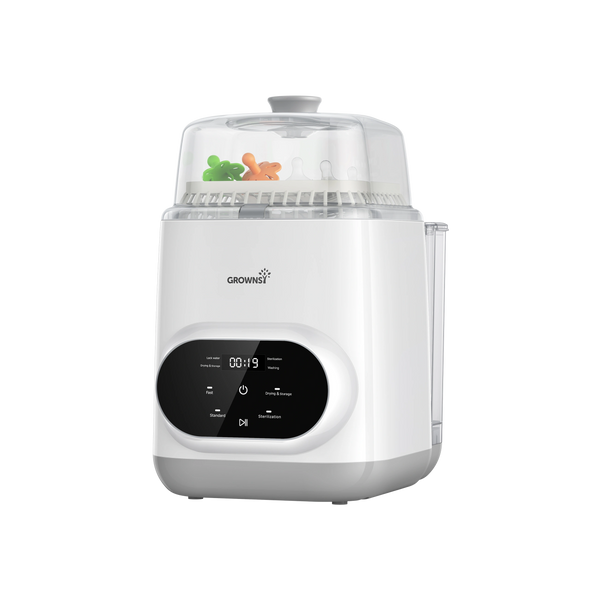
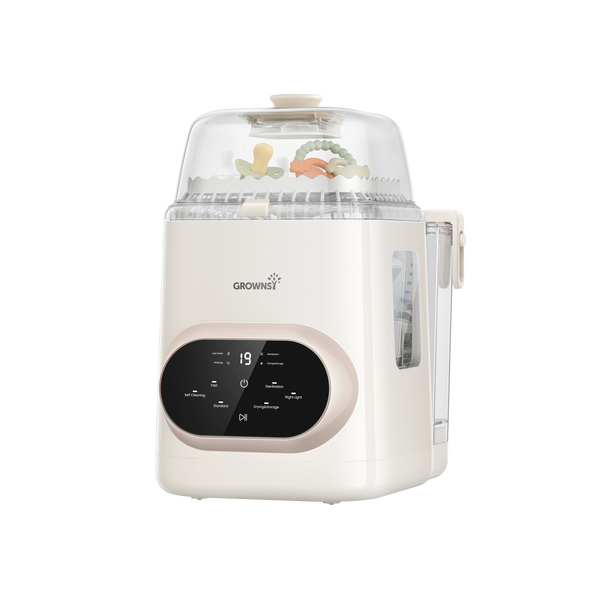
The Grownsy 4-in-1 EaseClean Feeding Bottle Washer Pro is designed for bottles, pump parts, and other feeding accessories. It combines:
- Wash
- Steam sterilize
- Hot-air dry
- Store
Its 26 spray jets use 24,000 Pa of water pressure, while the 9 cleaning modes allow you to choose a cycle based on your routine. The Quick Wash cycle takes 19 minutes. After washing, 212°F steam and heated drying complete the process, while HEPA-filtered storage keeps cleaned items enclosed for up to 72 hours.
For pumping parents, the benefit isn't simply having another appliance. It's reducing the number of repetitive steps between one pumping session and the next.
How Can You Make Pump Part Cleaning Easier?
If you're pumping frequently, build the cleaning process into your pumping routine rather than treating it as a separate chore.
A simple workflow looks like this:
Pump → Separate → Rinse → Wash → Dry → Store → Ready for the next session
You can also:
- Keep a dedicated cleaning area for pump parts.
- Keep clean and used parts physically separate.
- Have extra pump kits if you pump frequently.
- Use a dishwasher or bottle washer when the parts are compatible.
- Let pump parts air-dry completely before storing.
- Replace damaged, cracked, worn, or moldy components according to the manufacturer's instructions.
For parents pumping at work or without easy access to a sink, CDC also suggests having multiple pump kits so a clean kit is available for each session, with used parts cleaned later.
Do Pump Parts Need to Be Completely Dry Before Storage?
Yes.
After cleaning or sanitizing, allow pump parts to air-dry thoroughly before putting them away. Moisture left on pump parts can create an environment where germs and mold can grow.
CDC recommends placing clean pump parts in a clean, protected area and allowing them to dry completely before storage. It also advises against rubbing or patting pump parts dry with a dish towel, which can transfer germs back onto the clean parts.
A washer with a drying and enclosed storage function can make this part of the routine easier, provided the pump components are compatible with the machine.
Is a Bottle Washer Worth It for Pumping Parents?
It depends on how often you pump.
If you pump once or twice a day, hand washing may be perfectly manageable.
If you're pumping several times a day, however, the cleaning cycle becomes a recurring part of your schedule. That's where an automated bottle washer can make more sense.
The Grownsy 4-in-1 EaseClean Feeding Bottle Washer Pro is designed to bring washing, steam sterilizing, drying, and storage into one countertop workflow. With 26 spray jets, 24,000 Pa cleaning pressure, a 19-minute Quick Wash, and up to 72-hour HEPA-filtered storage, it is built around the repetitive nature of daily feeding and pumping.
The goal isn't to eliminate cleaning. It's to make the cleaning routine easier to keep up with.
Frequently Asked Questions
How often should I wash my breast pump parts?
Wash pump parts that come into contact with breast milk after every pumping session.
How often should I sanitize breast pump parts?
CDC recommends sanitizing pump parts at least once daily for extra germ removal, with daily sanitizing especially important for babies under 2 months, babies born prematurely, or babies with weakened immune systems.
Can I put breast pump parts in the dishwasher?
Some can. Always check the breast pump manufacturer's instructions first. Small parts may need to be placed in a closed-top basket or mesh bag.
Can I put breast pump parts in a bottle washer?
Some bottle washers are designed to clean pump parts, but compatibility depends on the specific pump components. Check both the breast pump and bottle washer manufacturer's instructions before use.
Can I refrigerate pump parts instead of washing them?
CDC recommends cleaning pump parts after every use. If you cannot clean them immediately, CDC notes that rinsing and refrigerating them for a few hours may slow bacterial growth, but refrigeration does not stop bacterial growth and has not been established as a safe replacement for cleaning after every use.
How do I keep pump parts dry after washing?
Allow them to air-dry completely in a clean, protected area before storing. Avoid drying them with a dish towel.
What is the easiest way to manage frequent pump-part cleaning?
Create a repeatable workflow and use the cleaning method that fits your pumping frequency. For frequent pumping, an automated bottle washer can combine washing, sanitizing, drying, and storage into one routine when the pump parts are compatible.
The Bottom Line
Wash breast pump parts after every pumping session. Sanitize when recommended for your baby's needs, and always let parts dry completely before storage.
If you're pumping several times a day, the challenge isn't knowing what to do—it's keeping up with the same routine over and over.
A dedicated bottle washer can help turn that repetitive cycle into a simpler, more consistent part of the day.


