


Wondering when your baby should move out of a bassinet? Age is only part of the answer.
Most babies transition from a bassinet when they reach the product's weight or developmental limits or when they begin showing signs that they have outgrown the sleep space. Rolling over, pushing up, sitting, or trying to climb can all be important signals to check the manufacturer's instructions and consider the next sleep space.
The right timing depends on your baby's development and the specific bassinet you're using.
What Age Do Babies Usually Stop Using a Bassinet?
There isn't one universal age when every baby should stop using a bassinet.
Many bassinets are designed for newborns and younger infants, but their limits vary. Some have specific maximum weights, while others also specify developmental milestones that determine when use should stop.
That's why "How old is my baby?" isn't the only question to ask.
Instead, check three things:
- Your baby's age
- Your baby's size and weight
- Your baby's developmental abilities
Most importantly, follow the instructions provided with your specific bassinet.
4 Signs Your Baby May Have Outgrown a Bassinet
1. Your Baby Has Reached the Weight Limit
Every bassinet has a maximum recommended weight.
Once your baby reaches that limit, stop using the bassinet even if they still appear comfortable in it.
Don't estimate based on appearance. Check the manufacturer's stated weight limit.
2. Your Baby Starts Rolling Over
Rolling is an important developmental change because your baby can begin changing position independently.
If your bassinet's instructions specify that use should stop when your baby shows signs of rolling, follow those instructions rather than waiting for a particular age.
3. Your Baby Can Push Up or Sit
As babies become more mobile, they may push up on their arms, sit, or otherwise move themselves into positions they couldn't reach as newborns.
These milestones can mean that a bassinet is no longer the appropriate sleep space. Check your product's specific developmental limits before continuing to use it.
4. Your Baby Is Trying to Climb or Pull Up
If your baby can pull themselves up or appears capable of climbing over the side, it's time to pay close attention to the bassinet's usage limits.
A sleep space designed for a less-mobile newborn may not be appropriate once your baby becomes significantly more active.
Is There a Difference Between a Bassinet and a Bedside Sleeper?
Yes, although the terms are sometimes used interchangeably.
Generally, A bassinet is generally a compact sleep space designed for younger babies.
In contrast, a A bedside sleeper is designed to be positioned next to the parent's bed, making nighttime feeding and soothing more convenient.
Some products combine both functions.
For example, the Grownsy DreamNest Bedside Bassinet is intended designed to work beside the bed while offering adjustable height and a bedside sleeper configuration. Its actual usage limits should still be followed according to the product instructions.
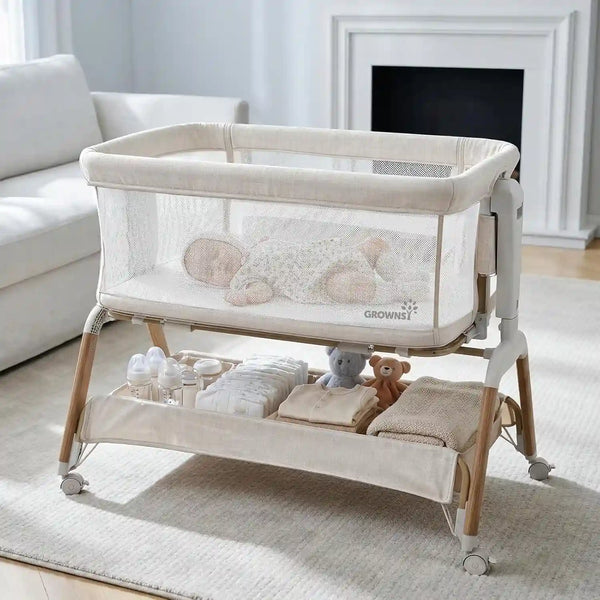
When Should You Stop Using a Bedside Bassinet?
The transition isn't determined by the bedside position itself. What matters is whether your baby still falls within the product's stated age, weight, and developmental limits.
If your baby has reached a listed limit or started showing a developmental milestone that means the bassinet should no longer be used, moving to an appropriate next-stage sleep space is the safer approach.
In other words:
Being close to your baby can continue. The sleep space may simply need to change.
What Comes After a Bassinet?
When your baby outgrows a bassinet, the next sleep space is often a crib or another appropriate infant sleep product that meets your baby's current developmental needs.
Before transitioning, check that the new sleep space is set up according to its manufacturer's instructions and current safe-sleep recommendations.
You don't necessarily need to make the transition complicated. The goal is to move from a newborn-focused sleep space to one that's appropriate for your baby's next stage.
Can a Baby Sleep in a Bassinet After Rolling Over?
This depends on the specific bassinet and its instructions.
Some products specify developmental milestones that mean use should stop, regardless of whether the baby has reached the maximum weight or age.
If your baby has started rolling, check the bassinet's instructions before continuing to use it. When in doubt, contact the manufacturer for clarification.
Can a 6-Month-Old Still Use a Bassinet?
Age alone doesn't determine whether a baby has outgrown a bassinet.
A 6-month-old may have already reached the product's weight or developmental limits, while another baby may develop at a different pace. Always check the specific bassinet's requirements and your baby's current developmental abilities.
What Should Parents Check Before Transitioning?
Before moving your baby to a new sleep space, check:
- Has your baby reached the bassinet's weight limit?
- Has your baby started rolling?
- Can your baby push up or sit?
- Is your baby trying to pull up or climb?
- Does the manufacturer specify a maximum age?
- Does the manufacturer specify developmental limits?
- Is the next sleep space appropriate for your baby's current stage?
If any of these raise questions, the product's instructions should be your first reference.

FAQ
What is the average age to stop using a bassinet?
There is no single age that applies to every baby. Weight limits and developmental milestones can be more important than age alone. For the Grownsy bassinet, its maximum weight recommendation is 20 pounds.
Should I stop using a bassinet when my baby rolls over?
Check the manufacturer's instructions. Some bassinets specify rolling or other developmental milestones as a reason to stop use.
How do I know if my baby has outgrown a bassinet?
Check the product's maximum weight, age, and developmental limits. Signs such as rolling, pushing up, sitting, or attempting to climb may also indicate that your baby is ready for a different sleep space.
What comes after a bassinet?
A crib or another appropriate infant sleep space is commonly used after a bassinet. Choose a sleep space that fits your baby's current developmental stage and follow its setup and safety instructions.
Can I keep using a bedside bassinet if my baby is sleeping well?
Sleeping comfortably doesn't necessarily mean your baby is still within the bassinet's intended limits. Continue using it only while your baby meets the product's stated age, weight, and developmental requirements.
Final Thoughts
The best time to stop using a bassinet isn't simply a date on the calendar. Look at your baby's development, check the product's limits, and transition when the bassinet is no longer designed for your baby's current stage.
For parents, that can make the transition feel less like guessing and more like following clear signals: watch your baby, check your bassinet, and move to the next sleep space when the time is right.


