


For new parents, time is the most precious resource. Between diaper changes, feedings, and those sweet snuggles, standing at the sink scrubbing bottles can feel like a never-ending chore. Many parents look at their kitchen dishwasher and wonder if it could be a helping hand. But is it safe? Will it actually get those bottles clean enough for your little one?
This guide explores using a dishwasher for your baby's feeding gear, helping you keep things hygienic while saving you some much-needed time. Finding the right tools is key, and a comprehensive collection of baby care essentials can make all the difference.
The Short Answer: Is It Safe?
The simple answer is yes, you can wash baby bottles in the dishwasher. For most modern bottles, the dishwasher is a convenient and effective option. The hot water and spray arms can often clean bottles better than a quick scrub by hand. However, there are a few things to keep in mind before you load up the rack.
Checking if Your Bottle is Dishwasher-Safe
Before putting anything in the machine, flip your bottle over. Look for a symbol on the bottom that looks like a plate with water droplets or says "dishwasher safe." Most glass bottles and high-quality plastic ones are fine. But if you have older bottles or ones with special vents, check the packaging just to be sure.
The Difference Between a Bottle Washer and a Sterilizer

It is helpful to know that washing and sterilizing aren't quite the same thing. A dishwasher acts as a bottle washer, scrubbing away milk and formula. While many have a "sanitize" setting that kills germs, it is different from a dedicated sterilizer. A sterilizer uses steam to zap 99.9% of bacteria but doesn't wash away dirt. Think of it this way: the dishwasher cleans the mess, and the sterilizer handles the germs.
Step-by-Step Guide to Using a Dishwasher as a Baby Bottle Cleaner
To make sure your baby's bottles come out sparkling, follow this simple routine. Using your dishwasher as a feeding bottle washer works best with a little prep.
Step 1: Disassemble and Pre-Rinse to Remove Residue
Never put a fully assembled bottle into the machine. Water can't get inside to clean everything properly. Take apart every piece: the bottle, the ring, the nipple, and the cap. Give them a quick rinse with warm water to wash away leftover milk. This prevents milk from getting baked on during the wash. This principle of thorough cleaning applies to all your baby gear, not just bottles, to ensure safe care for your little one.
Step 2: Loading the Top Rack Correctly
Heat rises, but the heating element in most dishwashers is at the bottom. This area can get too hot for delicate baby items. Always place bottle bodies upside down on the top rack. This lets the water spray inside to clean them while keeping them safe from the intense heat below.

Step 3: Securing Small Parts (Nipples and Lids)
Small parts like nipples and caps can fly around inside the dishwasher. If they fall, they might get damaged. Use a dishwasher basket—a small cage made for baby items. Lock these little pieces inside the basket and place it on the top rack. This keeps everything safe and sound.
Step 4: Choosing the Best Detergent and Heat Settings
Your standard detergent might be a bit strong. Look for a gentle baby bottle cleaner or a mild detergent without heavy perfumes. Select the "hot" water cycle and the "heated dry" or "sanitize" option if you have it. The hot water helps kill bacteria and cuts through grease effectively.
Step 5: Drying the Bottles Properly
Bacteria love damp spots, so drying is key. When the cycle finishes, take the bottles out with clean hands. If they are still wet, place them on a clean drying rack in an airy spot. Wait until they are completely bone dry before putting them away.
Important Safety Considerations for Your Feeding Bottle Washer
While the dishwasher is a great tool, a few extra precautions can help protect your baby's health.
Why You Still Need to Sterilize for Newborns
For babies under three months or those with weaker immune systems, a dishwasher cycle might not be enough. Their little bodies are very sensitive to germs. After washing, it is a good idea to run the bottles through a sterilizer or boil them. Once your baby is older, the dishwasher alone is usually fine.
Avoiding Harsh Chemicals and Fragrances
Babies have sensitive noses and tummies. Strong smells from detergents can cling to silicone nipples, which might make the milk taste funny. This could cause your baby to fuss at feeding time. Choosing fragrance-free, hypoallergenic detergents is usually the best bet.
Preventing Heat Damage to Plastic Parts
Over time, the dishwasher can be tough on plastic. Check your bottles often. If they look cloudy, scratched, or cracked, it is time to toss them. Scratches can hide bacteria that no bottle cleaner can reach. If nipples feel sticky, replace them right away.
Alternatives to the Dishwasher
Sometimes, the dishwasher isn't the perfect fit. Maybe you only have a few bottles to wash, or you want a deeper clean.
Using a Dedicated Feeding Bottle Washing Machine
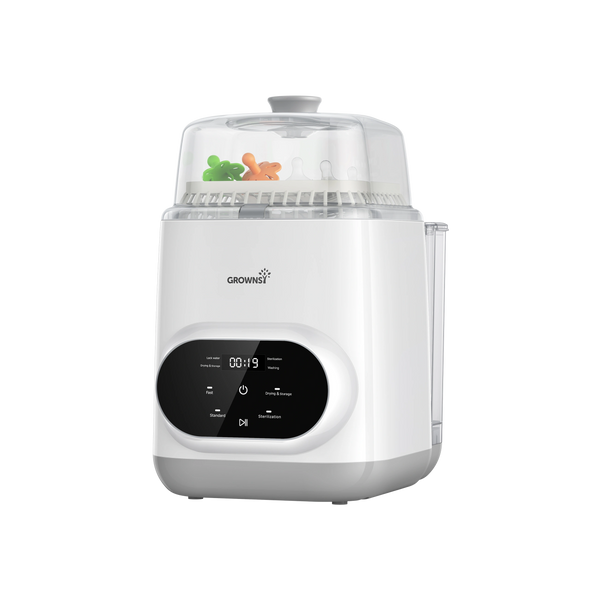
The best and most comforting thing to buy and possess is a dedicated gadget such as the Grownsy EaseClean Bottle Washer. The entire machine is designed not only to wash and sterilize but also to dry bottles, which is very convenient and helpful. These devices consume less water and also prevent leftover food particles from the family dinner from contaminating the baby products.

When to Stick to Hand Washing
If you are dealing with fragile bottles or if you only have a few things to wash, hand-washing is a safe option. You can hand-wash by using a bottle cleaner brush, which is exclusive to baby products. After which, you wash it thoroughly with hot, soapy water.
If you want to know more about the difference of dishwasher, bottle washer and hand-washing, read our related article.
If you want to know more about the difference of dishwasher, bottle washer and hand-washing, read our related article.
FAQs
Can I wash bottle nipples in the dishwasher?
Yes, silicone ones are generally safe to go into the dishwasher. You just have to make sure to place them inside a basket on the top rack so they won't fall and break.
Do I need to rinse bottles before putting them in the dishwasher?
Yes. It is best to rinse off leftover milk. If it is left to dry, it could stick to the bottle during the hot cycle.
Will the dishwasher sterilize my baby bottles?
In most dishwashers, there is a "sanitize" cycle, which is very hot, and it eliminates bacteria. Nevertheless, when it comes to infants, it is normally advisable to have a separate process of sterilization.
Can I wash baby bottles with my regular dirty dishes?
Yes, but take off the food first. You don't want old food getting into a bottle. You should also not wash greasy and spicy dishes at the same time.


